Russia weighs return to US Dollar settlement system – Bloomberg

Russia is considering returning to the US Dollar settlement, a reversal of Moscow’s intention to de-dollarize its economy, according to an exclusive article published by Bloomberg
An internal Kremlin memo reviewed by Bloomberg outlines areas of potential convergence between the US and Russia, which include Russia’s return to the US Dollar-based settlement system, joint Oil and Natural Gas ventures, cooperation on critical raw materials, nuclear energy collaboration, including AI-linked ventures and preferential conditions for US firms re-entering Russia.
However, the US would need to lift sanctions on Russia, including restoring access to US Dollar transactions.
Western officials cited in the report are skeptical that the Kremlin would distance itself from China, given the latter’s critical role in supplying components for Russia’s war economy.
The memo revealed that Dollar integration would stabilize Russia’s balance of payments and its FX markets. For the US, this would reinforce the US Dollar's reserve currency dominance and potentially rebalance global energy trade costs between China and America.
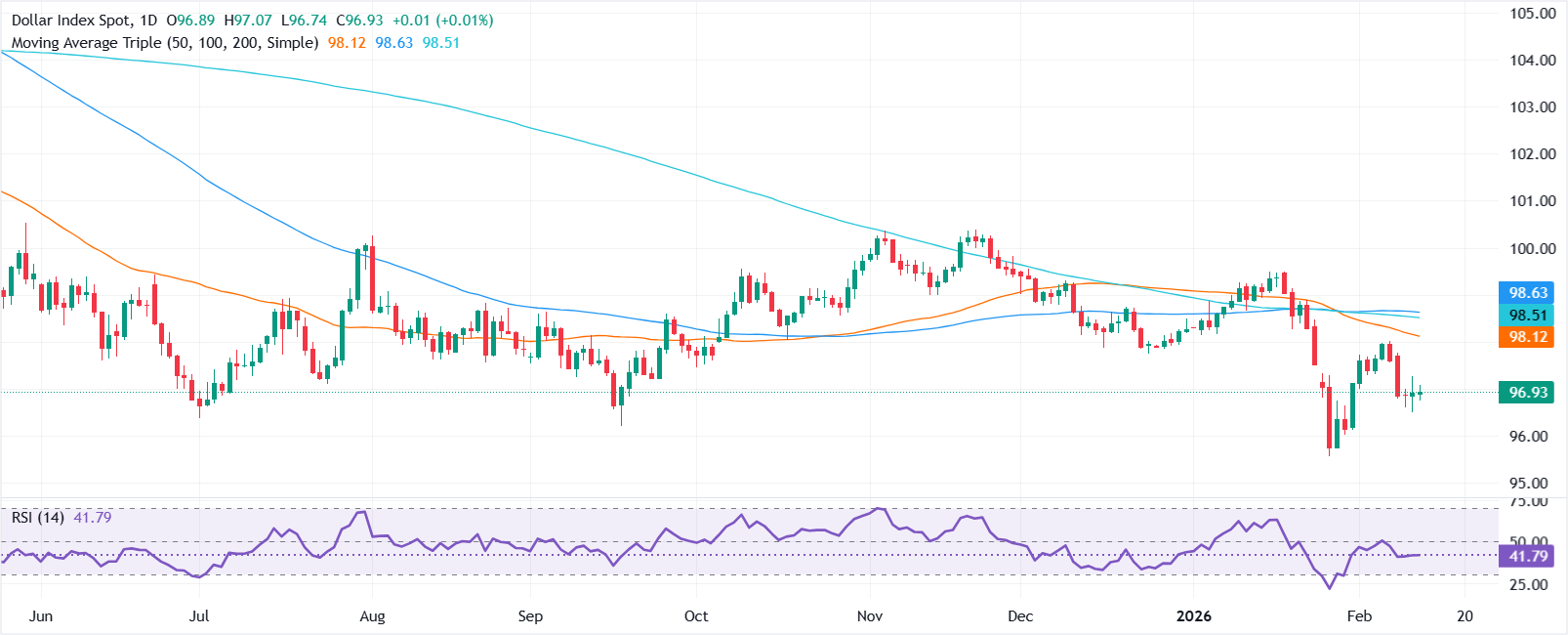
US Dollar Index reaction on the news
The US Dollar Index (DXY), which measures the performance of the Greenback against a basket of six currencies, pared earlier losses that pushed the index to lows near 96.74, trades at 96.93, about to clear the 97.00 figure.
Risk sentiment FAQs
In the world of financial jargon the two widely used terms “risk-on” and “risk off'' refer to the level of risk that investors are willing to stomach during the period referenced. In a “risk-on” market, investors are optimistic about the future and more willing to buy risky assets. In a “risk-off” market investors start to ‘play it safe’ because they are worried about the future, and therefore buy less risky assets that are more certain of bringing a return, even if it is relatively modest.
Typically, during periods of “risk-on”, stock markets will rise, most commodities – except Gold – will also gain in value, since they benefit from a positive growth outlook. The currencies of nations that are heavy commodity exporters strengthen because of increased demand, and Cryptocurrencies rise. In a “risk-off” market, Bonds go up – especially major government Bonds – Gold shines, and safe-haven currencies such as the Japanese Yen, Swiss Franc and US Dollar all benefit.
The Australian Dollar (AUD), the Canadian Dollar (CAD), the New Zealand Dollar (NZD) and minor FX like the Ruble (RUB) and the South African Rand (ZAR), all tend to rise in markets that are “risk-on”. This is because the economies of these currencies are heavily reliant on commodity exports for growth, and commodities tend to rise in price during risk-on periods. This is because investors foresee greater demand for raw materials in the future due to heightened economic activity.
The major currencies that tend to rise during periods of “risk-off” are the US Dollar (USD), the Japanese Yen (JPY) and the Swiss Franc (CHF). The US Dollar, because it is the world’s reserve currency, and because in times of crisis investors buy US government debt, which is seen as safe because the largest economy in the world is unlikely to default. The Yen, from increased demand for Japanese government bonds, because a high proportion are held by domestic investors who are unlikely to dump them – even in a crisis. The Swiss Franc, because strict Swiss banking laws offer investors enhanced capital protection.
Author

Christian Borjon Valencia
FXStreet
Markets analyst, news editor, and trading instructor with over 14 years of experience across FX, commodities, US equity indices, and global macro markets.