Italy: Risks after and beyond referendum – Deutsche Bank
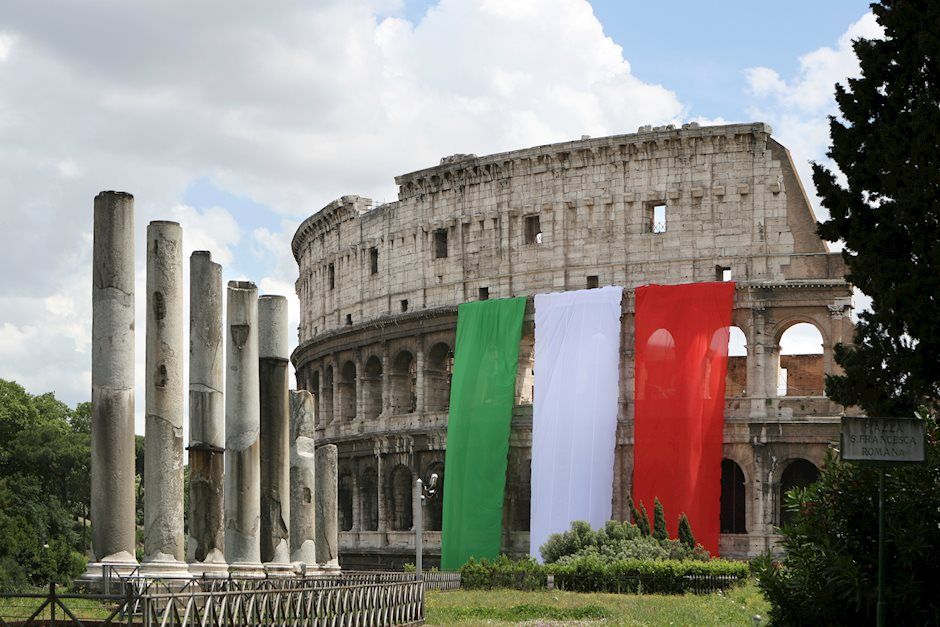

Research Team at Deutsche Bank, suggests that after Brexit and Trump’s victory, the next key political event is Italy’s 4 December referendum on the Senate reform.
Key Quotes
“Italy’s government bond and equity markets have underperformed recently. Hence, the impact of a “No” outcome may already have partially been reflected in asset valuations. Still, when looking at implied moves from options, the equity market seems to be mostly pricing in limited probability of extreme scenarios. An apparent lack of concern over contagion risk is even more apparent in broader European indices such as E-STOXX 50.”
“Short-term downside risk: in our opinion the key factor to monitor is the banking sector. In the case of a “No” victory we continue to believe that PM Renzi will resign. If we are correct markets will have to deal with a “No” and the risk of a government vacuum. Markets could react negatively, with the risk of particular stress on the Italian banking sector. If a solution is not found swiftly stress could quickly mount above July 2016 levels.”
“Medium-term downside risk: under a prolonged muddle-through scenario there is a risk of market complacency as investors dismiss it as Italy’s status quo. We see a non-trivial risk that a new, prolonged period of ineffectual governments leads to systemic instability in the medium term. A muddlethorough scenario means a very low likelihood of significant reforms; in our view Italy’s economy will continue to perform poorly in both absolute and relative terms. We do not see this as a sustainable equilibrium. Hence, over the medium-term there will have to be a convergence to either a pro-reform government or a euro-sceptic government. Our concern is that the longer Italy is stuck in a muddle-through strategy, the higher the support for euro sceptic parties will likely grow. In current polls, Italy’s three eurosceptic parties already capture a cumulative 44% of potential votes.”
“There could be room for a material rebound in Italian assets, driven by banks’ equity prices, in the case of a “Yes” victory. (i) In our opinion market expectations are tilting towards a “No” outcome. (ii) The proportion of undecided voters was still very large when the latest opinion polls were conducted before a two-weak black-out period ahead of 4 December. (iii) Italy’s equity market has significantly underperformed in 2016. The underperformance the banking sector has recently accelerated.”
“Medium-term upside risk: an unlikely systemic solution. We expect no immediate proactive systemic solution for the banking sector even if the Senate reform is approved. We could be too pessimistic. A systemic solution to the banking sector could be a chance of turning the current growth-banks-politics vicious circle into a virtuous one and revitalize the reform process. In the case a proactive systemic solution is implemented we would significantly revise upwards our GDP forecasts.”
Author
Sandeep Kanihama
FXStreet Contributor
Sandeep Kanihama is an FX Editor and Analyst with FXstreet having principally focus area on Asia and European markets with commodity, currency and equities coverage. He is stationed in the Indian capital city of Delhi.