Gold edges higher above $4,100 as traders trim Fed hike bets
- Gold price drifts higher to near $4,110 in Friday’s early Asian session.
- Traders scale back expectations of an immediate Fed rate hike.
- IRGC said it hit Kuwait and Jordan after US strikes.

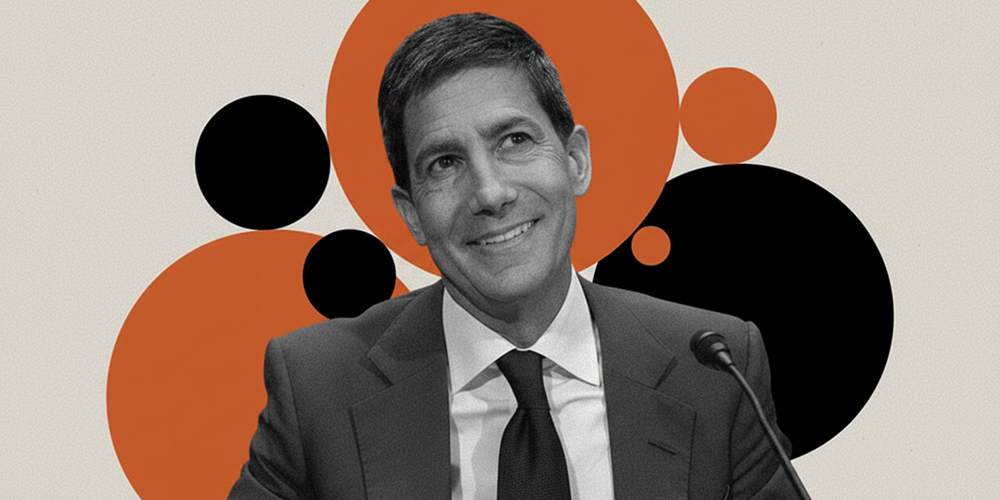
Gold price (XAU/USD) gains momentum to around $4,110 during the early Asian session on Friday. The precious metal edges higher as traders reduce their bets on interest rate hikes a day after Federal Reserve (Fed) Chair Kevin Warsh offered little clarity on policy.
On Wednesday, the US central bank decided to leave the interest rates unchanged in its current target range between 3.50% and 3.75%. During the press conference, Warsh pledged an unwavering commitment to bring inflation down, a message that left markets confused about just what he was prepared to do.
It’s worth noting that Gold is often used as a hedge against inflation but does not yield interest, making it less attractive when interest rates are high.
Markets are now pricing in nearly a 63.4% probability of a US rate hike in September, down from about 77% before the July Fed meeting, according to the CME FedWatch tool.
Nonetheless, ongoing tensions in the Middle East might cap the upside for the yellow metal as it could push crude oil prices up and prompt central banks to hold rates at elevated levels for longer.
Bloomberg reported the Islamic Revolutionary Guard Corps (IRGC) said that it targeted US bases in Kuwait, Jordan and Bahrain after US forces bombed a building on Iran’s Qeshm Island. Iranian military added that the Strait of Hormuz would remain closed and that the “aggressor will be punished.”
Fed shifts focus to data as forward guidance is pared back
Commerzbank’s FX Research team notes that the Fed chair has reinforced the central bank’s data-dependent stance, “continu[ing] his efforts to reduce the Fed's reliance on forward guidance, arguing that markets should respond to incoming economic data rather than Fed signalling.” This recalibration of communication strategy is seen by Commerzbank as a key backdrop for recent market moves, with investors increasingly attuned to the evolving macro data rather than pre-set policy cues.
Gold FAQs
Gold has played a key role in human’s history as it has been widely used as a store of value and medium of exchange. Currently, apart from its shine and usage for jewelry, the precious metal is widely seen as a safe-haven asset, meaning that it is considered a good investment during turbulent times. Gold is also widely seen as a hedge against inflation and against depreciating currencies as it doesn’t rely on any specific issuer or government.
Central banks are the biggest Gold holders. In their aim to support their currencies in turbulent times, central banks tend to diversify their reserves and buy Gold to improve the perceived strength of the economy and the currency. High Gold reserves can be a source of trust for a country’s solvency. Central banks added 1,136 tonnes of Gold worth around $70 billion to their reserves in 2022, according to data from the World Gold Council. This is the highest yearly purchase since records began. Central banks from emerging economies such as China, India and Turkey are quickly increasing their Gold reserves.
Gold has an inverse correlation with the US Dollar and US Treasuries, which are both major reserve and safe-haven assets. When the Dollar depreciates, Gold tends to rise, enabling investors and central banks to diversify their assets in turbulent times. Gold is also inversely correlated with risk assets. A rally in the stock market tends to weaken Gold price, while sell-offs in riskier markets tend to favor the precious metal.
The price can move due to a wide range of factors. Geopolitical instability or fears of a deep recession can quickly make Gold price escalate due to its safe-haven status. As a yield-less asset, Gold tends to rise with lower interest rates, while higher cost of money usually weighs down on the yellow metal. Still, most moves depend on how the US Dollar (USD) behaves as the asset is priced in dollars (XAU/USD). A strong Dollar tends to keep the price of Gold controlled, whereas a weaker Dollar is likely to push Gold prices up.
Author

Lallalit Srijandorn
FXStreet
Lallalit Srijandorn is a Parisian at heart. She has lived in France since 2019 and now becomes a digital entrepreneur based in Paris and Bangkok.