GBP/USD extends gains above 1.2700 amid risk-off mood, strong UK data
- GBP/USD marks a three-day uptrend, gaining 0.14%, trading at 1.2740 within a range of 1.2702/1.2787.
- UK data this week, including unemployment and inflation figures, bolster GBP/USD, hinting at a potential BoE rate hike.
- US data: Initial Jobless Claims at 239K, better than expected; Philadelphia Fed Manufacturing Index for August shows improvement.

The Pound Sterling (GBP) prolongs its uptrend to three straight days, as seen by the GBP/USD gaining 0.14%, despite market sentiment shifting sour due to global bond yields edging higher. Expectations that central banks would keep borrowing costs higher for longer are taking their toll on equities. The GBP/USD exchanges hands at 1.2740 after seesawing within a low and high of 1.2702/1.2787.
Pound Sterling rides on positive UK data, while US Treasury bond yields cap the pair's gains
Current week data has bolstered the GBP/USD pair, though it remains capped by high US Treasury bond yields. Even though the UK’s Unemployment Rate edged above the 4% forecast at 4.2%, the wage jump increased the chances of a Bank of England (BoE) rate hike. Wednesday’s data further reinforced that, as UK inflation decelerated as expected to 6.8% YoY, core inflation exceeded forecasts of 6.8%, rising to 6.9%. Consequently, the GBP/USD advanced.
Across the pond, the US Bureau of Labor Statistics (BLS) reported that last week’s unemployment claims rose to 239K, below estimates of 240K, still portraying a robust labor market. At the same time, the Philadelphia Fed revealed its Manufacturing Index for August came at 12, improving above the -10 contraction expected by analysts.
On Wednesday, the Fed released its July meeting minutes which showed Fed members still see upside risks on inflation, suggesting that further tightening would be needed. However, they would take into account upcoming data for the following meetings. Of note, Fed officials have expressed the need to stop hiking rates, led by some regional Fed Presidents, like Bostic, Goolsbee, Harker, and Barkin.
Following Wednesday’s data release, the Atlanta Fed GDPNow model portrays the US Q3 2023 GDP at around 5.8%, up from 4.1% on August 8. Given those developments, the swaps market has shown increased chances for a Federal Reserve 25 bps rate hike at the upcoming November meeting.
Sterling is trading slightly higher near $1.2750 but remains on track to test the late June low near $1.2590
What to watch?
The US economic docket is empty, while the UK would reveal the Gfk Consumer Confidence alongside Retail Sales for July.
GBP/USD Price Analysis: Technical outlook
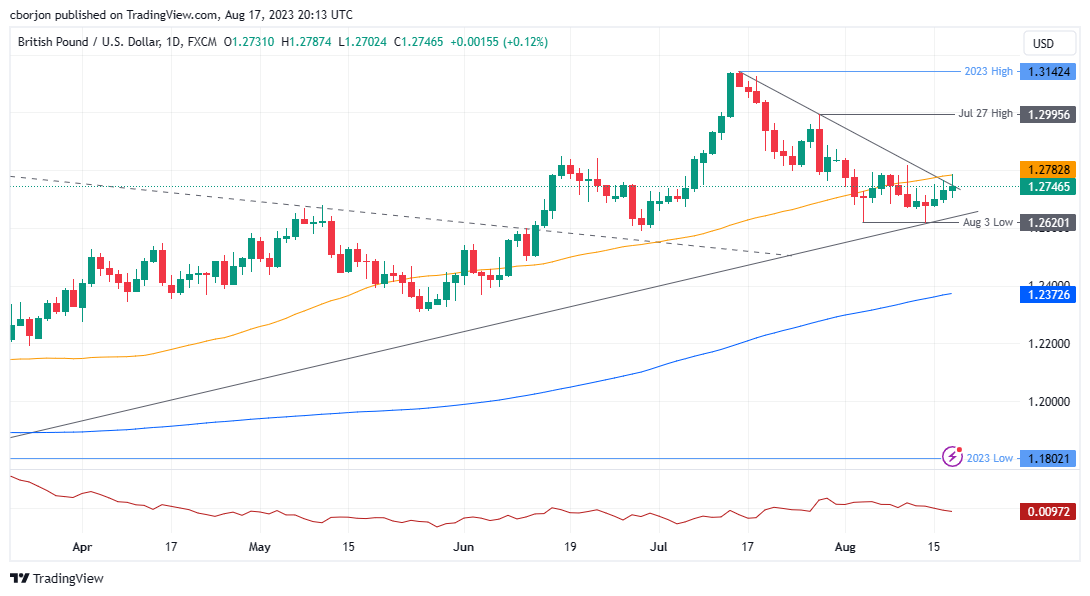
The GBP/USD daily chart portrays the pair bottomed around 1.2620 and remains tilted to the upside but capped by technical indicators. As of writing, the GBP/USD pair remained below a downslope resistance trendline and tested the 50-day Moving Average (DMA) at 1.2782, two levels aggressively defended by sellers. If GBP/USD fails to conquer 1.2800, the path of least resistance could push the price towards the low of the week at 1.2620. Otherwise, if GBP/USD reclaims the 50-DMA, the 1.2800 would be up for grabs.
Author

Christian Borjon Valencia
FXStreet
Markets analyst, news editor, and trading instructor with over 14 years of experience across FX, commodities, US equity indices, and global macro markets.

















