Fed's Powell: If policy is not in the right place, we'll move it there
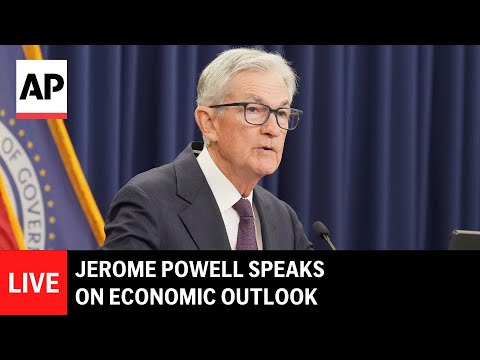
US Federal Reserve (Fed) Chair Jerome Powell said that tariff increases will likely show up as somewhat higher inflation, while speaking on the economic outlook on Tuesday.
Key takeaways:
We will make sure a one-time increase in prices does not become an ongoing inflation problem.
Reasonable base case is that tariff-driven inflation effects will be relatively short-lived.
Disinflation for services continues; most long-term inflation expectations are consistent with the 2% goal.
Goods price increases largely reflect tariffs, but not broader price pressures.
12-month PCE inflation was probably 2.7% in August, and core PCE was 2.9%, both up from the prior year and driven by goods prices.
Consumer spending has slowed, and businesses say that uncertainty weighs on the outlook.
Unusual and challenging decline in both supply and demand for workers.
The labour market is less dynamic and somewhat softer.
Inflation has risen and remains somewhat elevated.
Economic growth has moderated; downside risks to employment have risen.
Long-run inflation expectations are in line with the 2% target.
There is no risk-free policy path ahead.
Expect somewhat higher inflation
Tariff increases will likely show up as somewhat higher inflation over several quarters.
Policy stance is still modestly restrictive, well-positioned to respond to potential developments.
The rate cut was another step toward a more neutral policy stance.
The Beige Book showed modest growth, with the economy growing but not fast.
Over the summer the labour market has softened.
The focus on inflation needs to moderate to a more balanced approach.
Towards the next meeting, the Fed will look at labour market data, growth data, and inflation data to assess if policy is in the right place.
If policy is not in the right place, it will be moved there.
In aggregate, households are in good shape.
This is not a time of elevated financial stability risks.
(This story was corrected on September 24 at 12:51 GMT to say core PCE inflation was at 2.9% in August, not 2.3%.)
This section below was published at 14:00 GMT as a preview to Federal Reserve's Chairman Jerome Powell's words at the Greater Providence Chamber of Commerce.
- Fed Chair Powell will speak on the US economic outlook on Tuesday.
- Markets see a strong probability of two more Fed rate cuts in 2025.
Federal Reserve (Fed) Chairman Jerome Powell will deliver a speech on the economic outlook at the Greater Providence Chamber of Commerce 2025 Economic Outlook Luncheon on Tuesday at 16:35 GMT.
Following the September policy meeting, the Fed decided to cut the policy rate by 25 basis-points (bps) to the range of 4%-4.25%, as widely anticipated. The revised Summary of Economic Projections (SEP), also known as the dot-plot, showed that projections imply additional 50 bps of rate cuts in 2025, 25 bps in 2026 and 25 bps in 2027.
In the post-meeting press conference, Fed Chair Powell clarified that he doesn't feel the need to move quickly on rates and called the decision to lower the rates a "risk management cut." While he noted that it's time to acknowledge that risks to the employment mandate have grown, he also added that they still expect tariff-driven price increases to continue this year and next.
The CME FedWatch Tool currently shows that markets are pricing in about a 75% probability of the Fed opting for two more 25 bps rate cuts this year. This market positioning suggests that the US Dollar (USD) has room on the downside in case Powell leaves the door open to a total of 50 bps reduction in rates, citing worsening conditions in the labor market.
On the other hand, the USD could stay resilient against its major rivals if Powell reiterates upside risks to the inflation outlook because of the uncertainty surrounding the impact of tariffs on prices, and adopts an optimistic tone about economic prospects. In this scenario, US Treasury bond yields could edge higher and Wall Street's main indexes could come under bearish pressure.
Fed FAQs
Monetary policy in the US is shaped by the Federal Reserve (Fed). The Fed has two mandates: to achieve price stability and foster full employment. Its primary tool to achieve these goals is by adjusting interest rates. When prices are rising too quickly and inflation is above the Fed’s 2% target, it raises interest rates, increasing borrowing costs throughout the economy. This results in a stronger US Dollar (USD) as it makes the US a more attractive place for international investors to park their money. When inflation falls below 2% or the Unemployment Rate is too high, the Fed may lower interest rates to encourage borrowing, which weighs on the Greenback.
The Federal Reserve (Fed) holds eight policy meetings a year, where the Federal Open Market Committee (FOMC) assesses economic conditions and makes monetary policy decisions. The FOMC is attended by twelve Fed officials – the seven members of the Board of Governors, the president of the Federal Reserve Bank of New York, and four of the remaining eleven regional Reserve Bank presidents, who serve one-year terms on a rotating basis.
In extreme situations, the Federal Reserve may resort to a policy named Quantitative Easing (QE). QE is the process by which the Fed substantially increases the flow of credit in a stuck financial system. It is a non-standard policy measure used during crises or when inflation is extremely low. It was the Fed’s weapon of choice during the Great Financial Crisis in 2008. It involves the Fed printing more Dollars and using them to buy high grade bonds from financial institutions. QE usually weakens the US Dollar.
Quantitative tightening (QT) is the reverse process of QE, whereby the Federal Reserve stops buying bonds from financial institutions and does not reinvest the principal from the bonds it holds maturing, to purchase new bonds. It is usually positive for the value of the US Dollar.
Author

FXStreet Team
FXStreet
Composed of a group of economic journalists and FX experts, the FXStreet content team produces and oversees all content published on FXStreet. It provides a purely journalistic approach to the Forex market.

















