ECB’s Lagarde warns France needs a credible path to rein in debt
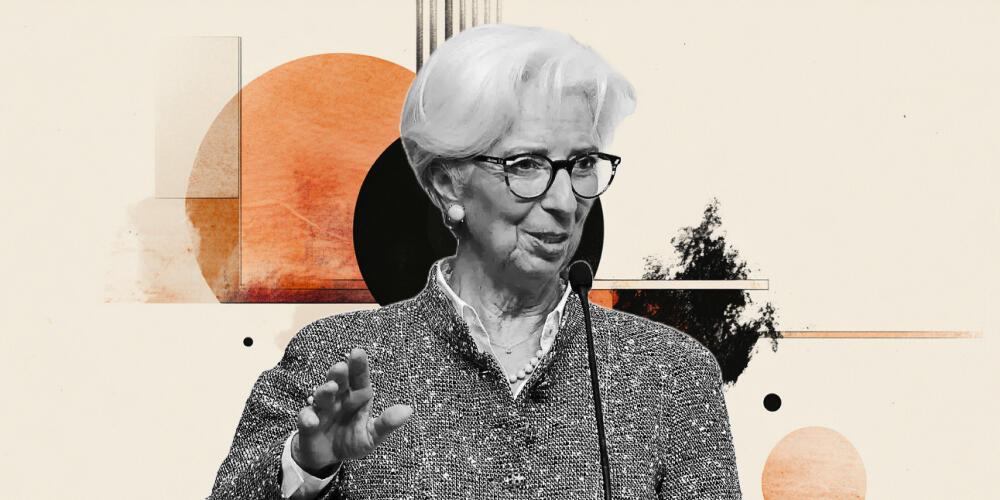
The European Central Bank (ECB) Christine Lagarde said that France’s debt situation is “serious at 120% of GDP and without a path to lowering it,” at an interview with La Croix.
Lagarde added that the European financial system is more solid than in the 2008 and 2011 crises and stated that “France needs a credible budget trajectory and reforms to restore confidence.”
Key highlights:
Tells La Croix newspaper that France's debt situation is serious at 120% of GDP and without a path to lowering
Tells La Croix newspaper the European financial system is more SOLID now than in the 2008 and 2011 crises
Tells La Croix newspaper, France needs a credible budget trajectory and reforms to restore confidence
Asked by La Croix newspaper if she would be a French presidential candidate, says, 'that would not be a good idea at all'
Tells La Croix if I leave ECB early, "It will only be by a few months
Euro Price Today
The table below shows the percentage change of Euro (EUR) against listed major currencies today. Euro was the strongest against the Australian Dollar.
| USD | EUR | GBP | JPY | CAD | AUD | NZD | CHF | |
|---|---|---|---|---|---|---|---|---|
| USD | 0.02% | -0.26% | 0.02% | 0.19% | 0.49% | 0.09% | 0.11% | |
| EUR | -0.02% | -0.25% | -0.04% | 0.17% | 0.46% | 0.07% | 0.09% | |
| GBP | 0.26% | 0.25% | 0.23% | 0.44% | 0.72% | 0.35% | 0.37% | |
| JPY | -0.02% | 0.04% | -0.23% | 0.18% | 0.50% | 0.07% | 0.13% | |
| CAD | -0.19% | -0.17% | -0.44% | -0.18% | 0.31% | -0.10% | -0.06% | |
| AUD | -0.49% | -0.46% | -0.72% | -0.50% | -0.31% | -0.40% | -0.36% | |
| NZD | -0.09% | -0.07% | -0.35% | -0.07% | 0.10% | 0.40% | 0.03% | |
| CHF | -0.11% | -0.09% | -0.37% | -0.13% | 0.06% | 0.36% | -0.03% |
The heat map shows percentage changes of major currencies against each other. The base currency is picked from the left column, while the quote currency is picked from the top row. For example, if you pick the Euro from the left column and move along the horizontal line to the US Dollar, the percentage change displayed in the box will represent EUR (base)/USD (quote).
ECB FAQs
The European Central Bank (ECB) in Frankfurt, Germany, is the reserve bank for the Eurozone. The ECB sets interest rates and manages monetary policy for the region. The ECB primary mandate is to maintain price stability, which means keeping inflation at around 2%. Its primary tool for achieving this is by raising or lowering interest rates. Relatively high interest rates will usually result in a stronger Euro and vice versa. The ECB Governing Council makes monetary policy decisions at meetings held eight times a year. Decisions are made by heads of the Eurozone national banks and six permanent members, including the President of the ECB, Christine Lagarde.
In extreme situations, the European Central Bank can enact a policy tool called Quantitative Easing. QE is the process by which the ECB prints Euros and uses them to buy assets – usually government or corporate bonds – from banks and other financial institutions. QE usually results in a weaker Euro. QE is a last resort when simply lowering interest rates is unlikely to achieve the objective of price stability. The ECB used it during the Great Financial Crisis in 2009-11, in 2015 when inflation remained stubbornly low, as well as during the covid pandemic.
Quantitative tightening (QT) is the reverse of QE. It is undertaken after QE when an economic recovery is underway and inflation starts rising. Whilst in QE the European Central Bank (ECB) purchases government and corporate bonds from financial institutions to provide them with liquidity, in QT the ECB stops buying more bonds, and stops reinvesting the principal maturing on the bonds it already holds. It is usually positive (or bullish) for the Euro.
Author

Christian Borjon Valencia
FXStreet
Markets analyst, news editor, and trading instructor with over 14 years of experience across FX, commodities, US equity indices, and global macro markets.
















