ECB Recap: On hold amid tighter financial conditions and rising energy costs
The European Central Bank (ECB) unanimously left its three key interest rates unchanged, keeping the deposit rate at 2.50% as policymakers assessed the impact of renewed energy-price increases. President Christine Lagarde said the Governing Council had debated whether a hike was appropriate but concluded that a measured approach remained justified for now.
The ECB acknowledged that energy prices had risen beyond its baseline assumptions, creating upside risks to inflation and downside risks to growth. Headline inflation is likely to remain well above target over the coming quarters, although the ECB expects it to decline later as energy inflation eases. Underlying inflation has remained broadly stable, wages have not shown a material second-round response and longer-term expectations remain close to 2%.
Lagarde said early pricing-chain data pointed to renewed upward pressure, while the ECB’s wage tracker indicates negotiated wage growth of 2.5%-2.8% in the remaining months of 2026. The central bank is seeing more indirect effects from the energy shock, but no additional second-round effects beyond those already incorporated into its projections.
The growth outlook remains mixed. Incoming data suggest the economy expanded in the third quarter, with AI investment, government spending and a potential recovery in exports supporting activity. However, higher energy prices, rising financing costs, weaker confidence, fiscal uncertainty and tighter financial conditions are all weighing on demand. The risks to growth are tilted to the downside, while inflation risks remain tilted higher.
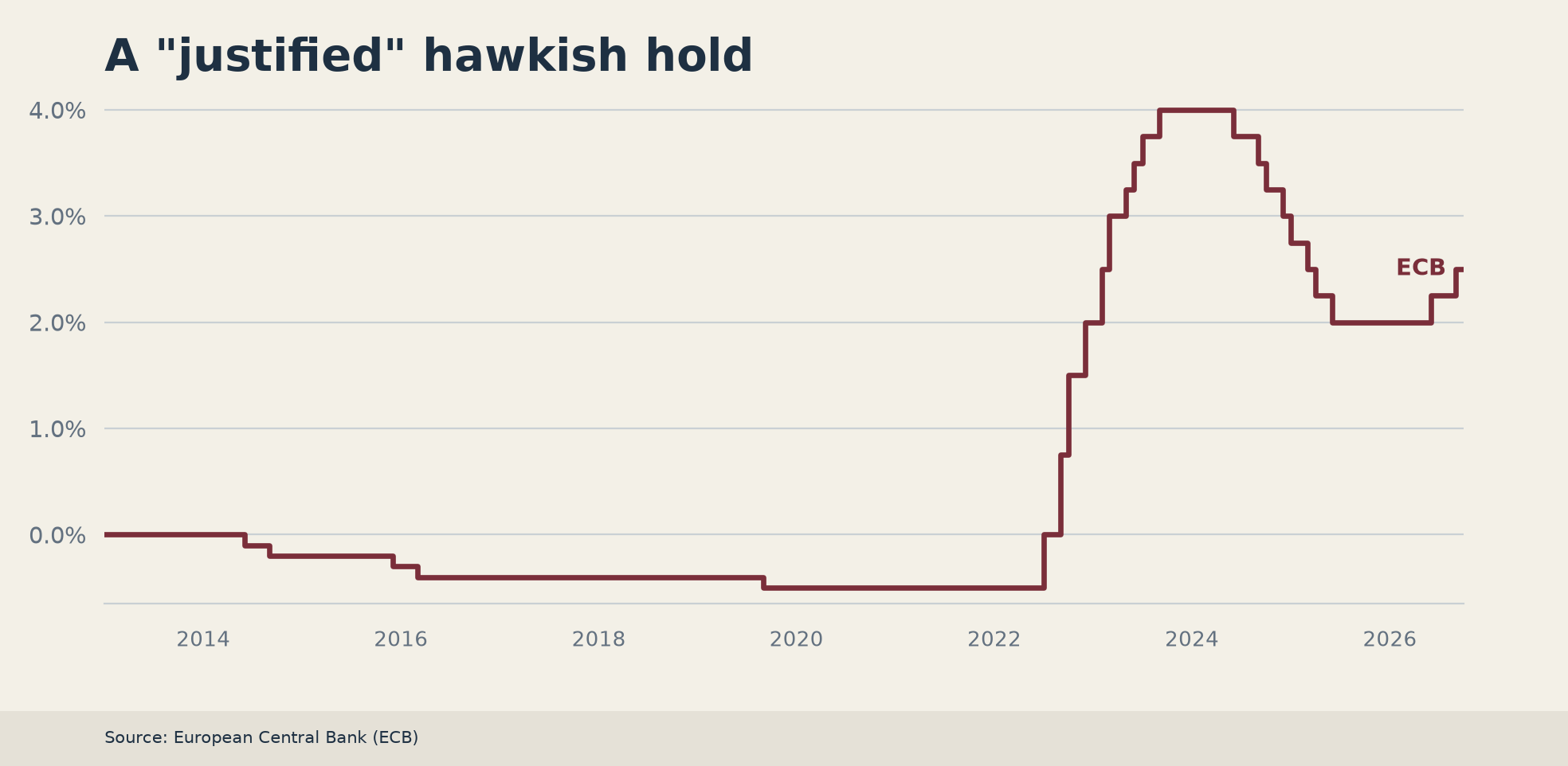
Overall, the decision was a cautious and slightly hawkish hold. The Governing Council has not pre-committed to a rate path, but the decision will be guided closely by underlying inflation and the transmission of monetary policy. Lagarde described the six-week period before the next meeting as information-rich, suggesting that December’s decision will depend heavily on whether energy pressures broaden or remain contained.
Author

Pablo Piovano
FXStreet
Born and bred in Argentina, Pablo has been carrying on with his passion for FX markets and trading since his first college years.