Dow Jones futures slip as traders adopt caution ahead of Trump’s Iran deadline
- Dow Jones futures decline due to increased risk aversion linked to Iran talks uncertainty.
- Traders adopt caution as Trump’s Iran deadline looms, set for 8:00 PM ET on Tuesday.
- US index futures struggle as hawkish tone surrounding Fed stance strengthens amid higher energy prices.

Dow Jones futures fall 0.2% to near 46,800 during European hours on Tuesday, ahead of the regular United States (US) open. Meanwhile, S&P 500 and Nasdaq 100 futures also decline 0.34% and 0.45% to near 6,620 and 24,250, respectively, at the time of writing.
US stock futures declined as traders prepared for US President Donald Trump’s approaching deadline for Iran to reopen the Strait of Hormuz. Trump had earlier warned that he could strike Iranian power plants and bridges if his demands are not fulfilled by 8:00 PM Eastern Time on Tuesday.
Moreover, Trump said on Monday that the latest proposal for a US ceasefire with Iran is “not good enough” ahead of his deadline for Tehran to reopen the Strait of Hormuz, though he noted it represents progress. “It’s a very significant step,” Trump added. “They’re negotiating now, and they’ve made a very significant step. We’ll see what happens.”
Meanwhile, Iran warned it would respond to any potential US strikes on civilian infrastructure by intensifying attacks on energy assets in the Gulf, a move that could further strain global energy supplies.
In regular US trading on Monday, the Dow Jones rose 0.36%, the S&P 500 advanced 0.44%, and the Nasdaq 100 increased 0.54%. Eight of the 11 S&P sectors closed in positive territory, with gains led by consumer discretionary, energy, and consumer staples.
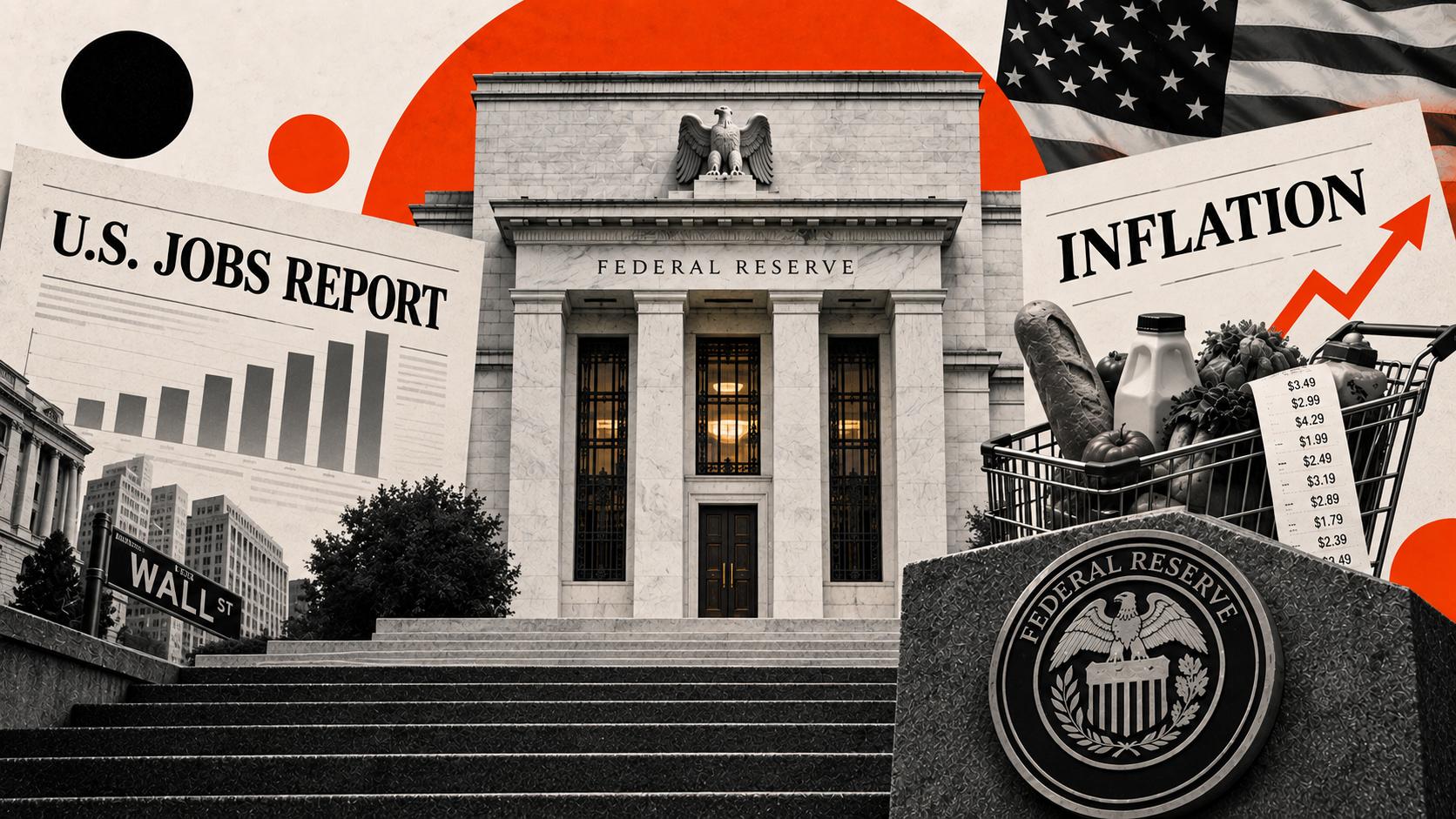
Risk aversion increased as Iran's war lifted energy prices, fueling inflation fears and prompting a more hawkish Federal Reserve stance. Markets have fully priced in that the Federal Reserve will hold the federal funds rate steady this month, with borrowing costs likely to remain unchanged through year-end. CME Group’s FedWatch Tool indicates a 99.5% probability that the Fed will leave rates unchanged at the April meeting.
Traders are now looking ahead to the latest Federal Open Market Committee (FOMC) Meeting Minutes due on Wednesday, along with key inflation data set for release on Friday. On the corporate front, earnings from Delta Air Lines are also drawing attention this week.
Dow Jones FAQs
The Dow Jones Industrial Average, one of the oldest stock market indices in the world, is compiled of the 30 most traded stocks in the US. The index is price-weighted rather than weighted by capitalization. It is calculated by summing the prices of the constituent stocks and dividing them by a factor, currently 0.152. The index was founded by Charles Dow, who also founded the Wall Street Journal. In later years it has been criticized for not being broadly representative enough because it only tracks 30 conglomerates, unlike broader indices such as the S&P 500.
Many different factors drive the Dow Jones Industrial Average (DJIA). The aggregate performance of the component companies revealed in quarterly company earnings reports is the main one. US and global macroeconomic data also contributes as it impacts on investor sentiment. The level of interest rates, set by the Federal Reserve (Fed), also influences the DJIA as it affects the cost of credit, on which many corporations are heavily reliant. Therefore, inflation can be a major driver as well as other metrics which impact the Fed decisions.
Dow Theory is a method for identifying the primary trend of the stock market developed by Charles Dow. A key step is to compare the direction of the Dow Jones Industrial Average (DJIA) and the Dow Jones Transportation Average (DJTA) and only follow trends where both are moving in the same direction. Volume is a confirmatory criteria. The theory uses elements of peak and trough analysis. Dow’s theory posits three trend phases: accumulation, when smart money starts buying or selling; public participation, when the wider public joins in; and distribution, when the smart money exits.
There are a number of ways to trade the DJIA. One is to use ETFs which allow investors to trade the DJIA as a single security, rather than having to buy shares in all 30 constituent companies. A leading example is the SPDR Dow Jones Industrial Average ETF (DIA). DJIA futures contracts enable traders to speculate on the future value of the index and Options provide the right, but not the obligation, to buy or sell the index at a predetermined price in the future. Mutual funds enable investors to buy a share of a diversified portfolio of DJIA stocks thus providing exposure to the overall index.
Author

Akhtar Faruqui
FXStreet
Akhtar Faruqui is a Forex Analyst based in New Delhi, India. With a keen eye for market trends and a passion for dissecting complex financial dynamics, he is dedicated to delivering accurate and insightful Forex news and analysis.