BoJ’s Ueda: Will continue to raise rates if economy keeps improving in line with outlook
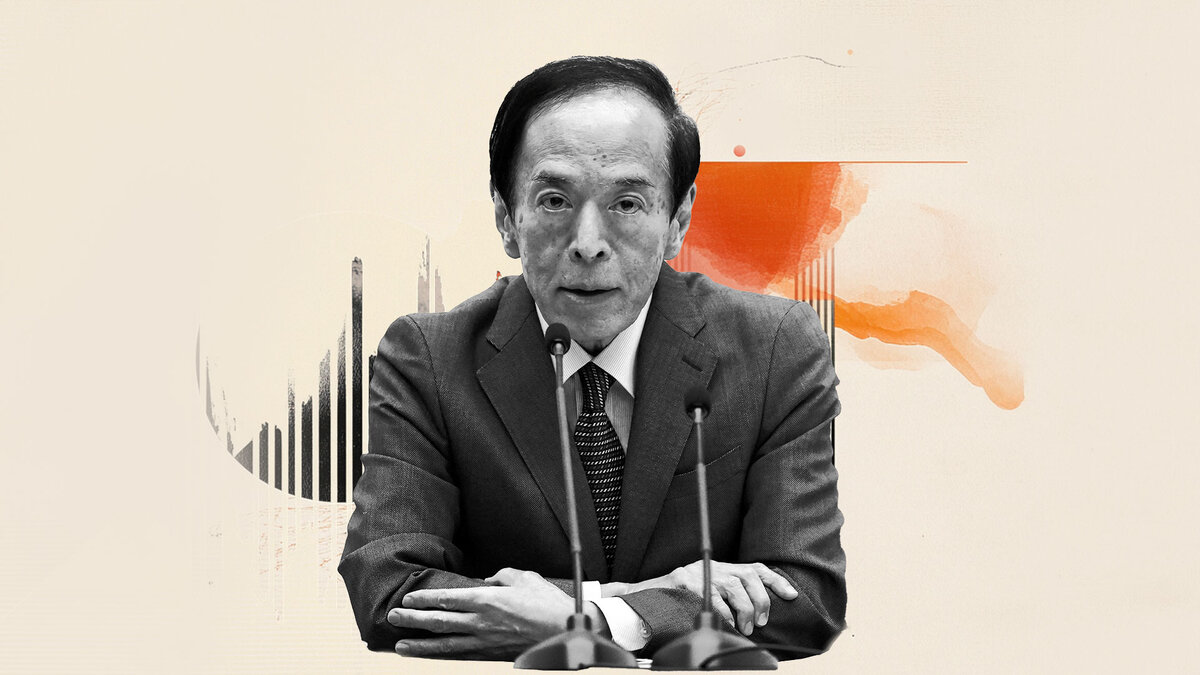

Ahead of his meeting with the Japanese Financial Services Agency (FSA) and Ministry of Finance (MoF) on Wednesday, Bank of Japan (BoJ) Governor Kazuo Ueda said that the central bank “will continue to raise rates if the economy keeps improving in line with the outlook.”
Additional quotes
- Will take appropriate policy decision by examining domestic, overseas risks.
- That includes economic, price developments and markets including US trade policy impact.
- Japan's economy is recovery moderately albeit with some weak signs.
- Must be vigilant to fact uncertainty over each country's trade policy outlook heightening.
- Underlying inflation below 2% now but gradually accelerating.
Market reaction
USD/JPY has staged a decent comeback from near 144.60 levels to now trade at 145.40, still down 0.56% on the day.
Bank of Japan FAQs
The Bank of Japan (BoJ) is the Japanese central bank, which sets monetary policy in the country. Its mandate is to issue banknotes and carry out currency and monetary control to ensure price stability, which means an inflation target of around 2%.
The Bank of Japan embarked in an ultra-loose monetary policy in 2013 in order to stimulate the economy and fuel inflation amid a low-inflationary environment. The bank’s policy is based on Quantitative and Qualitative Easing (QQE), or printing notes to buy assets such as government or corporate bonds to provide liquidity. In 2016, the bank doubled down on its strategy and further loosened policy by first introducing negative interest rates and then directly controlling the yield of its 10-year government bonds. In March 2024, the BoJ lifted interest rates, effectively retreating from the ultra-loose monetary policy stance.
The Bank’s massive stimulus caused the Yen to depreciate against its main currency peers. This process exacerbated in 2022 and 2023 due to an increasing policy divergence between the Bank of Japan and other main central banks, which opted to increase interest rates sharply to fight decades-high levels of inflation. The BoJ’s policy led to a widening differential with other currencies, dragging down the value of the Yen. This trend partly reversed in 2024, when the BoJ decided to abandon its ultra-loose policy stance.
A weaker Yen and the spike in global energy prices led to an increase in Japanese inflation, which exceeded the BoJ’s 2% target. The prospect of rising salaries in the country – a key element fuelling inflation – also contributed to the move.
Author
Dhwani Mehta
FXStreet
Residing in Mumbai (India), Dhwani is a Senior Analyst and Manager of the Asian session at FXStreet. She has over 10 years of experience in analyzing and covering the global financial markets, with specialization in Forex and commodities markets.

















