Banxico: Uncertainty clouds Mexico's economic horizon – El Financiero
- Public safety and the policies implemented by the United States are a source of concern for businesses.
- Central bank warns slowdown could deepen; urges investment boost amid weakening demand and trade tensions
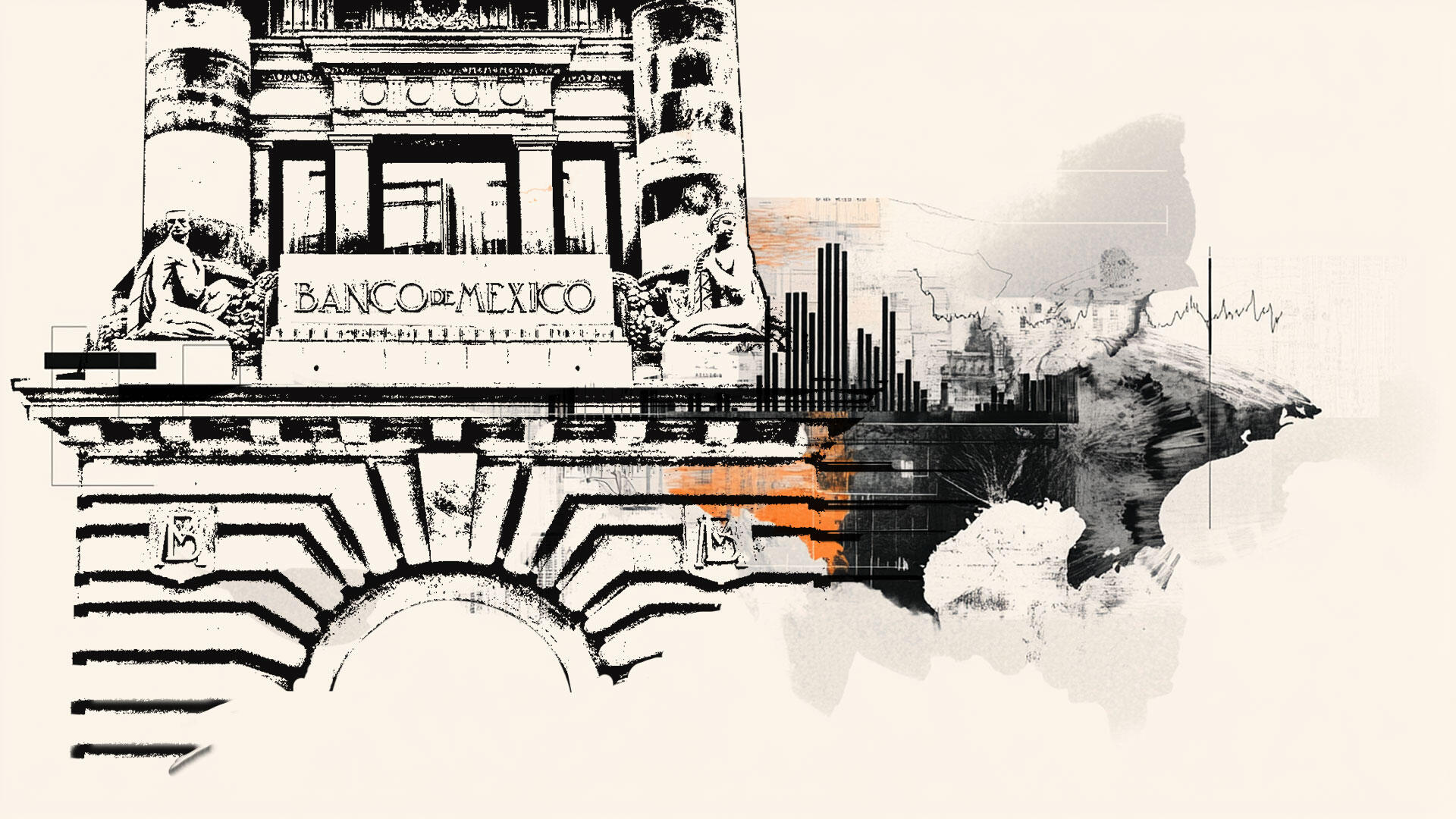
Banco de Mexico (Banxico) Director of Economic Research Alejandrina Salcedo Cisneros said that uncertainty is having a widespread impact on the country's businesses, so the outlook points to a moderate expansion of regional economies.
Banxico’s economist added, “We had a slowdown that we had been observing for several quarters, to which this environment of uncertainty is now compounded.” She said this could be due to lower internal and external demand, given that manufacturing production slowed in the United States (US).
Mexico’s central bank revealed an economic contraction of 0.6 % in Q4 2024. Although the country is not in a recession, having a negative quarter could be a prelude to a deeper economic slowdown.
Business executives interviewed by Banxico indicated that deteriorating public safety and trade policies implemented by the US are among the risks that could affect regional economies over the next year.
Also, public investment in infrastructure at the state and federal levels may be lower than expected.
She considered that, in the face of these challenges, it is necessary to continue strengthening domestic sources of growth and generating favorable conditions for investment, especially to continue promoting infrastructure construction.
Banxico FAQs
The Bank of Mexico, also known as Banxico, is the country’s central bank. Its mission is to preserve the value of Mexico’s currency, the Mexican Peso (MXN), and to set the monetary policy. To this end, its main objective is to maintain low and stable inflation within target levels – at or close to its target of 3%, the midpoint in a tolerance band of between 2% and 4%.
The main tool of the Banxico to guide monetary policy is by setting interest rates. When inflation is above target, the bank will attempt to tame it by raising rates, making it more expensive for households and businesses to borrow money and thus cooling the economy. Higher interest rates are generally positive for the Mexican Peso (MXN) as they lead to higher yields, making the country a more attractive place for investors. On the contrary, lower interest rates tend to weaken MXN. The rate differential with the USD, or how the Banxico is expected to set interest rates compared with the US Federal Reserve (Fed), is a key factor.
Banxico meets eight times a year, and its monetary policy is greatly influenced by decisions of the US Federal Reserve (Fed). Therefore, the central bank’s decision-making committee usually gathers a week after the Fed. In doing so, Banxico reacts and sometimes anticipates monetary policy measures set by the Federal Reserve. For example, after the Covid-19 pandemic, before the Fed raised rates, Banxico did it first in an attempt to diminish the chances of a substantial depreciation of the Mexican Peso (MXN) and to prevent capital outflows that could destabilize the country.
Author

Christian Borjon Valencia
FXStreet
Markets analyst, news editor, and trading instructor with over 14 years of experience across FX, commodities, US equity indices, and global macro markets.