AUD/USD eyes a 61.8% Fibo retracement and then lower
- AUD/USD is taking on the bear's commitments is a significant correction.
- All eyes will be on the RBA 6 July meeting as the month draws towards a close.

AUD/USD ended the day flat on Friday at 0.7586 after ranging between 0.7579 and 0.7616 following a slide from the late European trade highs despite a softer greenback
The US dollar drifted lower as an agreement on US infrastructure spending underpinned appetite for other riskier currencies. However, the greenback recovered after tamer-than-expected producer price inflation as investors continued to evaluate whether the Federal Reserve will need to act faster in order to battle inflation risks.
However, the personal consumption expenditures (PCE) price index, excluding the volatile food and energy components, increased 0.5%, below economists’ expectations of an 0.6% increase. In the 12 months through May, the core PCE price index shot up 3.4%, the largest gain since April 1992.
Meanwhile, the Aussie dollar was able to shrug off some domestic woes as the spread of the Covid-19 Delta variant forced Sidney into lockdown. Instead, while the data calendar is rather uneventful beforehand, the Reserve Bank of Australia will be at the forefront of traders minds scheduled for 6th July.
The RBA would be expected to have shifted to the hawkish side after the June Federal Open Market Committee hawkish hold. The market is now pricing in 45bp of tightening in two-year time, up from 25bp before the Fed’s hawkish shift. AUD could benefit from the RBA sounding hawkish and is set to reduce stimulus at the July meeting. Other than that, AUD should remain mostly driven by external factors.
AUD/USD technical analysis
The correction eyes a test of the 61.8% Fibonacci given the bullish daily close and prospects of the wick being fille din on the ower time frames for the sessions ahead.
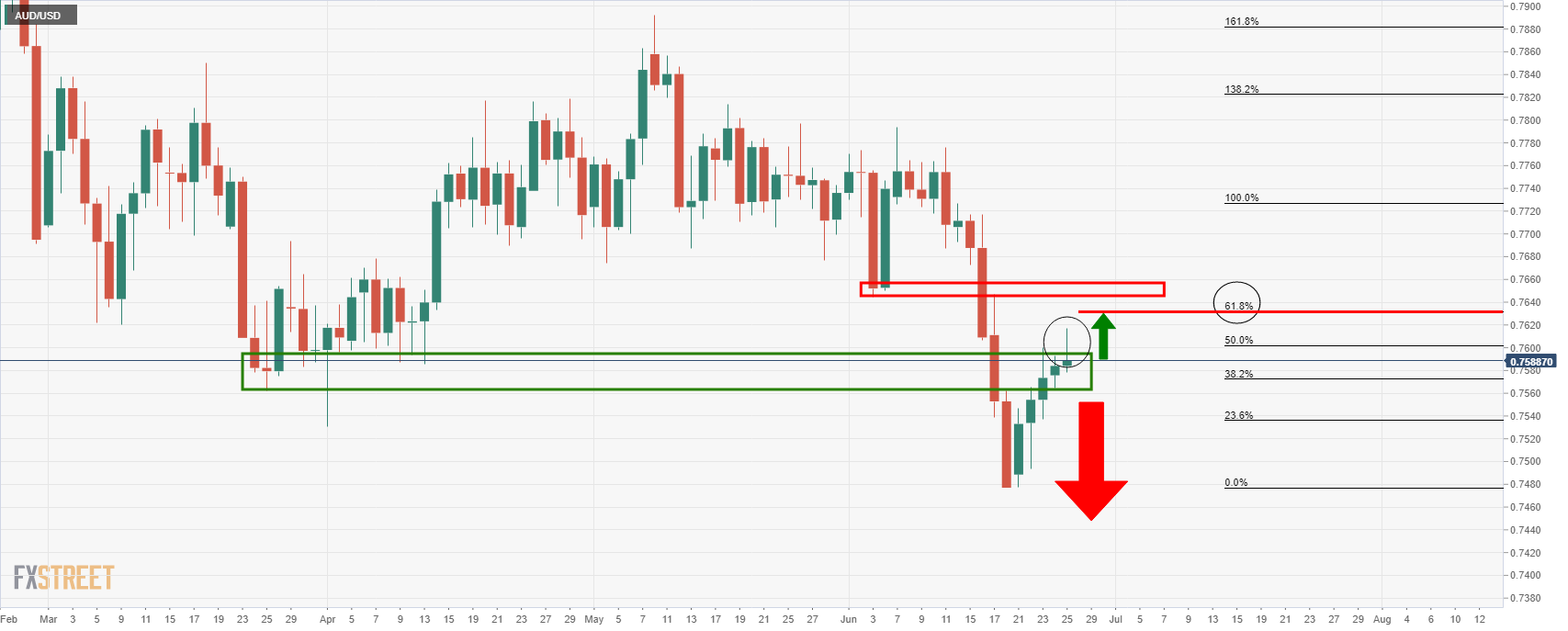
0.7650 is also an upside target marked by the prior early June lows.
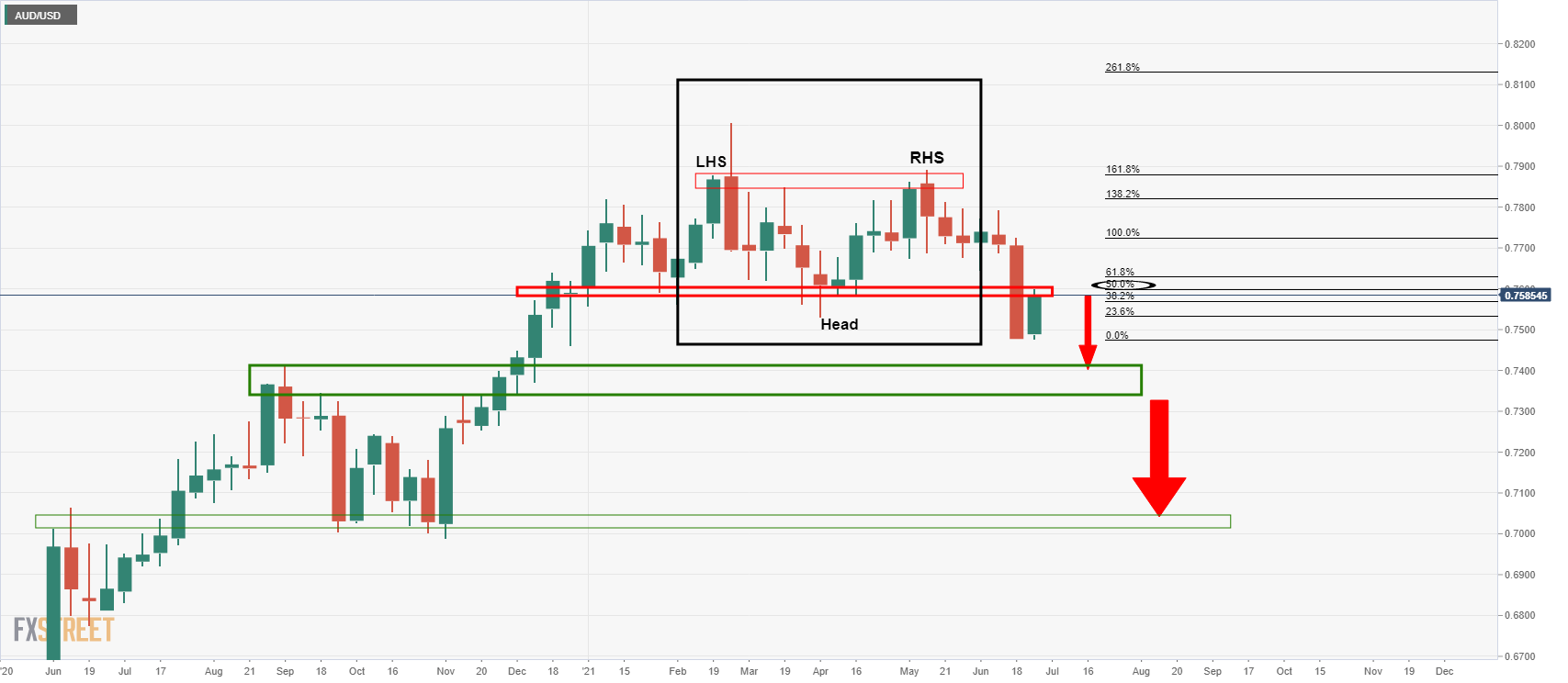
However, scanning out the weekly chart, the first bearish scenario comes with the failed reverse head and shoulders:
Also, we have a double top as a result.
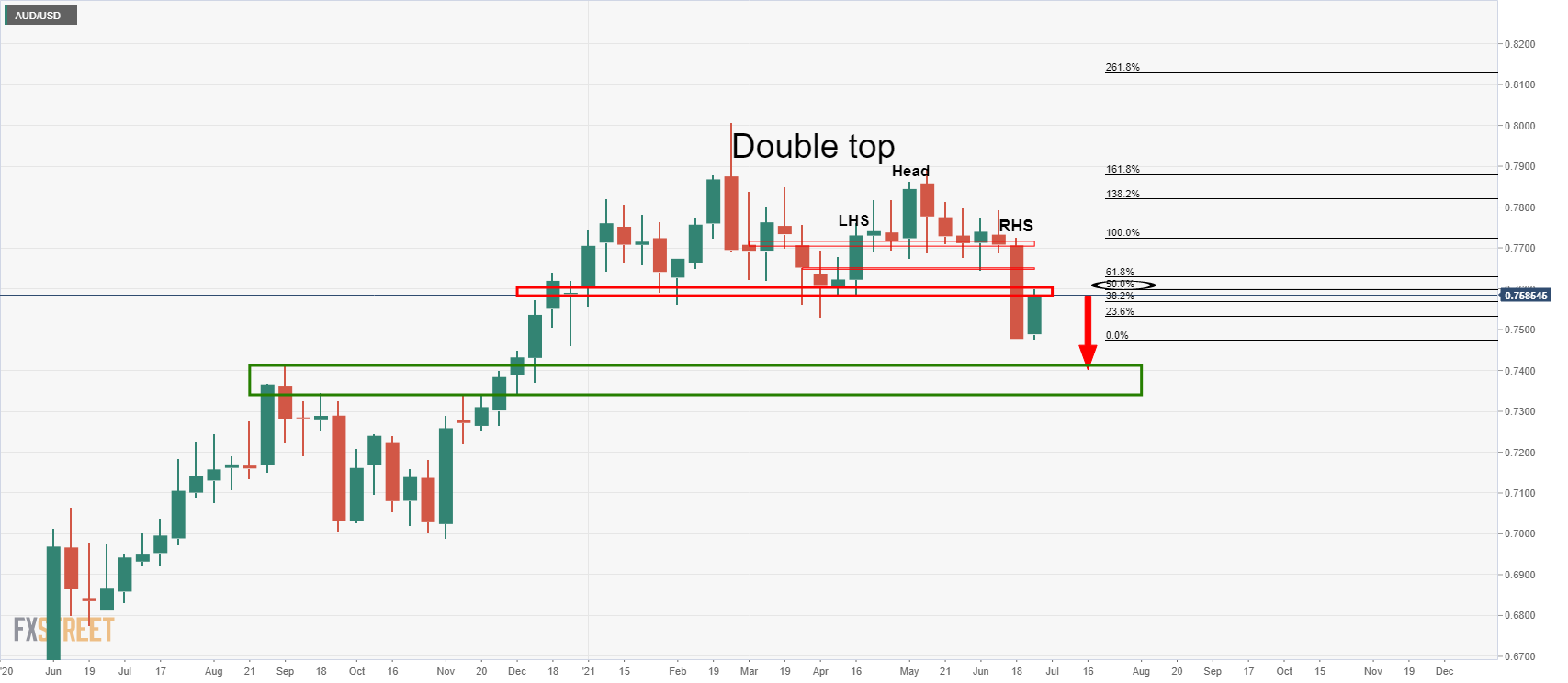
A downside continuation would be expected in the sessions ahead with prior structure at 0.7365/0.7410 as a target area.
Author

Ross J Burland
FXStreet
Ross J Burland, born in England, UK, is a sportsman at heart. He played Rugby and Judo for his county, Kent and the South East of England Rugby team.














