|

Alibaba Group. ($BABA) extreme area offering a buying opportunity

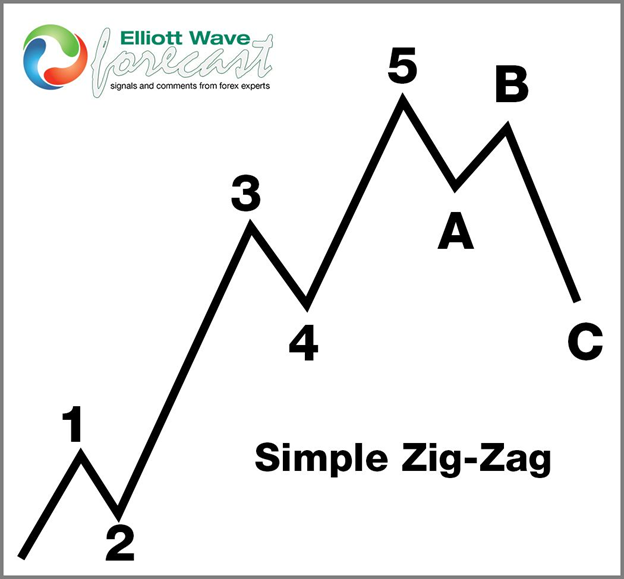
In today’s article, we’ll review the recent performance of Alibaba Group. ($BABA) through the lens of Elliott Wave Theory.  We’ll review how the rally from the Jan 8th 2026 low unfolded as a 5-wave impulse followed by a 3-swing correction (ABC) and discuss what could come next. Let’s explore the structure and the expectations for this stock.

Five wave impulse structure + ABC correction
BABA

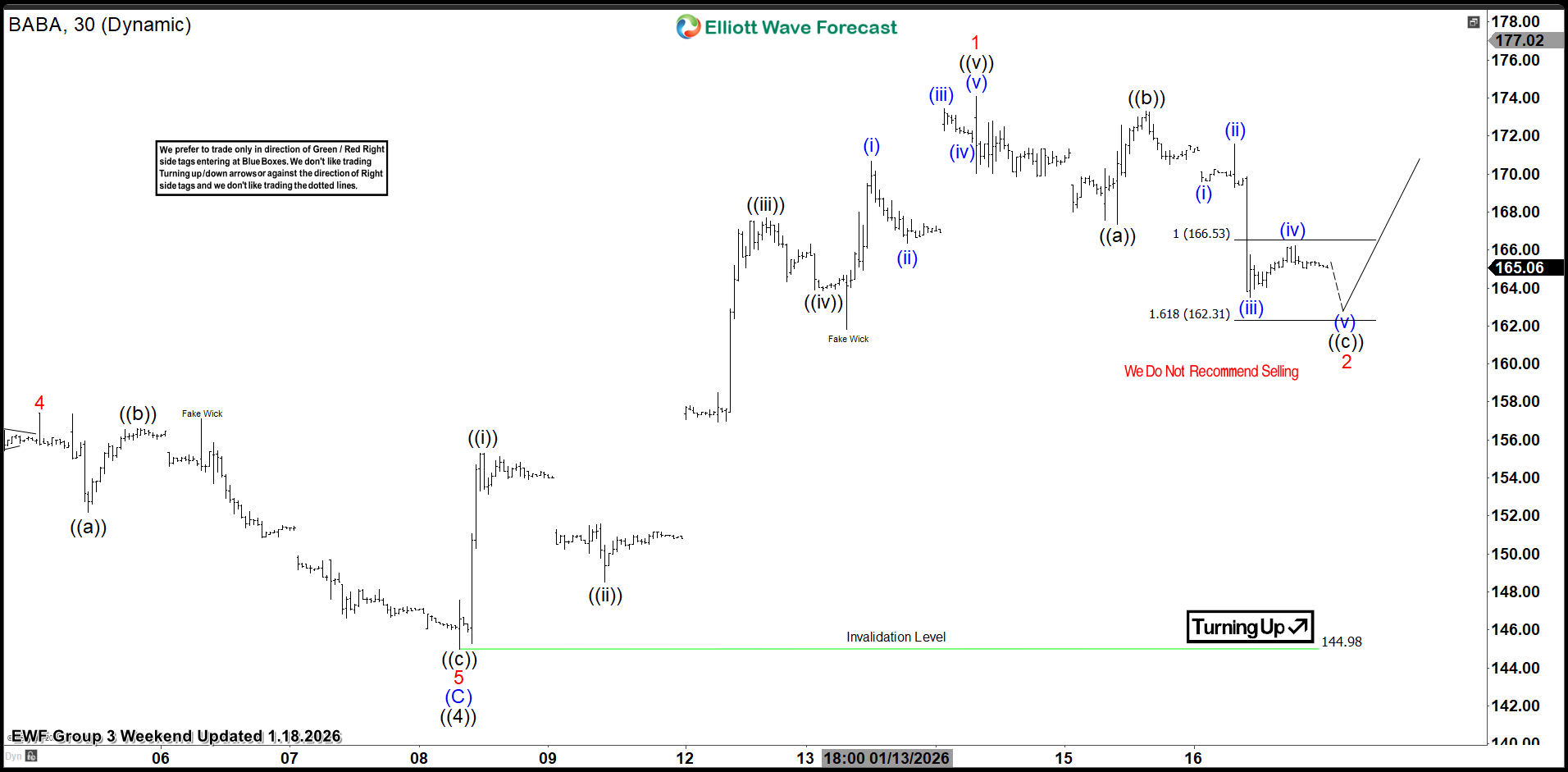
$BABA one-hour Elliott Wave chart 1.18.2026
Chart

In the 1H chart from Jan 18, 2026, $BABA completed a clear 5-wave impulsive cycle labeled red 1. After such a move, a corrective pullback is typical. As expected, the stock began to retrace in three swings, forming what we identify as an ABC correction.

The price action suggested that buyers would likely appear near the extreme area between $166.53 and $162.31. This zone represents the ideal region where a correction usually ends and a new bullish cycle begins.

In other words, the market took a brief pause before potentially resuming its primary uptrend. Therefore, this structure aligns well with a standard Elliott Wave correction, offering traders a technical roadmap.

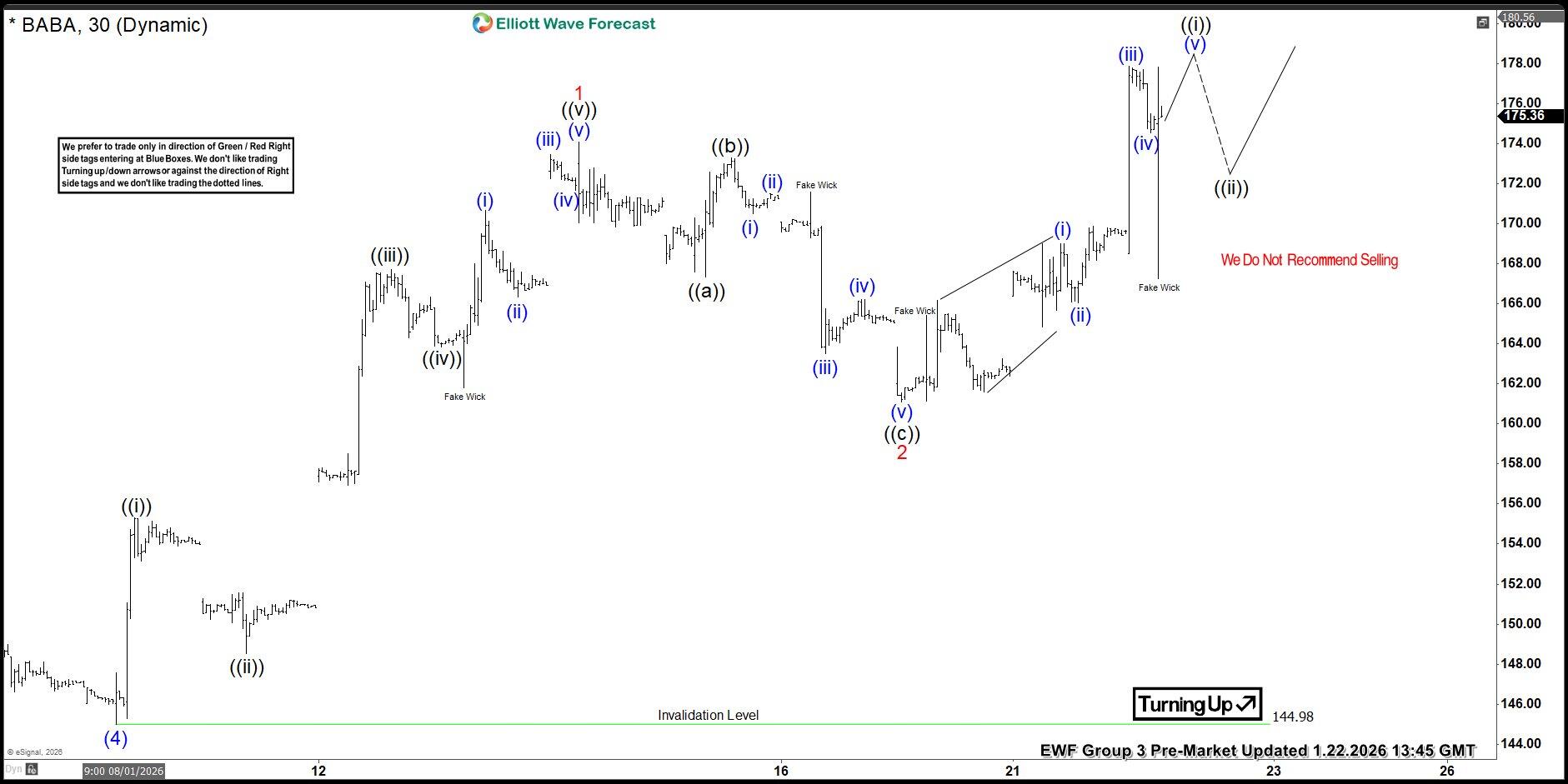
$BABA one-hour Elliott Wave chart 1.22.2026
BABA

Few days later, the stock bounced and made new highs confirming the bullish trend. Currently, it is looking to remain supported against 1/20 low and higher in wave 3 of (3). Longs should be risk free and looking for $190-207 area as the next possible target.

Conclusion

In conclusion, our Elliott Wave analysis of $BABA suggests the stock continues to trade within a bullish framework. By using Elliott Wave Theory, traders can better anticipate market structure, identify continuation zones, and plan trades with greater confidence.

In addition, understanding how impulse and correction phases interact helps improve risk control, especially in volatile markets like this one. Therefore, maintaining flexibility and discipline remains key as this structure evolves.

Author

Elliott Wave Forecast Team

Elliott Wave Forecast Team

ElliottWave-Forecast.com

More from Elliott Wave Forecast Team
Share:

Editor's Picks

AUD/USD recovers toward 0.7000 amid improving mood

AUD/USD is firming up toward 0.7000 in Asia on Tuesday, helped by improving market mood. A pause in the US Dollar rebound also aids the pair's upside. However, geopolitical risks and caution ahead of AI tech earnings report could limit the pair.

USD/JPY flatlines near 158.50 as markets seek direction

USD/JPY steadies around 158.50 in the Asian trading hours on Tuesday. Traders prefer to wait on the sidelines ahead of Japan’s National Consumer Price Index inflation data later on Friday. Meanwhile, elevated US bond yields provide some support to the US Dollar against the Japanese Yen.

Gold just failed at $4,150. This is the next stop

Gold prices trade without a clear direction on Tuesday, hovering around the $4,170 region per troy ounce and still struggling to regain upside traction following Monday’s pullback. In the meantime, lower US Treasury yields and a marked pullback in the US Dollar come in tandem with the yellow metal’s price action.

Crypto Today: Bitcoin, Ethereum, XRP tick lower amid mixed ETF flows

Bitcoin is trading above $81,000 on Tuesday, aligning with a lethargic tone in the broader cryptocurrency market. Altcoins, including Ethereum and Ripple, reflect Bitcoin’s lock-step price action, trading below $2,400 and $1.30, respectively.

Markets at a turning point: Bitcoin, Gold, FX and Tech react to a heavy macro week

The new trading week opens with a mixed but revealing picture across global markets. Indices, commodities, FX, tech stocks, and cryptocurrencies are all sending one message: risk appetite is alive, but it is cautious, selective, and highly sensitive to macro signals.

The US Dollar fell. Gold didn't rally. That tells you everything
Gold (XAU/USD) is struggling to capitalize on a weaker US Dollar (USD), after repeatedly failing to establish itself above the $4,200 level. The precious metal remains confined to a relatively narrow trading range despite a combination of developments that would normally support higher prices.