|

18 consecutive months and running: China’s central bank extends Gold-buying spree

  • The People’s Bank of China continued to add Gold to its reserves in April, extending its buying run to 18 consecutive months.
  • China’s central bank bought the highest amount of Gold since December 2024.
  • Globally, central banks resumed net purchases in April after recording net sales a month earlier.

China’s central bank, one of the major Gold purchasers worldwide, continued to add the precious metal to its vaults in April, in a sign that demand from sovereigns remains high.

The People’s Bank of China (PBoC) bought 8 tonnes of Gold in April, the highest amount since December 2024, posting its 18th consecutive month of purchases, according to the most recent data published by the World Gold Council (WGC).

China’s central bank now holds 2,322 Gold tonnes, which represents around 9% of its total reserves, the data showed.

In April, the PBoC was the third Gold buyer among central banks, only surpassed by Poland and Uzbekistan.
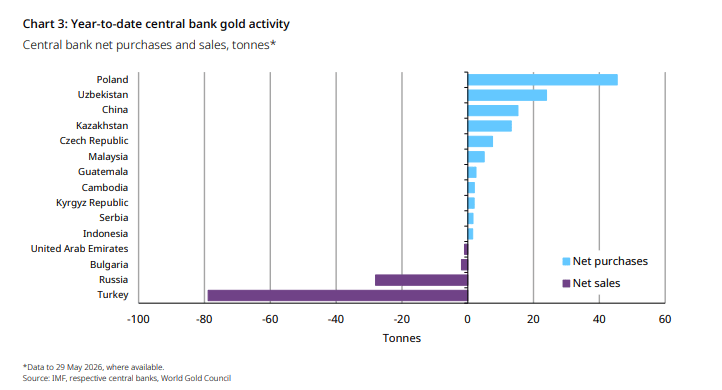
Data from the WGC shows that global central banks resumed net Gold purchases in April, rebounding from the net sales reported in March. Back then, the immediate economic fallout from the Iran war forced some sovereigns in emerging markets to offload Gold to protect their currencies.
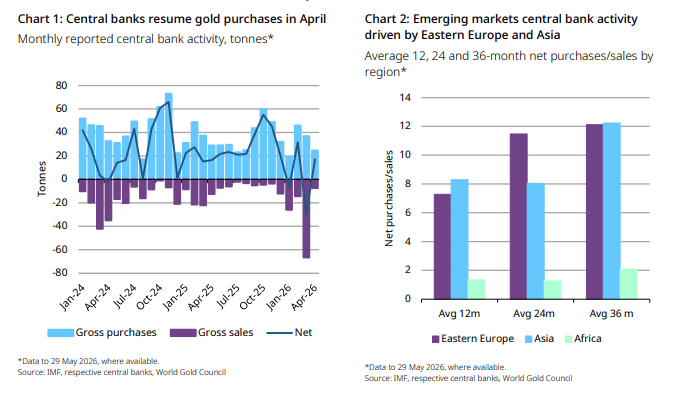
Central bank buying has been a key driver of Gold’s rally, which saw the metal almost double in price in 2025. The pace of purchases jumped significantly in 2022, after Russia’s foreign reserves were immobilized following its invasion of Ukraine.

Gold touched an all-time high of around $5,600 per troy ounce in January but has fallen about 23% since then, trading at around $4,300. 

Gold’s most recent correction, which has driven its price below its 200-day Simple Moving Average since October 2023, has been triggered by a surprisingly strong US jobs report for May, which prompted markets to price in upcoming interest-rate hikes by the Federal Reserve. As Gold doesn’t yield interest, investors have fled to other interest-bearing assets such as bonds.

Author

Valeria Bednarik

Valeria Bednarik was born and lives in Buenos Aires, Argentina. Her passion for math and numbers pushed her into studying economics in her younger years.


More from Valeria Bednarik
Share:

Editor's Picks

AUD/USD picks up amid easing geopolitical tensions, bright data from China

The Australian Dollar posts moderate gains against the US Dollar on Tuesday, regaining some of the ground lost last week, although it remains at its lowest level in nearly two months. News that Israel and Iran halted hostilities has triggered a mild relief rally. At the same time, upbeat Chinese trade data has provided additional support for the Aussie, as China is Australia’s major trading partner.

Japanese Yen steadies near recent lows as ceasefire, Japan intervention threats offset

USD/JPY trades around 160.15 on Tuesday, remaining close to its highest level since April 30 despite a broadly neutral intraday performance. The pair retains an underlying bullish bias, supported by expectations that US monetary policy will remain restrictive, although upside potential is being capped by the risk of intervention from Japanese authorities.

Gold dives to fresh two-month lows, aims to challenge $4,000

The selling pressure now gathers extra pace and sends Gold to new three-month lows near $4,230 per troy punce on Tuesday. That said, the yellow metal resumes its decline on the back of a recovery attempt in the US Dollar and the likelihood of a tighter-for-longer Fed this year.

Crypto Today: Bitcoin, Ethereum, XRP edge lower despite Middle East tensions easing

Cryptocurrency prices trade amid persistent selling pressure on Tuesday. Bitcoin (BTC) hovers near $63,000, Ethereum (ETH) above $1,650, and Ripple (XRP) around $1.14.

Hotter US inflation numbers could further bolster Fed hike bets

Middle East tensions keep inflation risks elevated. Fed hike fully priced in by year end amid strong NFP report. US CPI data on Wednesday (12:30 GMT) to enter the spotlight. Further acceleration in inflation could drive the Dollar higher.

The US economy defies the rules: 100 days into the Oil shock and the recession signal is still missing

More than three months after the start of the Iran war and the resulting disruption to global energy markets, the US economy continues to display remarkable resilience. The conflict has triggered a sharp rise in Oil prices, reignited inflationary pressures and fueled widespread concerns about a potential economic slowdown.















