|

Pound Sterling Price News and Forecast: GBP recovers some losses against US Dollar

British Pound recovers some losses against US Dollar, ISM Services PMI eyed

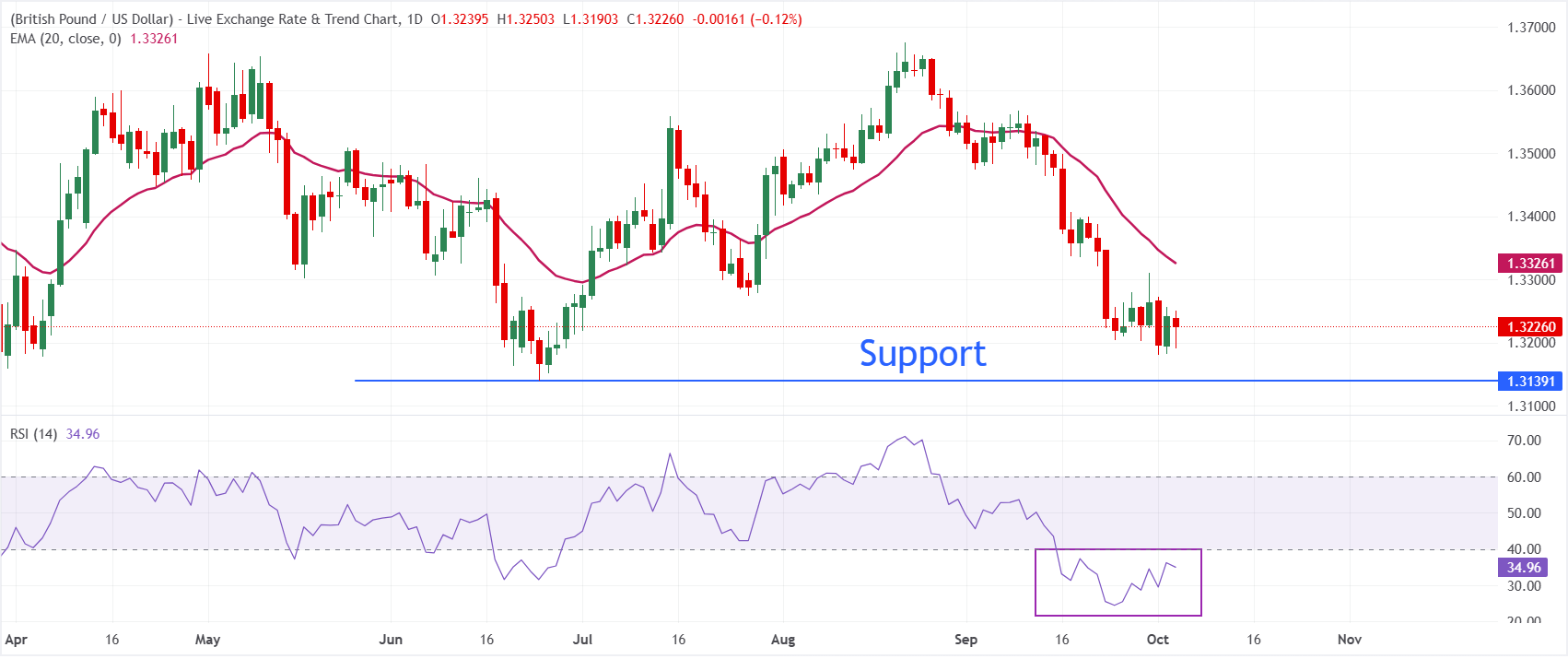
The British Pound (GBP) claws back some of its early losses against the US Dollar (USD), but is still 0.15% down to near 1.3220 during the European trading session on Monday. The GBP/USD pair recovers slightly as the US Dollar Index retreats after hitting a fresh annual high near 102.53.

It is highly likely that receded hawkish Federal Reserve (Fed) expectations are capping the US Dollar’s upside. According to the CME FedWatch tool, the odds of the Fed hiking interest rates in the policy meeting later this month have diminished to 19.4% from 70.9% seen a week ago. Read more...
GBPUSD

GBP/USD in positive territory as pound rebounds from lows

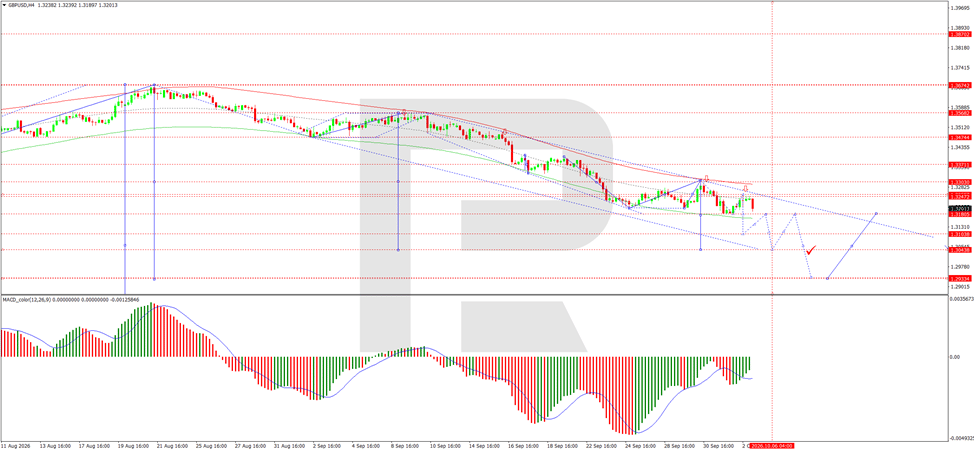
GBP/USD starts the new week of October at 1.3237. The pound is seizing every opportunity to rebound from three-month lows after a weak US labour market report put pressure on the dollar.

The US economy added just 29,000 jobs in September, compared with expectations of 90,000. This has reinforced expectations that the Federal Reserve could leave rates unchanged in October, with the probability of a move in December now appearing higher. Read more...
GBPUSD

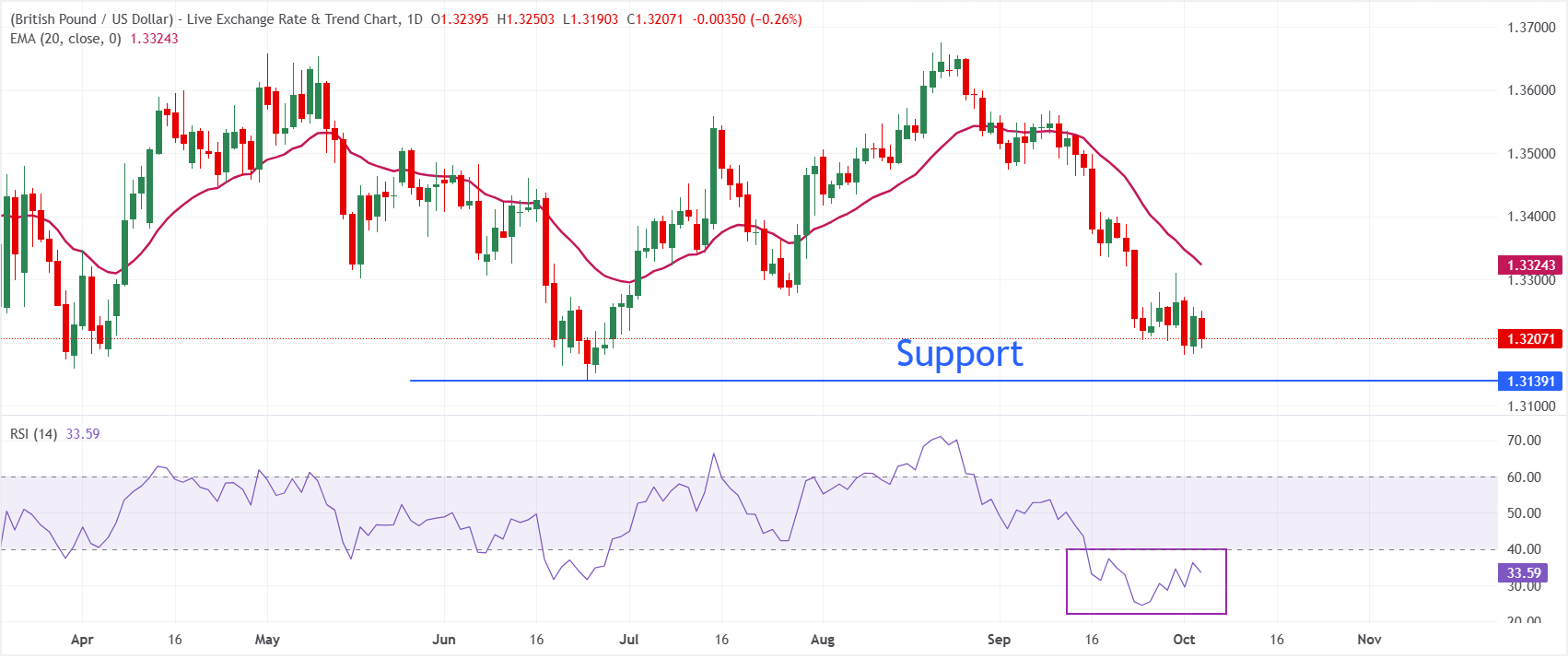
GBP/USD Price Forecast: YTD low near 1.3140 to act as key support level

The British pound (GBP) is down 0.26% to near 1.3200 against the US Dollar (USD) during the early European trading session on Monday. The GBP/USD pair faces selling pressure as the US Dollar (USD) outperforms due to an improvement in its safe-haven demand in the wake of heightened French fiscal concerns.

As of writing, the US Dollar Index (DXY), which gauges the Greenback’s value against six major currencies, trades 0.42% higher to near 102.53. The DXY posted a fresh yearly high at 102.53 during the day. Read more...
GBPUSD

Author

FXStreet Team

Composed of a group of economic journalists and FX experts, the FXStreet content team produces and oversees all content published on FXStreet. It provides a purely journalistic approach to the Forex market.


More from FXStreet Team
Share:

Editor's Picks

AUD/USD turns south toward 0.6900 as USD firms up

AUD/USD sees fresh selling and drops toward 0.6900 in late Asian trading on Monday, as renewed US Dollar strength weighs on the pair amid lingering Middle East and Russia-Ukraine geopolitical tensions. Focus remains on Oil prices, Treasury bond yields, and RBA expectations for fresh trading impetus in the major.

USD/JPY retakes 158.00 amid hawkish BoJ bets, firmer USD

USD/JPY erases losses and retakes 158.00 in the Asian session on Monday, trading within a one-week-old range. Geopolitical uncertainty continues to underpin the US Dollar, despite fading Fed rate hike hopes, supporting the pair's rebound. However, further upside could be capped by hawkish BoJ expectations and looming intervention risks that could support the Japanese Yen.

Gold trades flat as stronger US Dollar offsets easing Fed rate-hike bets

Gold trades little changed on Monday after giving back most of its early gains. The metal remains caught between easing Fed interest-rate hike bets and a stronger US Dollar (USD), while US Treasury yields also remain elevated near multi-year highs.

Crypto Today: Bitcoin rally slows while Ethereum and XRP extend recovery amid slowing ETF inflows

Bitcoin is narrowly consolidating while trading above $86,000 at the time of writing on Monday. Altcoins, on the other hand, show a positive outlook, with Ethereum edging higher above $2,700 while Ripple steadies above $1.52.

Eurozone inflation just hit 3.8%, its highest in three years. This chart shows why the ECB can’t simply hike its way out

The ECB would normally have a relatively straightforward answer to inflation running almost twice its target: raise interest rates. But these are not normal circumstances. This time, the bond market is already doing part of the tightening for it, leaving the ECB facing an increasingly difficult dilemma.

Eurozone inflation just hit 3.8%, its highest in three years. This chart shows why the ECB can’t simply hike its way out

The ECB would normally have a relatively straightforward answer to inflation running almost twice its target: raise interest rates. But these are not normal circumstances. This time, the bond market is already doing part of the tightening for it, leaving the ECB facing an increasingly difficult dilemma.














