Living in a Post-Election Forex World

So, the election is over, the dust has settled and we have a new President Elect. The United States of America, and the rest of the world, is sitting on the edge of their collective seats waiting to see what the next four years is going to look like, but the financial markets tick along just the same. Plenty of speculation about where markets will be in the next 6 months is already in the air and irrespective of where the markets go, we have seen an increase in market volatility over the last few weeks which is likely to continue for some time. However, like anything, this volatility will come and go and our job as disciplined market speculators is to be prepared for all market conditions no matter the situation.
In the earlier days of my FX trading I tended to like volatility when it paid me on trades and hated it when I lost! My novice mentality shone through strongly back then. Today though, I look at market volatility from a very different perspective altogether. Markets will typically do what they were always meant to do, as the only thing which pushes prices higher or lower are the imbalances between willing buyers and willing sellers, namely supply and demand. When major news and volatility swings into the markets it is easy to forget this and be tempted to react to movement, as opposed to planning your moves around it. There is a huge difference in these approaches, with one being focused on planning in advance and the other just reacting to what is happening.
Reacting is easy to do because most people hate to be left out of a move in the markets. It can be hard to sit there and watch a market move hundreds of pips without you, tempting us to jump into the move far too late and right at the end of the run, resulting often in an inevitable loss. Do you think that the major banks and institutions are jumping into moves last minute and waiting for news to come out before they make their moves? Of course not! These are the people who are creating the moves in the first place! At Online Trading Academy, we teach our students to plan their trades and positions ahead of time, just like the largest institutions and banks do but only after those major market players have shown us their hand first. It doesn’t matter if it’s a vote for the UK to leave the EU, a Presidential Election or simply monthly Non-Farm Payroll figures being released; we can always plan our moves ahead of time. Our job as disciplined market speculators is to track the footprints of the big guys so we can buy and sell when they do, no matter the market volatility. If you know when to enter a trade by letting price come to you, volatility will only stop you out for a small loss when wrong and give you a big win when you are right.
Now of course, we can also choose to trade things with lesser volatility around these major news events too, especially if we want to tighten up our risk management even further. Many FX traders will focus on pairs like the EURUSD and the GBPUSD as these will often move the most in times like this, yet it can pay us to look at some of the lesser traded instruments from time to time, especially if the charts are cleaner and the entries and exits more defined. For example, let’s look at some set ups from a recent XLT I hosted on November 2nd, a few days before the election. Below we can see setups to buy the USDJPY and sell the NZDUSD along with their respective Demand and Supply levels:
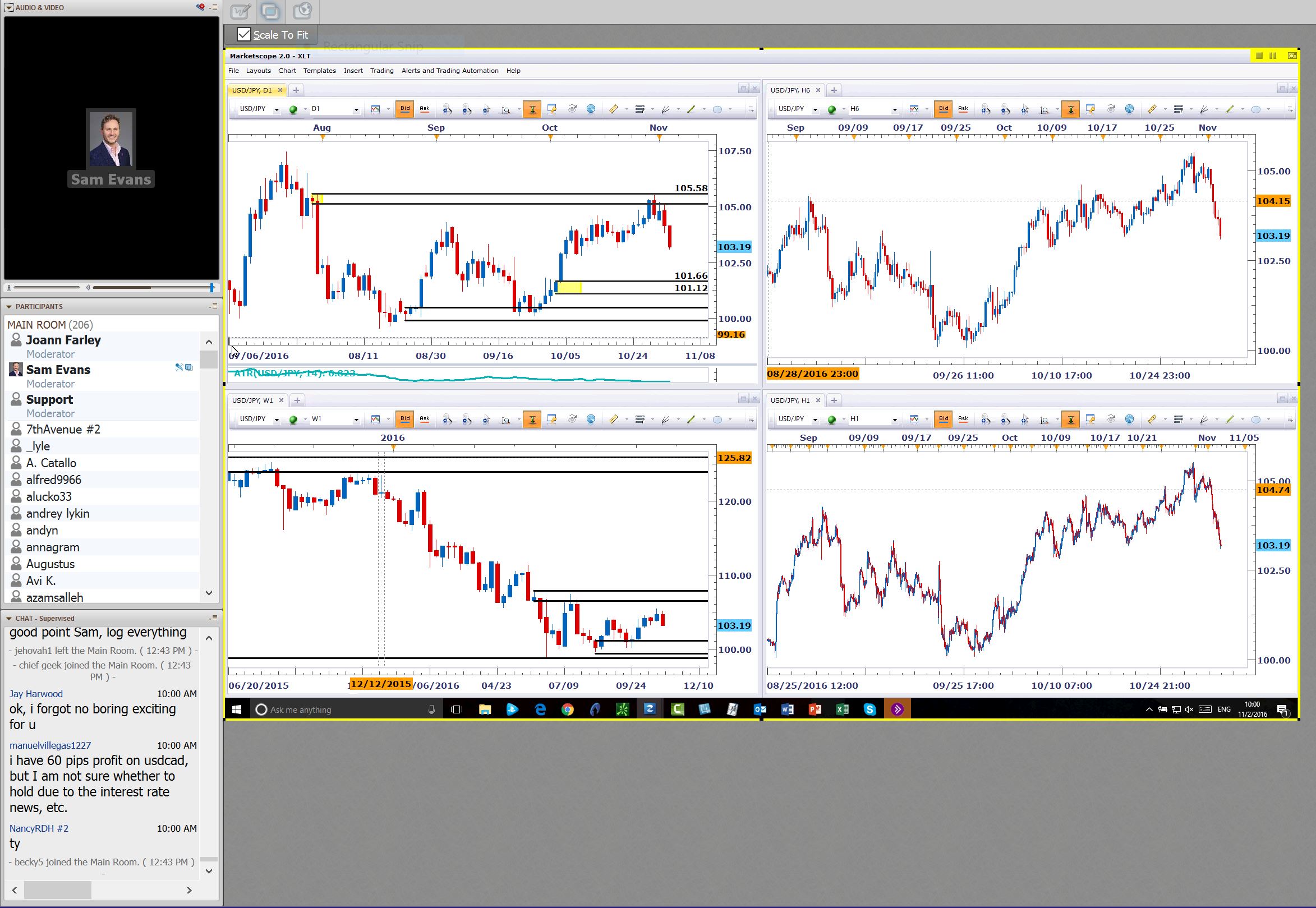
In the first example on the USDJPY we already had prices dropping steadily from our pre-defined level of supply, as we can clearly see in the screen-shot. With the downward move already well underway, it was now time to look for our next opportunity to get long on the pair. It made sense to highlight the lower level of demand for an entry to buy at 101.66 with a stop loss in case proven wrong below 101.12. The clear imbalance shown in price and qualified by the OTA odds enhancers suggested to us that this was a very low risk and potentially high reward opportunity to get long the USD and short the JPY.
At the time of setting up the trade a few students asked if I was at all concerned about taking the trade around the Presidential Election. I explained to them that prices and the major banks will do what they are going to do anyway, irrespective of the news or political events. I highly doubt these guys are waiting for the news to tell them what to do before acting, do you? They know exactly what their plan is way ahead of time. Why should we be any different?

Our next setup was a nice short entry at Supply on the NZDUSD, a slightly lower volatility pairing but also very nice to work with, especially around major economic news events. At the time of doing the analysis we found ourselves in a level for a short right away. We also set up the higher level for a short at 0.7390 with stops located above 0.7414, just in case the lower level didn’t work out as planned. We know that not every trade will work and so we plan for this eventuality by having that stop loss order in place ahead of time. Let’s see how these trades worked themselves out a little while later:
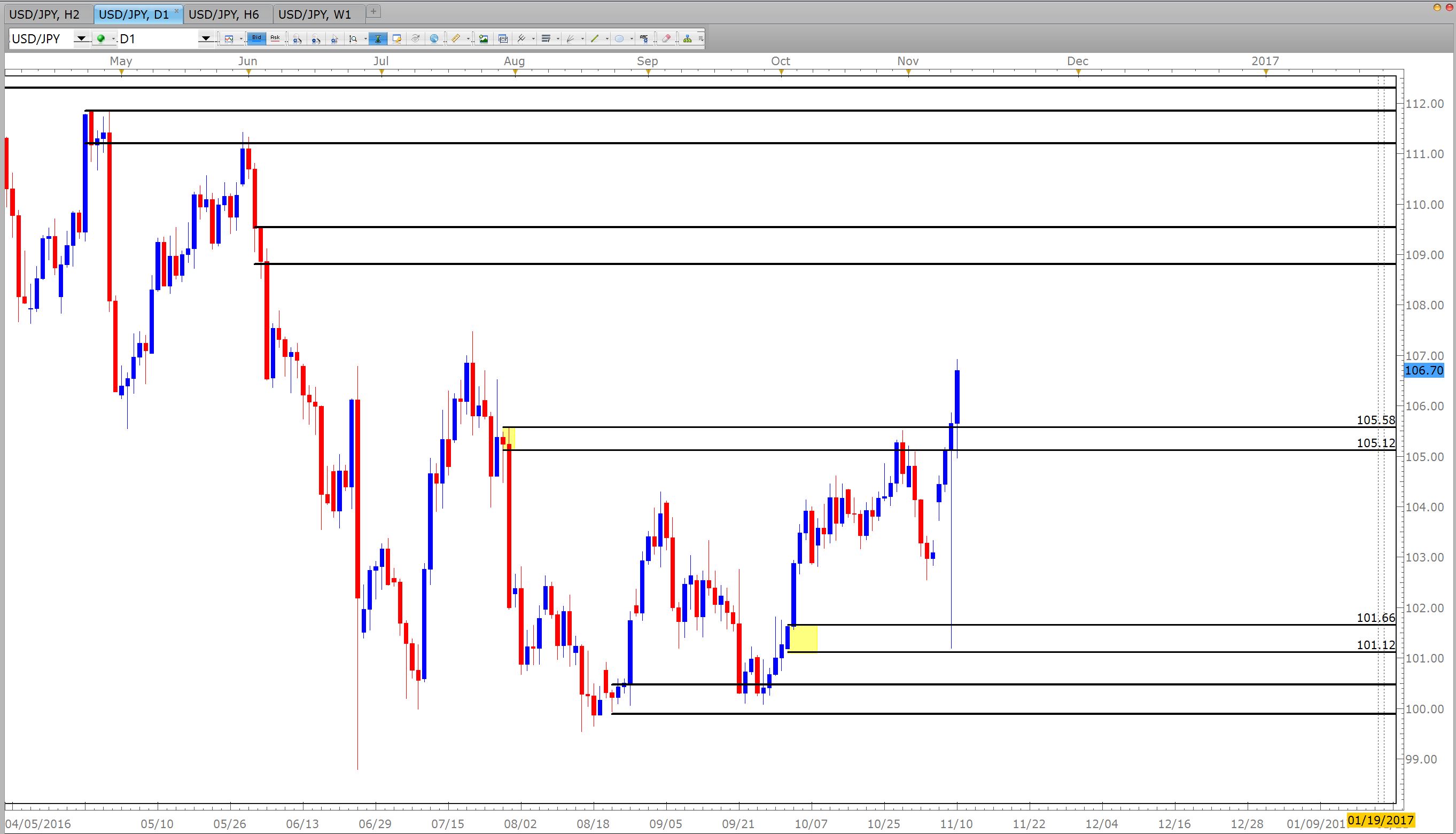
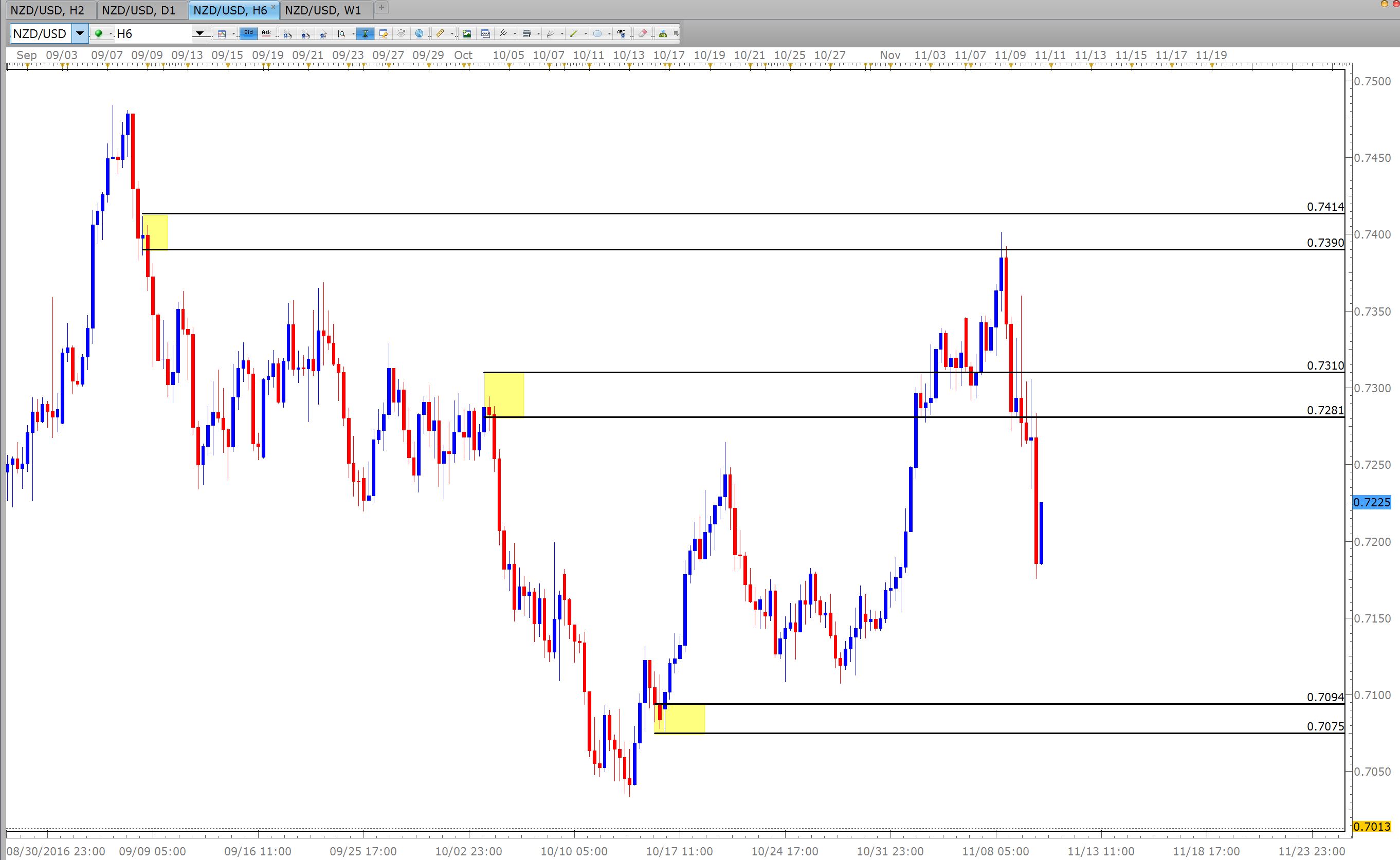
Looking at the results of these trades, we can see just how effective it can be to set up ahead of time, with the USDJPY spiking down hard on the election night and then reversing nicely for a great winner which is still playing out at the time of writing this article. Market volatility, how fast or powerfully price moves doesn’t matter, if it hits enough orders we can have ourselves a decent trade. On the other hand, our first trade on the NZDUSD stopped out for a small loss but hit the higher entry about a week later and dropped cleanly, more than making up for the first loss and turning into a nice profit which still has some nice potential left. As we can clearly see, no matter the news, the data of the economic climate, there is always a safe chance to make money if you follow the bank’s footprints in price and stick to your plan throughout. Many have asked me for my thoughts on the markets following the surprise US Election results and what approach I will be taking in the coming months and into 2017. Well, to be honest it’s just business as usual for my students at OTA and myself. We follow price because price always behaves the same no matter what. In our trade plans, the rules are always the same as the market flows from one day to the next. Take the same approach in your own trading and you’ll be pleasantly surprised with your results.
Be well and thanks for reading.
Author

Sam Evans
Bustamante & Co
Starting his career in the London Film, Music and Radio Industry, Sam was a novice in the ways of the Markets. Almost 17 years ago, he jumped to Trader, Fund Manager and Lead Instructor in the Financial Markets.