The habits that actually separate consistent traders from everyone else

There's a version of every trader who shows up at 3 a.m., wide awake, replaying a trade that closed six hours earlier.
Recalculating what should have happened. Knowing, somewhere underneath the recalculation, that the strategy wasn't the problem.
Markets test the nervous system more than they test the edge. Patience, ego, whether the thumb stays off the buy button when the candle is red, and the urge to do something gets loud.
Trading psychology is running underneath every decision, every session, whether anyone's paying attention to it or not.
Habits around attention, emotion, and risk shape an account as much as the charts do.
Given enough time, those habits either compound into something stable or quietly grind a trader down until they burn out. That gap is the whole subject here.
What consistent actually means
Traders expect consistency to look like a straight line up and to the right, and when it doesn't, they panic and start improvising mid-session.
Consistent traders stick to the process across changing conditions. They show up with a plan written before the market opened, not invented mid-trade. They log everything.
Results don't depend on adrenaline or a hot streak that makes three weeks feel like a genius move. They depend on behaviors that recur on boring days, too.
The research underneath this isn't soft.
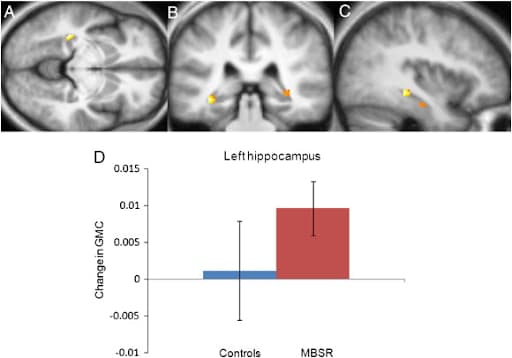
Mindfulness training has been shown to change brain structures tied to emotion regulation and attention, exactly what's needed when the screen is flashing, and a position is live.
One study found mindfulness practice was linked to increased gray matter in regions tied to learning, memory, sense of self, and emotional regulation.
Sleep matters just as much. Sleep-deprived people take bigger risks and make worse calls, which is the last thing anyone wants heading into a volatile session.
The traps that lead to burnout
Burnout builds through a few repeating patterns, and almost every trader falls into at least one before noticing.
Overtrading
Every click costs something, like slippage, fees, and the small mistakes that pile up when setups get forced instead of found.
Individual investors who traded more frequently underperformed by a wide margin compared to those who traded less. More activity isn't more edge. Usually, it's the opposite.
FOMO
Fear of missing out is a stress response, full stop.
The CFA Institute has pointed to FOMO as a pull away from disciplined decision-making and into momentum-chasing, buying because something has already moved rather than because a thesis exists.
That tends to end the same way: a late entry, a loss that feels personal because some part of the trader already knew better going in.
Emotional decision-making
Prospect theory points to something uncomfortable: losses get felt more intensely than equivalent gains, and that asymmetry warps choices in real time.
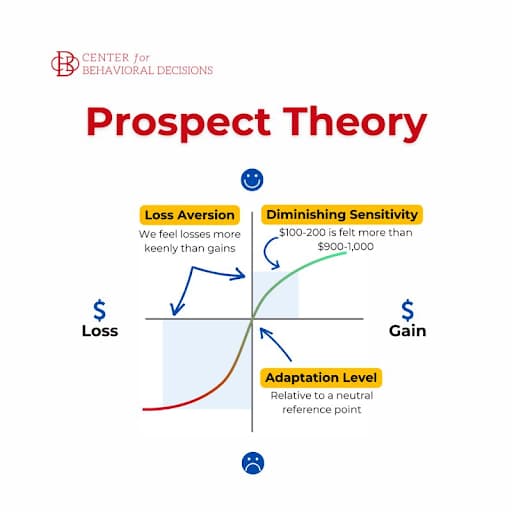
It's how a small drawdown becomes a big one. The stop moves. Size gets added to a loser to average down. At that point, risk isn't being managed anymore, the feeling of being wrong is.
Chase, force, lie awake. The cycle is more common than most traders admit. Getting out of it starts with habits that lower emotional volatility and raise clarity. Not motivation. Habits.
Essential habits of consistent traders
No single fix exists. It's a stack of smaller practices, most of them unimpressive on paper, which is the point. The boring habits are the ones that survive a bad week.
Discipline and routine
A routine keeps the day from running the trader instead of the other way around. Pre-market: review levels, catalysts, scenarios. Define what an A+ setup looks like, and just as importantly, define what conditions keep a trader flat.
A few things that hold up:
- Time-box decision windows. Trade in focused blocks, then step away to reset.
- Set a max number of trades and a daily loss limit before the session starts — not after the third loss.
- Write the playbook down. Drift is visible on paper and invisible in memory.
- Protect sleep like capital. Willpower is finite; spend it on the trade, not on staying up to watch it.
Brandy Hastings, SEO Strategist at SmartSites, works with performance-driven marketing campaigns where consistent execution often matters more than individual wins.
She notes, "The strongest performers usually aren't the people making dramatic decisions every day. They're the people following a repeatable process long enough to identify what's actually working.
Whether you're optimizing a marketing campaign or managing risk in the markets, documentation creates accountability. Once a process is written down, it's much easier to spot emotional decisions before they become expensive mistakes."
During the session: a checklist, scheduled breaks, and no screen-staring when no edge is present. After the close: review, tag, write down the lesson while it's still fresh, before it gets rationalized into something flattering.
Emotional regulation
Markets are emotional machines dressed up as spreadsheets. The goal isn't feeling nothing, that's neither realistic nor useful. The goal is noticing the feeling without handing it the keys.
A few short, repeatable techniques do more than expected:
- Two minutes of box breathing before entries, to settle the nervous system.
- An if-then rule for hot zones: two consecutive losses, then step away for fifteen minutes. No negotiating in the moment.
- A thirty-second pause after an alert fires, to check bias, context, and risk before clicking anything.
- A short daily mindfulness practice is linked directly to improvements in attention and emotional control.
Almost too simple. That's the point. Easy to do is easy to keep doing.
Risk management strategies
Consistent traders plan the downside before deciding whether they like the setup.
Position size comes from predetermined risk per trade. Stops sit where the thesis breaks, not where the pain becomes tolerable. Daily loss limits get respected even when the next trade feels like the one.
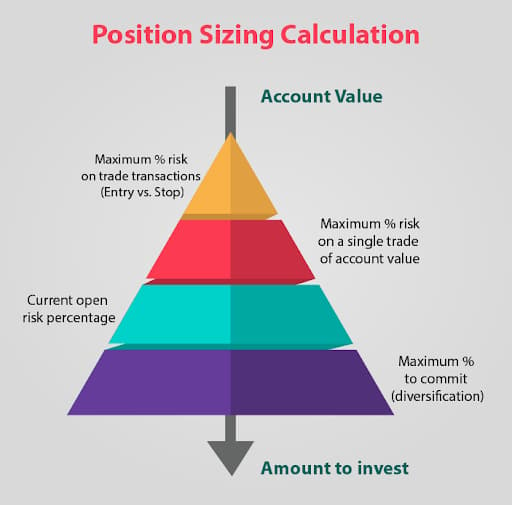
Knowing the exact loss tolerance before entry removes most of the emotional weight that wrecks judgment mid-trade.
That's the real function of risk management, not the money itself, but removing the decision from the moment a trader is least equipped to make it well.
Exact numbers, not estimates. Define the R and don't renegotiate it once inside the trade. Sizing approaches informed by something like the Kelly criterion help avoid overbetting during a hot streak, when overconfidence runs highest, and scrutiny runs lowest.
With stop-loss orders, the level and the reason are decided before the trade, not after it starts moving the wrong way, and bargaining begins.
Developing a mindset for success
Traders who last treat each session like a rep in the gym. Not just chasing P&L, training judgment under uncertainty, one decision at a time, most of which nobody else will ever see.
Journaling trades and emotions in the same place makes patterns visible faster than tracking them separately.
Visualizing high-stress moments before they happen, the news spike, the slipped fill, the missed entry that runs without anyone in it, means the response gets decided in advance instead of invented under pressure.
Samuel Charmetant, Founder of ArtMajeur, oversees a global marketplace where artists and collectors make decisions in environments shaped by uncertainty, changing demand, and incomplete information.
He shares, "One of the most valuable skills in any decision-driven environment is the ability to adapt without abandoning your process. People often mistake consistency for doing the same thing repeatedly, when in reality it's about applying the same principles while adjusting to new conditions.
The individuals who perform well over long periods are usually the ones who can learn, recalibrate, and move forward without becoming emotionally attached to yesterday's assumptions."
The playbook keeps updating as conditions shift, because they will. Andrew Lo's Adaptive Markets framing fits here: markets evolve, and traders who last evolve with them instead of clinging to a system built for a regime that's already gone.
Where this leaves things
Consistent traders don't lean on willpower in the moment, because willpower in the moment is exactly what fails first.
The day gets designed in advance, so the right choice is the only easy one left by the time the market gets loud.
One habit, picked this week. A real daily loss limit. A two-minute breathing reset before entries. Tagging emotional state next to every trade in the journal, wins included.
None of it feels like much on any given day. That's how compounding works, unnoticed until the account is still there, and so is the trader who built it.
Author