US Nonfarm Payrolls Preview: Bitcoin price set to breach $30,000 if jobs in April hit this figure
- Bitcoin price is expected to observe bearishness for as long as the jobs report comes in below the expected level.
- Nonfarm Payrolls in the United States are forecast to rise by nearly 179,000 in the month of April.
- If NFPs rebound to 250,000, BTC could slip below $28,000 on a stronger US Dollar, pushing Bitcoin to $26,000.

The Nonfarm Payrolls report for the month of April will have an effect not just on the stock markets in the United States but also on the crypto market, potentially beating down Bitcoin price. However, a strong job report, considering the current market conditions, would be quite surprising.
Read more - US April Nonfarm Payrolls Preview: Analyzing Gold price's reaction to NFP surprises
Bitcoin price hinges on NFP
Bitcoin price is currently trading just under the $29,000 mark and its rise beyond $30,000 and the rest of the weekend’s performance is directly dependent on the NFP report. Also known as the Nonfarm Payrolls report or jobs report, the data exhibits the number of jobs added over the last month.
Usually, a better-than-expected report suggests that the market is strong at the moment and that people’s spending power is increasing, as is their income. This is a trigger for the US Dollar, basically strengthening the economy.
This would eventually take away from Bitcoin price since the broader market cues would turn bearish on the Dollar’s strengthening.
On the other hand, if the contrary were to happen and the report was to come in under the expected figures, then the crypto market can expect a bounce. This is because the US Dollar will weaken, potentially turning the capital towards an inflation hedge asset like Bitcoin.
That said, the month of April is forecasted to have added about 180,000 jobs. A low figure was already expected, considering the various holidays in the month as well as credit tightening from recent banking failures in the US in Q1.
In line with the same FXStreet lead analyst Eren Sengezer stated,
“Markets are convinced that the US Federal Reserve (Fed) will leave its policy unchanged in June even though Chairman Jerome Powell refrained from comitting to a pause in the tightening cycle in the post-meeting press conference. In a case where the April job report confirms tight labor market conditions by showing a strong increase in Nonfarm Payrolls (NFP), close to 250,000, a rebound in the US Treasury bond yields and the US Dollar (USD) could be witnessed.
On the other hand, a disappointing NFP reading near 100,000 should feed into expectations of a rate cut later in the year and cause the USD to end the week on a weak note. It will not be easy to assess the impact of the jobs report on risk sentiment with investors staying focused on the performance of regional bank stocks.”
To add to this, investors have been calling on which direction Bitcoin price would take over the weekend.
Nonfarm Payrolls for April will be released on May 5, 2023, 12:30 UTC!
— YouHodler (@YouHodler) May 4, 2023
The Crypto Market might be volatile upon news release.
<179,000 =
>236,000 =
Which side are you on?#NFP #CryptoTrading #Bitcoin #Ethereum
The cryptocurrency will notice a huge bearish impact if the employment situation is shown to have improved beyond expectations in the last month. BTC could slip to $28,000 or lower and dip to $26,000, which coincides with the 50-day Exponential Moving Average (EMA) and a 100-day EMA, which jointly provide support for the cryptocurrency.
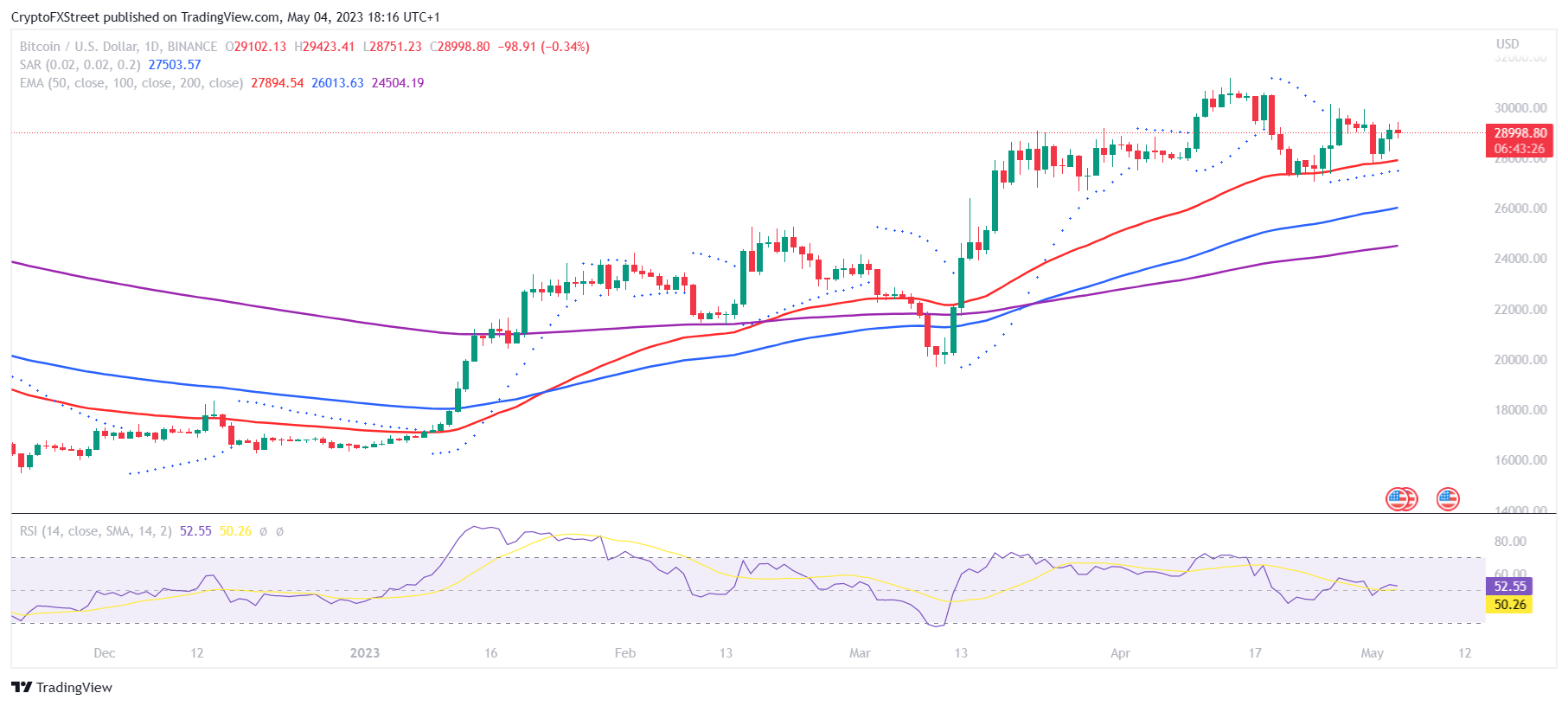
BTC/USD 1-day chart
Should the opposite of the same happen and the jobs report come in below forecasts, Bitcoin price can be expected to breach the $30,000 barrier. Acting as a crucial resistance and a psychological support level, this price point would set the cryptocurrency up for further increases.
Thus, the next 24 hours will be important for Bitcoin price in determining the path that the cryptocurrency takes over the weekend.
Author

Aaryamann Shrivastava
FXStreet
Aaryamann Shrivastava is a Cryptocurrency journalist and market analyst with over 1,000 articles under his name. Graduated with an Honours in Journalism, he has been part of the crypto industry for more than a year now.