Polygon investors' losses rise by $3 billion as MATIC price declines by 13% over the week
- MATIC price is testing a key support level to prevent a crash to 2023 lows of $0.585.
- More than 5.2 billion MATIC tokens have become loss-bearing in less than a week.
- The rate at which new addresses are formed has observed a 12% drop, suggesting the broader market hype was short-lived.

MATIC price enjoyed gains obtained from the broader market bullishness following XRP's partial win against SEC in the lawsuit last week. These gains did not take too long to be wiped out, and along with it came terrible losses pushing investors' profits back by over a month.
MATIC price dip brings losses
MATIC price trading at $0.737 is already below the support line at $0.742, but a close below the 50-day Exponential Moving Average (EMA) is the only matter of concern for investors. This is because this weakness could initiate a drawdown that would stop only when the altcoin hits 2023 lows of $0.585.
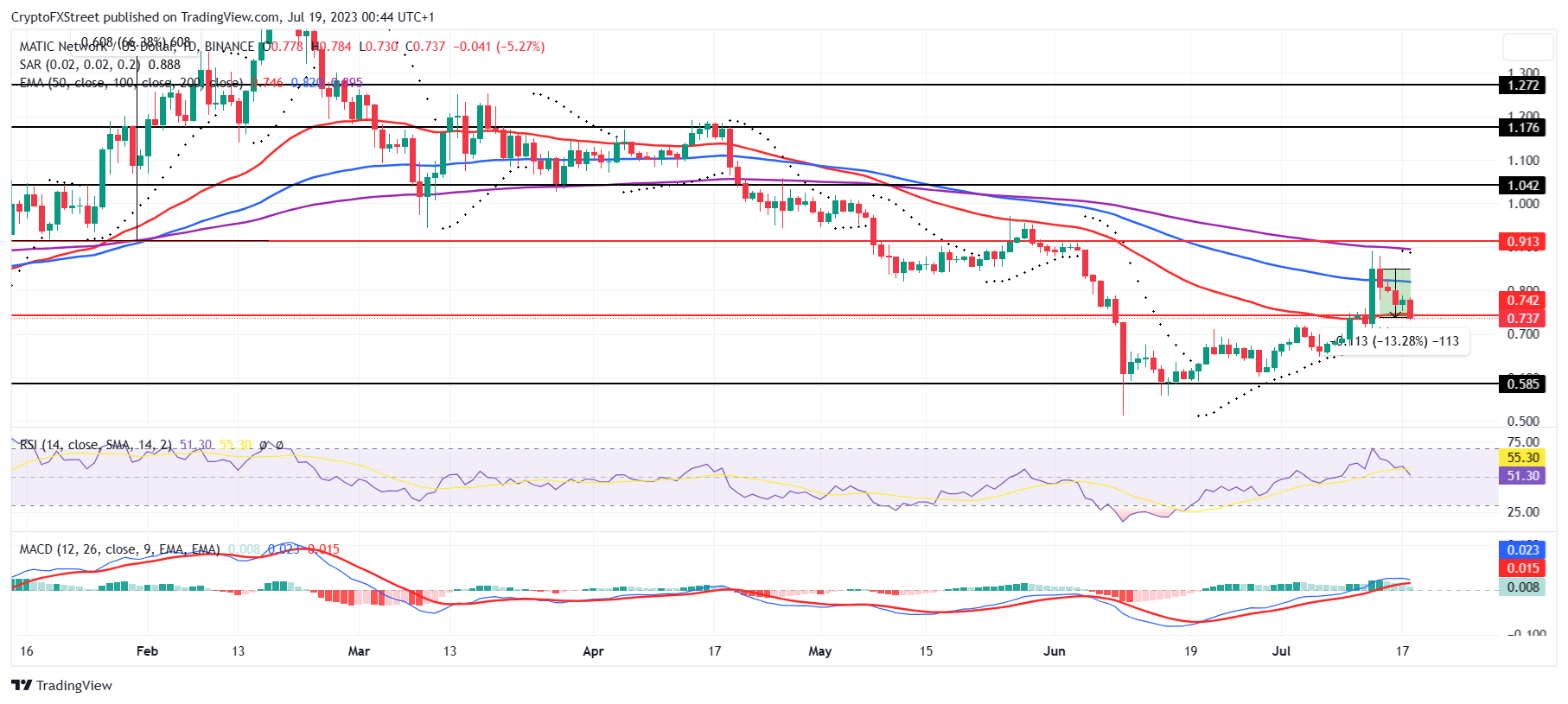
MATIC/USD 1-day chart
The Polygon token would not be able to find much support from the investors either since they, too, have been pulling back. Since the hype was short-lived, new addresses joining the Polygon network began exhibiting a decline. Consequently, the network growth is suffering, with the rate of new address formation dropping by 12% in less than a week.
 [05.09.14, 19 Jul, 2023]-638253221078530565.png)
MATIC network growth
The increase in losses is playing an equal role in driving away new investors, as is the fading broader market bullishness. In the last five days, MATIC price has declined from the mark of $0.850 to the current price of $0.737. In this duration, over 5.2 billion MATIC tokens bought by nearly 75k addresses have lost their profits.
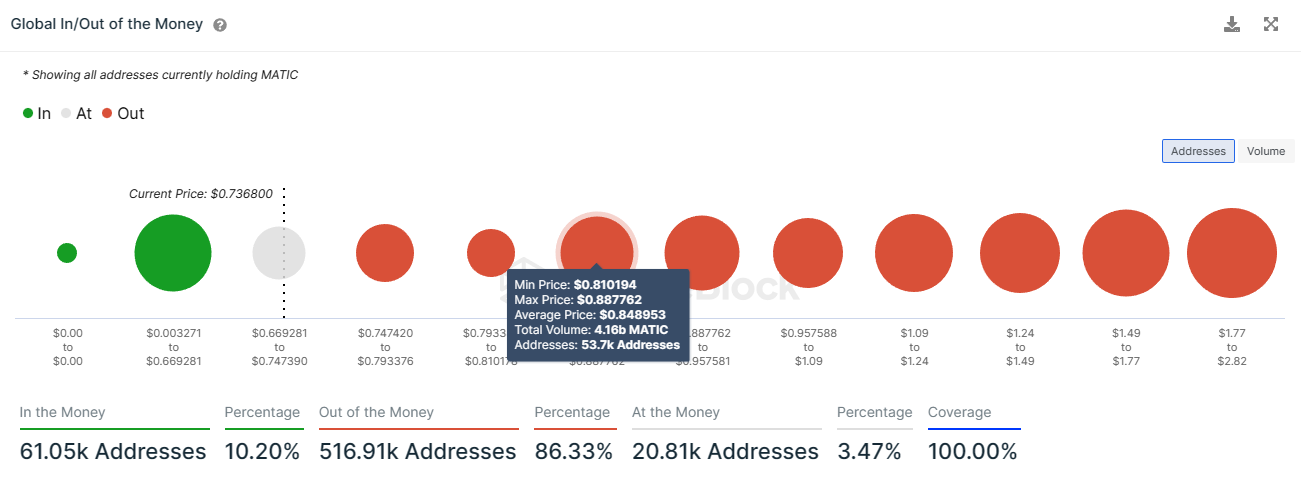
MATIC GIOM
These tokens, at their current price, are worth over $3 billion collectively and would only become profitable again if the altcoin hits $0.848 again. That is because this was the average purchase price of about 4.1 billion MATIC tokens, which represents a little under half of the entire circulating supply.
Thus, MATIC price correcting further could result in more losses unless the altcoin finds a way to bounce back and prevent more damage to the investors.
Like this article? Help us with some feedback by answering this survey:
Author

Aaryamann Shrivastava
FXStreet
Aaryamann Shrivastava is a Cryptocurrency journalist and market analyst with over 1,000 articles under his name. Graduated with an Honours in Journalism, he has been part of the crypto industry for more than a year now.