More dormant Bitcoin whales awaken in August – Can the market absorb them?
Tens of thousands of dormant Bitcoins from the Satoshi era awakened in July. Investors absorbed the supply without triggering a price decline. However, more dormant whales are resurfacing in August. The question is whether the market can absorb them as effectively as last month.
Analysts are sounding caution over this trend.
Bitcoin whales awaken after 5 years of dormancy
The awakening of dormant Bitcoin wallets often signals major shifts in the market. These whales—usually early investors (OGs) or institutions—have held BTC across multiple cycles. When they move coins, it may indicate profit-taking, wallet restructuring for security, or preparation for large transactions.
One notable finding comes from Maartunn, a community analyst at CryptoQuant. He detected a large BTC movement from the 3–5 year age band, meaning coins inactive since 2020–2022.
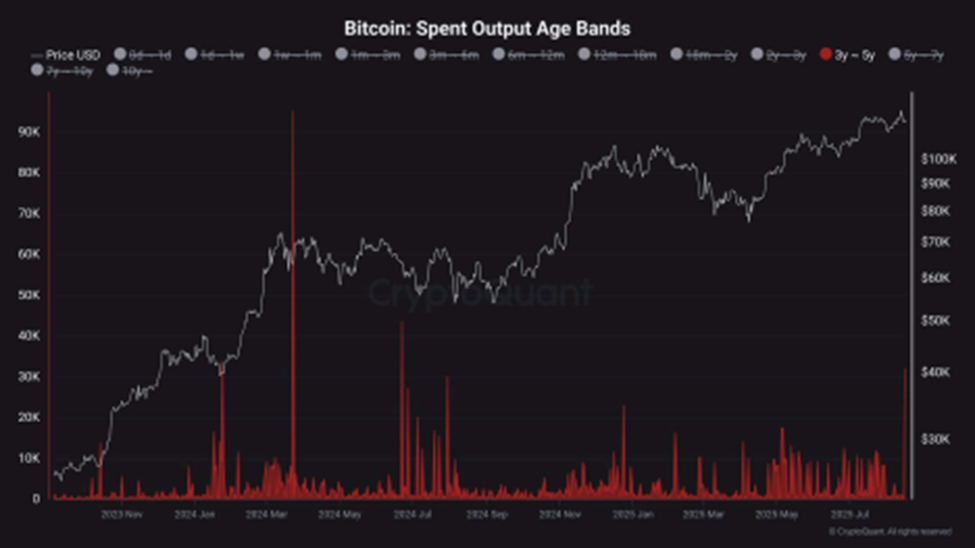
Specifically, 31,967 BTC, worth about $3.78 billion, were moved. This was the largest transfer from this age group in over a year.
History shows that similar movements in March 2024 triggered a more than 30% decline in Bitcoin’s price.
The latest transfer occurred on August 17, just as Bitcoin was trying to recover from a mild correction off its $124,000 high.
“Historically, similar moves have marked major turning points in price—sometimes a bottom, sometimes a top,” Maartunn commented.
Additionally, Lookonchain, a well-known on-chain tracker, also spotted activity from an OG whale using the wallet address “19D5J8.” This wallet holds 23,969 BTC, worth about $2.82 billion. After five years of dormancy, the whale transferred 3,000 BTC—roughly $353.16 million—to a new wallet.
Five years ago, Bitcoin traded below $10,000. These whales are now sitting on more than 10x profits.
Can the market absorb without a price crash?
Not all signals are negative. Another on-chain analyst, Darkfost, highlighted a more optimistic angle based on the Coin Days Destroyed (CDD) metric. CDD measures selling pressure, especially from long-term holders (LTHs).
The metric calculates how long a BTC has been held before moving. Older BTC being moved usually indicates selling.
According to Darkfost, the 30-day average of CDD spiked to this cycle’s peak—around 1.35 million—on July 23, signaling heavy selling of old BTC. Encouragingly, the metric has fallen sharply through August, suggesting selling pressure is easing.
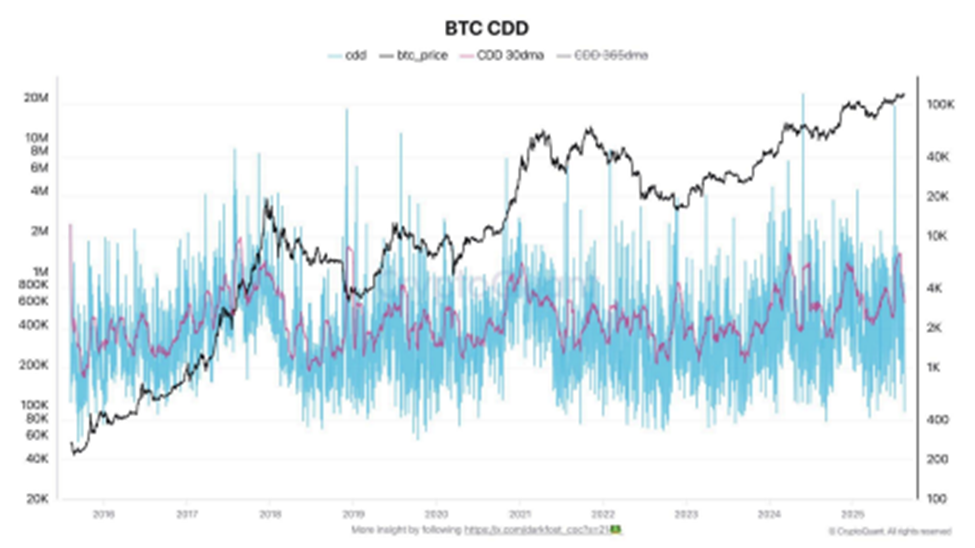
“A large amount of old BTC has been sold recently, yet Bitcoin has managed to hold its price quite well,” Darkfost observed.
From this perspective, August’s awakening of dormant BTC looks less worrying than July’s. However, Bitcoin’s absorption capacity appears weaker if judged by U.S. Bitcoin ETF netflows.
SoSoValue data shows July’s BTC ETF netflow exceeded $6 billion—the highest since last December. However, netflows had turned negative by mid-August, with outflows of more than $17 million.
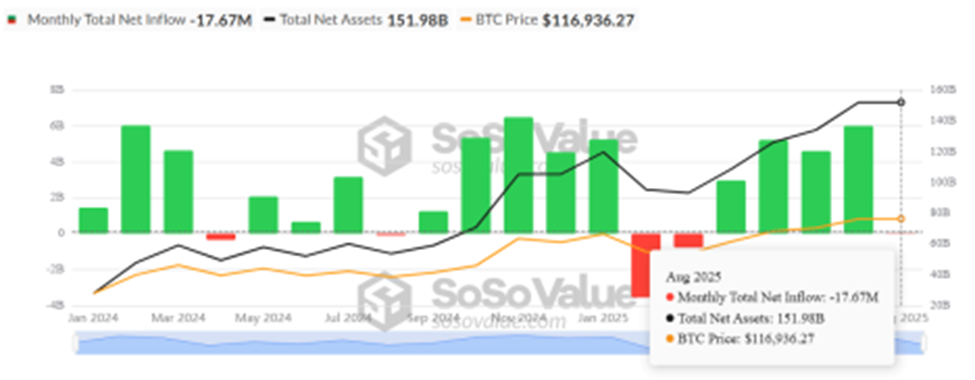
This indicates softening demand from ETFs. Bitcoin’s price outlook could become more complicated if more whales awaken in August.
The concern is already visible. Following the whale movements, Bitcoin fell below $116,000 on August 18, marking a 7% decline five days after hitting an all-time high.
Author

BeInCrypto
BeInCrypto
Since 2018, BeInCrypto has grown into a leading global crypto news platform. Through our award-winning journalism and close ties with industry leaders, we deliver trusted insights into Web3, AI, and digital assets.