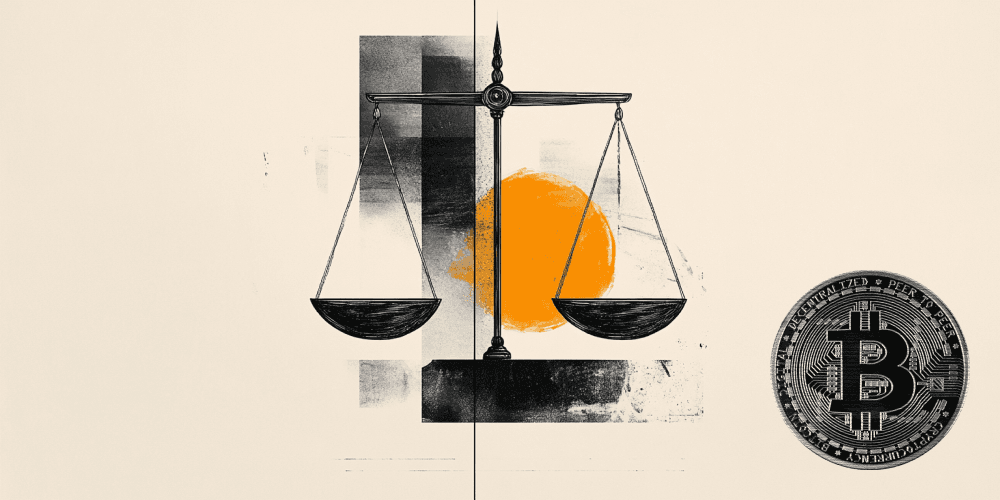
Clear regulations on crypto will increase trust and lead the whole financial industry to a solid path


Trust is the key
Until a few years ago, humanity's greatest challenge was ensuring everyone had equal access to the opportunities presented worldwide. The fourth industrial revolution has primarily met this challenge, as most of the world's population can potentially access global opportunities.
Given this fact, the most significant global challenge today is not that people and entities have access to international opportunities but that they follow the same rules to access them.
Such a perspective would create healthy conditions of competition and, consequently, balanced growth that would benefit both developing and developed economies. Rules and regulations benefit the global economy, countries, companies and products offered, including innovative products and services.
No product, no matter how innovative, can stand in the economy and markets over time if it does not follow the rules and regulations dictated by strong institutions that have already won the trust of people and markets. Trust is the key.
Is often said that Trust is slowly and hard earned while quickly lost. This is true, but it is only half true. Because, indeed, Trust is lost quickly and is built slow and difficult, only when there is no adherence to rules and regulations.
Crypto market looking for ways to be regulated
See, what is happening in cryptocurrencies. For a long time, most of those involved in this industry were against adding controls from a regulatory framework. But after the frauds that the industry experienced, confidence was immediately shaken. So crypto platforms with the target of regaining trust are now looking for ways to regulate the crypto market so as to create the conditions to prevent massive levels of fraud.
The fact is that fraudsters have stolen billions from thousands of people in crypto scams. Given that, in recent years, crypto platforms have become the favourite haunt of the cybercrime community, crypto platforms need regulation to survive.
Additionally, the characteristics of the decentralized blockchain platform on which cryptocurrencies are based provide the environment for money laundering and cybercriminal activities. Cryptocurrencies laundered through decentralized finance (DeFi) protocols amount to several hundreds of millions. This means that given the criminal activities in crypto and cyberspace, cryptocurrencies untimely, will benefit from regulation.
As has already been said, after all, in financial products and markets, are all about trust. Clear regulations in the crypto market will be a development with a significant effect on increasing trust in a way that will take the industry on a solid path.
Today, most of the regulatory authorities worldwide are staffed to work on crypto regulations and rules, while the crypto industry is pushing for clear regulations since it sees regulations as the development that could lead the industry to a new upgraded level.
How the regulatory framework applies to cryptos
The current global outlook for crypto regulations is dynamic and evolving. The UK and US are actively developing regulations to control cryptocurrencies.
Verifying the identity of individuals and ensuring that controls are in place to prevent money laundering and other fraud is essential to building trust. Trust that is a prerequisite for the proper functioning of financial products, services, and markets, including cryptocurrencies. The crypto industry is well aware that many of the regulations are necessary to revolve around AML and KYC customer identification processes and therefore the industry of crypto strongly supports these processes.
The new rules and regulations will lead to an increase in the infrastructure of the cryptocurrency industry globally, while all industry participants must learn to comply with AML and KYC procedures. When it comes to KYC, robust and dynamic identity verification controls are needed that can help ensure traceability for money laundering and other criminal activities. Identity verification checks should include sanctions checks for high-risk and politically exposed individuals. Since they are dynamic, the sanctions list needs to be constantly updated.
Behavioural analytics for people involved in the crypto market is a critical area that all auditors, compliance officers and institutions should focus on to demonstrate compliance with regulations. In this light, the use of artificial intelligence (AI)-based methodologies gives a comparative advantage in providing reports capable of keeping them one step ahead of fraudsters.
Cryptocurrency is here to stay It is now time to realise that cryptos are here to stay and thus to see how cryptocurrencies can be supported through institutions, regulations, and rules so that everyone can play in the cryptocurrency market with the same rules and regulations. The lack of control by central banks and authorities on cryptocurrencies, the anonymity surrounding cryptocurrency transactions and the volatility of the price do not help traditional banks and financial institutions, as all the above undermine trust in all financial companies and institutions, both the innovative and the traditional financial industry.
A robust regulatory framework in the cryptocurrency market will lead to a new environment for the expansion of innovative financial products. What will need to be realized by all is that the benefits will be multiple, not only for the new innovative products but also for the traditional financial companies and institutions. Since, with the regulation of these products, they will be able to include them in their activities, creating a new development perspective for the entire financial sector.
Author
Nikolaos Akkizidis
LegacyFX
Mr Nikolaos Akkizidis is an economist, with 20+ years of experience in multiple roles in the financial sector.