Bitcoin wobbles below $46K as 1 BTC passes 800K Turkish lira for the first time

Bitcoin (BTC) fell over 5% from local highs through Dec. 20 as macro tensions persisted into the new week.
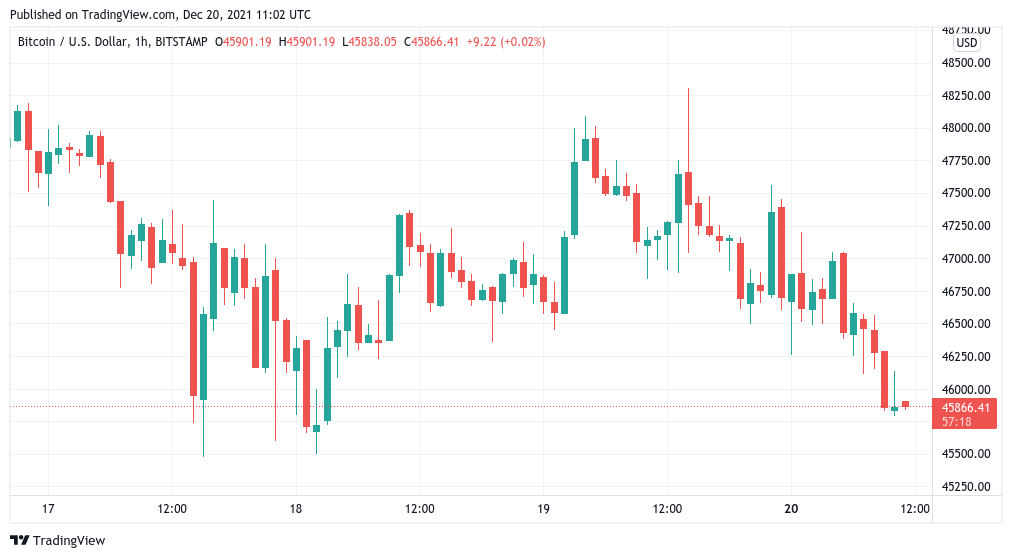
BTC/USD 1-hour candle chart (Bitstamp). Source: TradingView
Analyst: Brace for volatile end to 2021
Data from Cointelegraph Markets Pro and TradingView tracked BTC/USD as it fell back below $46,000 overnight on Sunday, reaching lows of $45,787 on Bitstamp.
The pair had hit $48,300 before a reversal took hold as Asian stocks opened the week on a limp note thanks to Coronavirus.
"The U.S. stock markets will be having a pretty bad day when it comes to today. Also, the European stock markets will be opening with red numbers," Cointelegraph contributor Michaël van de Poppe warned in his latest YouTube update.
"We are actually making ourselves ready for some heavy volatility in the last few weeks of this year."
Like others, Van de Poppe highlighted strength in the U.S. dollar providing extra friction for risk assets such as Bitcoin. With the U.S. dollar currency index (DXY) facing resistance, Bitcoin is battling to maintain support in a classic inversely correlated move.
"What you want to see in a reversal structure is something like we have been seeing in September as well," he continued, referencing the $40,000 breakout at the end of that month.
Max pain for Turkish lira holders
With little to inspire Bitcoin traders overall, only events in Turkey provided some form of a silver lining for those who opted to diversify into BTC.
Following a fresh commitment to lower interest rates from President Recep Tayyip Erdoğan, Turkey's national fiat currency, the lira (TRY), fell to new record lows of 17.8 against the dollar.
Taking its year-to-date losses to near 60%, the latest slide brought the focus back to Bitcoin and other cryptocurrencies as a potential hedge against extreme economic policy.
BTC/TRY passed 800,000 in a record-breaking move overnight, having doubled in just two-and-a-half months.
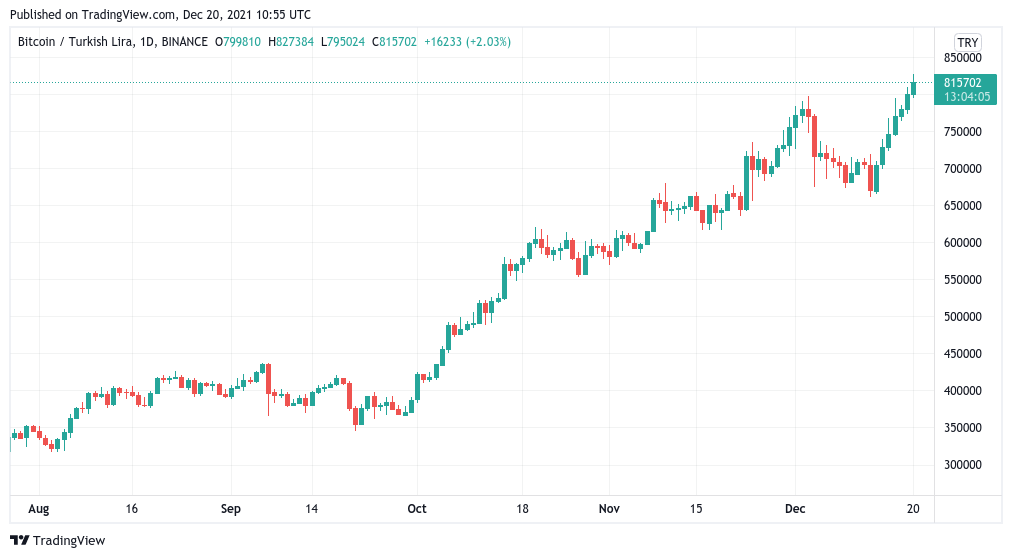
BTC/TRY 1-day candle chart (Binance). Source: TradingView
To add insult to injury, the lira fell below parity with the embattled Egyptian pound (EGP) for the first time in history.
Erdogan has had a fraught relationship with cryptocurrency and has taken steps to banish the industry from Turkish consumers.
Author

Cointelegraph Team
Cointelegraph
We are privileged enough to work with the best and brightest in Bitcoin.