Bitcoin Weekly Forecast: HODLing Bitcoin in a bull market is still a working strategy
- Bitcoin has printed a scary red candle on a weekly chart.
- Long-term traders are winners even during the sell-off.
- Oveleveraged traders are exposed to extreme risks.
- Bitcoin may extend the correction, but it is still bullish in the long run.

Bitcoin (BTC) scared the bulls with an 8% drawdown this week. The first digital asset attempted a recovery to $12,000 before an eye-watering sell-off to $10,000. At the time of writing, BTC/USD is changing hands at $10,450. The coin has rebounded from the psychological support, but the upside momentum is still limited. Bitcoin's market dominance dropped to 56.3% amid a strong rally of some smaller cap coins related to DeFi-industry.
In the long run, we are all dead... except for Bitcoin
While the short-term traders may feel devastated, the long-term investors see the sell-off as a hiccup and an excellent opportunity to add more coins to their portfolio before the price starts growing again. As Blockstream's CSO and a famous Crypto Twitter influencer Samson Mow recently noticed, Bitcoiners reached Nirvana as they benefit no matter where the price goes.
Bitcoiners that have reached #Bitcoin Enlightenment are happy when the price is up AND when the price is down because they can stack more.
Let's dive deeper into the idea of HODLing to understand how this magic works and why long-term Bitcoin investors tend to benefit no matter what.
Dissecting Bitcoin's bull runs
Bitcoin's bull trends are characterized by massive gains in the long term, punctured with steep correction.
Let's say some smart Joe bought his Bitcoin in November 2011. Sure enough, his heart missed a beat more than once since that time as Bitcoin has had quite a number of ups and downs. But if he was patient and held the Bitcoins until now, he earned over 300,000% over nine years. Hardly any other asset can boast similar results.
The chart below shows that strong rallies are often followed by sharp and violent downside corrections that may lead to panic and force investors to sell their assets at a less favorable price. Thus, in April 2013, BTC crashed from $200 to $45. The coin lost 75% of its value in just a matter of days. Another violent sell-off took place in December of the same year. By that time, the coin resumed the upside momentum and hit $1,200 before collapsing to $380.
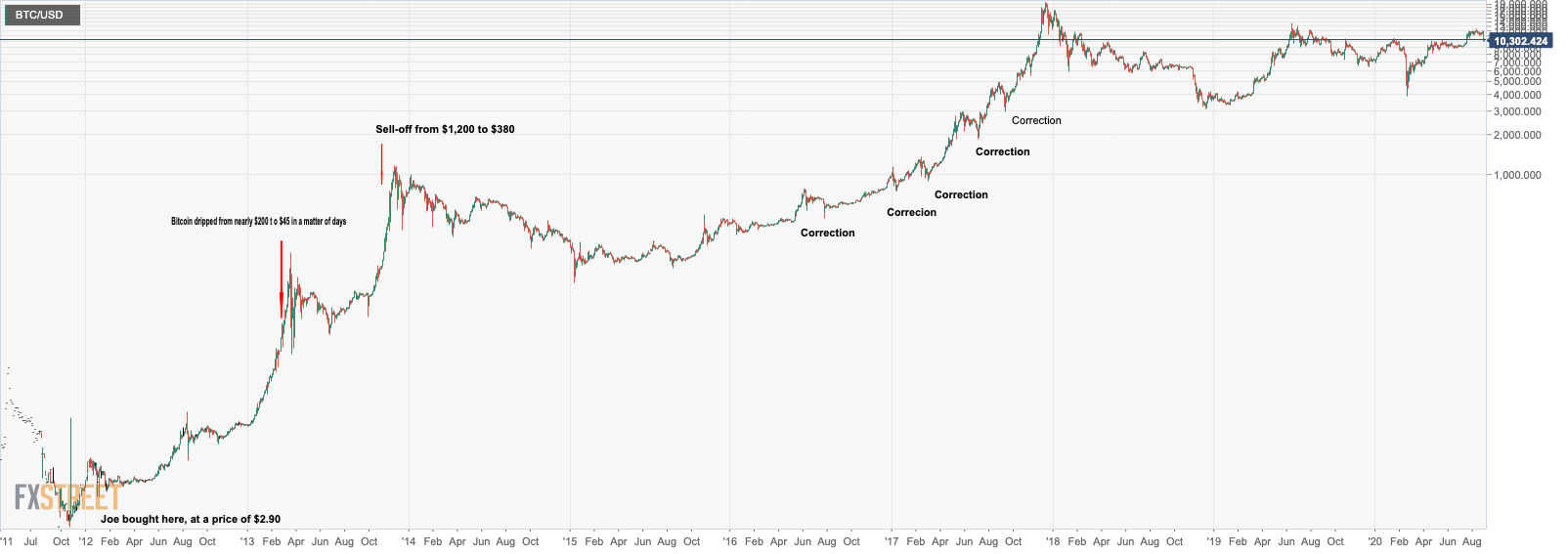
Even the famous rally of 2017 was punctured with numerous sharp drawdowns. Each time it was strong enough to trigger an avalanche of Bitcoin's death forecasts. According to 99bitcoins, Bitcoin has died 381 times; each time, it has risen like a phoenix from its ashes.
Dancing with the devil
According to Intotheblock data, over 65% of Bitcoin owners (20 million addresses) are holders. By definition, a holder hasn't moved their coins for over a year; however, the stats reveal that their weighted average time held is 4.6 years. They know how to be patient, and have a stomach strong enough to digest all those ups and downs, and win in the long run.
The rest of the tribe is in a less privileged position as they tend to treat Bitcoin as a speculative asset or as a means of making a quick buck. Traders focused on the short-term price movements are more vulnerable to losses due to Bitcoin's price volatility.
Moreover, overleveraged traders risk losing all their investments as they tend to get liquidated from their positions once the market becomes violent. Leveraged trading, also often referred to as margin trading, allows traders to amplify their trades' value. It means that their positions are much larger than the invested capital. This can increase the traders' rewards, but it can increase the risks. Even a tiny price movement against your position can kick you out of the market and destroy the deposit. That's why leveraged investments require a lot of concentration and experience.
On the regulated markets, trading service providers are forced to limit the leverage they can offer their clients; however, the cryptocurrency market is still unregulated in most jurisdictions. It means the companies will allow their customers to trade with enormous leverage and bear all the risks that come with it.
Where from here?
Let's face it. BTC/USD may drop much lower before it the upside momentum is resumed. From the long-term perspective, the price can safely retest the weekly SMA50 at $8,750 and even dip to $7,800 (the broken downside trend line from June 2019 high), before the upside momentum is resumed. David Gokhshtain, a member and contributing writer of Forbes, shares this view. In his recent tweet, he mentioned $8,100 as a potential bearish target.
The price retains bullish bias as long as it stays above the said support levels. However, we will need to see a sustainable move and a weekly close above $12,000 for the bull's rally to gain traction. The next resistance is created by $13,800, which is the highest level since June 2019.
BTC/USD weekly chart
-637348343928911240.png)
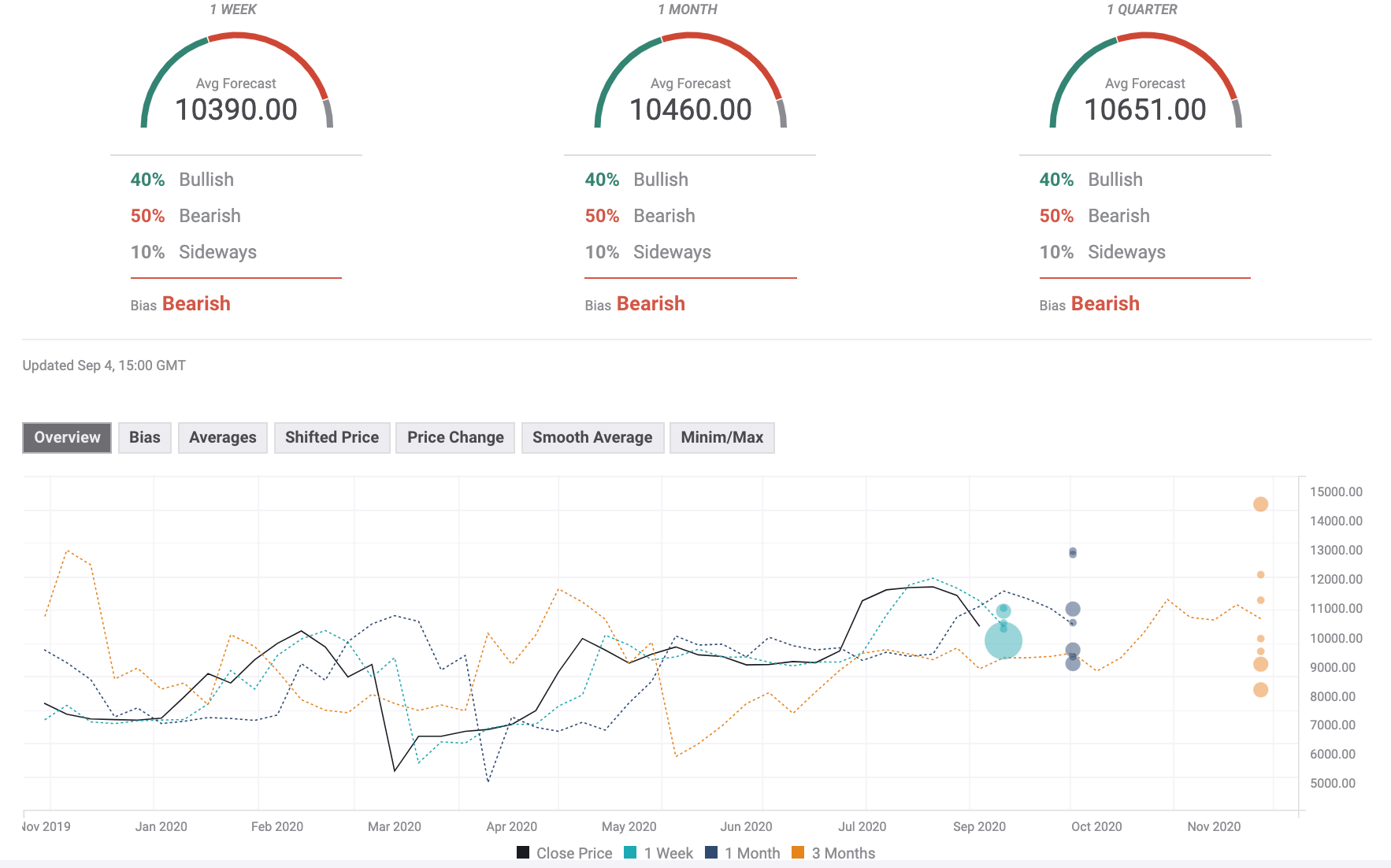
The Forecast Poll has barely changed since the previous week as expectations on all time frames remained bearish. Now the experts believe that the risks are tilted to the downside both in the short run and in the long period. Notably, price forecasts dropped below $11,000. It means that no one expects that Bitcoin rises significantly. According to the median price forecast, the first digital coin will stay range-bound around the current levels.
Author

Tanya Abrosimova
Independent Analyst