Binance Coin price signals breakout as BNB Chain announces plug-and-play AI integration
- BNB Chain advances its “AI-first” strategy, supporting plug-and-play AI integration Model Context Protocol.
- Model Context Protocol is an open protocol standardizing secure, two-way communication between AI applications.
- BNB price strengthens its bullish outlook, seeking a breakout above the 50-day EMA, coinciding with a descending trendline resistance.

Binance Coin (BNB) is making another recovery attempt at around $600 at the time of writing on Tuesday, as the broader cryptocurrency market consolidates gains following a significant bullish turnaround in April. Binance, the largest cryptocurrency exchange by traded volume, has announced a major step toward empowering builders to create the next wave of Artificial Intelligence (AI) innovation in web3 on BNB Chain.
BNB Chain launches plug-and-play AI integration with MCP
Binance Chain is tapping into the fast-growing intersection between AI and blockchain by adding plug-and-play integration utilizing the Model Context Protocol (MCP). The move is designed to unlock the larger ecosystem, including BSC and opBNB for AI agents.
The MCP is an open standard that streamlines secure, two-way communication between AI applications – acting as hosts or clients – and external systems like servers that supply data or tools.
“It replaces bespoke integrations with a unified approach, making it easier for AI to get the context and capabilities needed for relevant actions and responses,” BNB Chain said in a blog post.
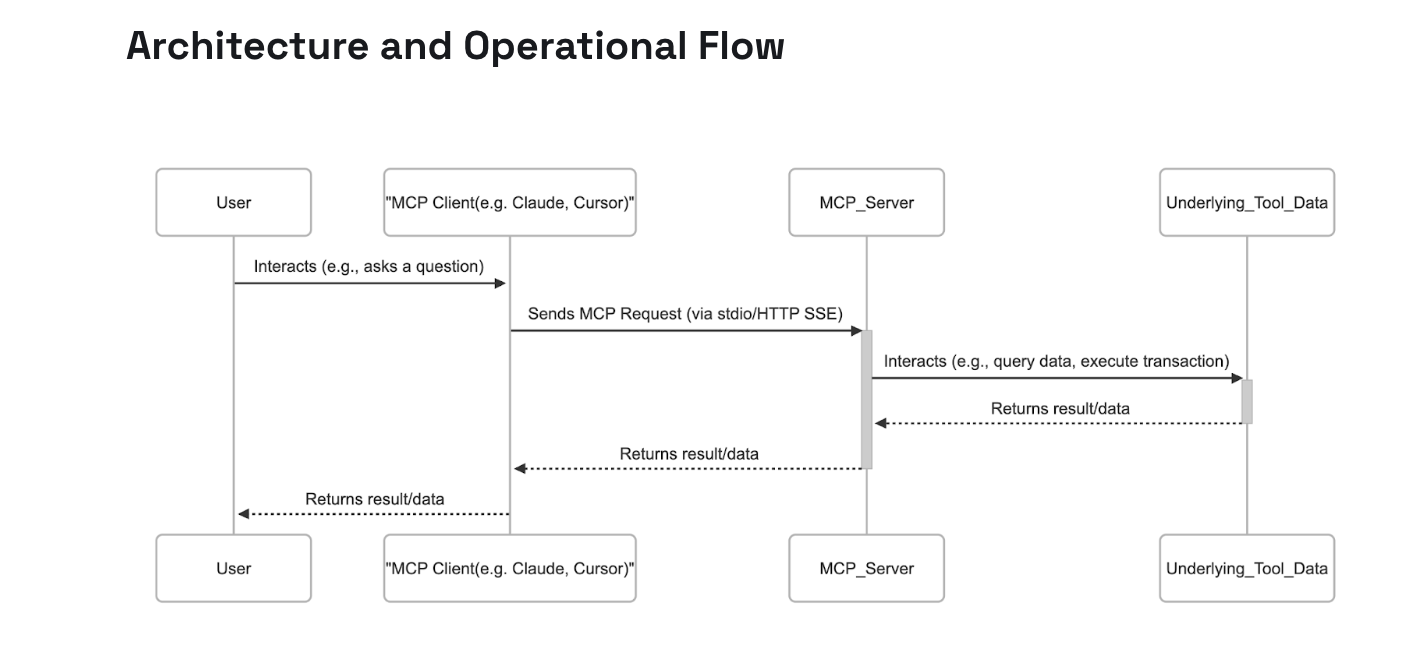
BNB chain AI integration with MCP | Source: BNB Chain
The BNB AI integration is critical for Machine Learning (ML) models analyzing complex and high-stakes data across the decentralized finance (DeFi), trading, and security sectors.
Moreover, MCP is adopted to solve real crypto challenges like enhancing blockchain security and enabling reproducible and auditable trading and DeFi strategies. At the same time, MCP exists beyond the BNB Chain, ensuring seamless infrastructure in the context of the broader Binance ecosystem’s AI strategy.
BNB price teeters at the edge of a breakout
BNB price holds below the 50-day Exponential Moving Average (EMA) at $600, coinciding with an extended descending trendline resistance from December. The Relative Strength Index (RSI) indicator’s rebound, from the previous day’s low at 42.97 to the midline, signifies growing momentum and confidence in the token’s recovery.
A break above the 50-day EMA and the trendline resistance would cement the bullish outlook, with a subsequent step past $612, a confluence level formed by the 200-day EMA and the 100-day EMA, encouraging traders to buy BNB, anticipating a stronger uptrend. Beyond the moving averages, BNB could test resistance at around $640, as marked in red on the daily chart below.
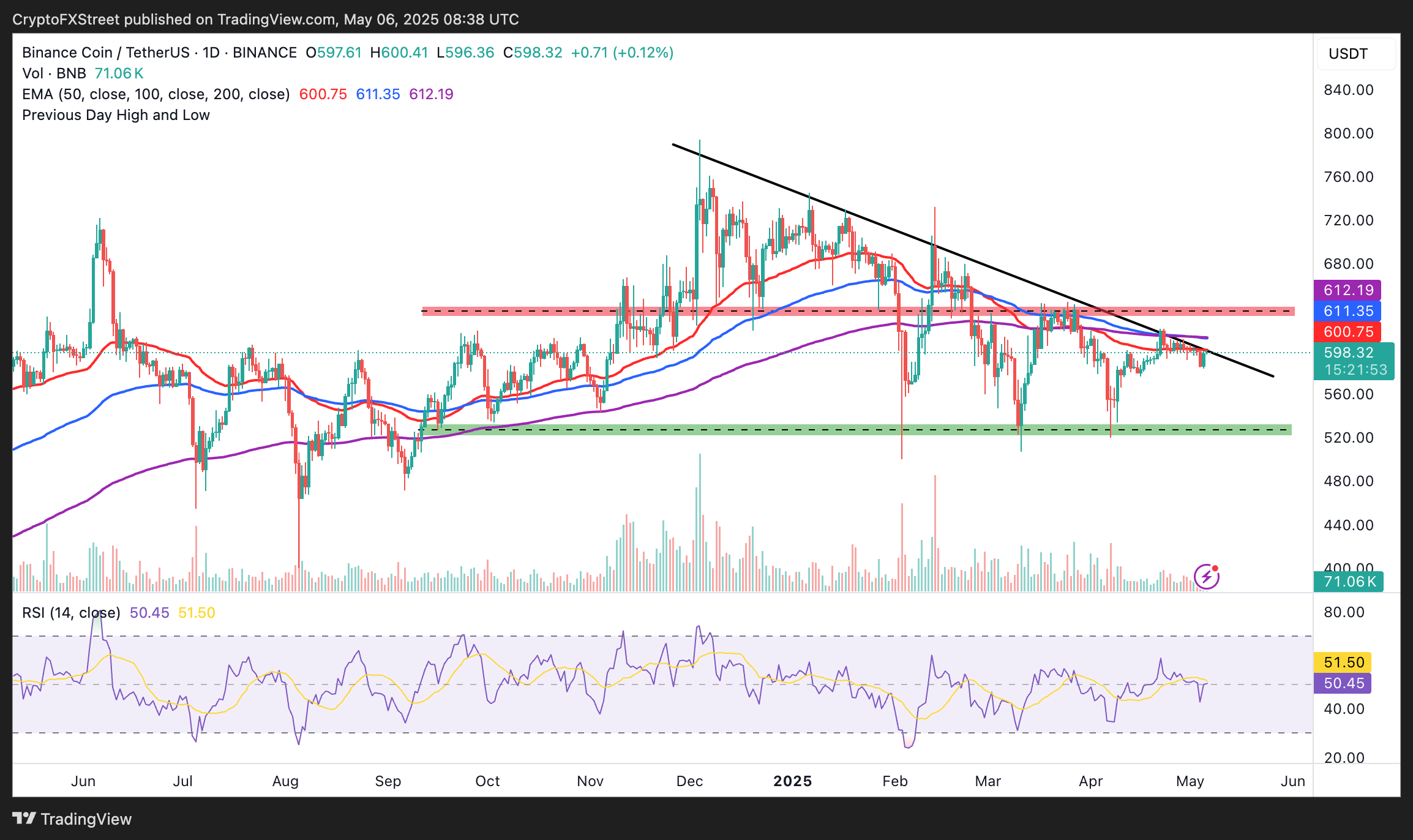
BNB/USDT daily chart
However, the token’s position below all three moving averages could complicate matters for the bulls, as downside risks will likely increase.
The descending trendline has remained unbroken for five months, which could hinder the anticipated breakout. On the downside, tentative support areas lie at this week’s low near $580 and April’s low at $520.
Cryptocurrency prices FAQs
Token launches influence demand and adoption among market participants. Listings on crypto exchanges deepen the liquidity for an asset and add new participants to an asset’s network. This is typically bullish for a digital asset.
A hack is an event in which an attacker captures a large volume of the asset from a DeFi bridge or hot wallet of an exchange or any other crypto platform via exploits, bugs or other methods. The exploiter then transfers these tokens out of the exchange platforms to ultimately sell or swap the assets for other cryptocurrencies or stablecoins. Such events often involve an en masse panic triggering a sell-off in the affected assets.
Macroeconomic events like the US Federal Reserve’s decision on interest rates influence crypto assets mainly through the direct impact they have on the US Dollar. An increase in interest rate typically negatively influences Bitcoin and altcoin prices, and vice versa. If the US Dollar index declines, risk assets and associated leverage for trading gets cheaper, in turn driving crypto prices higher.
Halvings are typically considered bullish events as they slash the block reward in half for miners, constricting the supply of the asset. At consistent demand if the supply reduces, the asset’s price climbs.
Author

John Isige
FXStreet
John Isige is a seasoned cryptocurrency journalist and markets analyst committed to delivering high-quality, actionable insights tailored to traders, investors, and crypto enthusiasts. He enjoys deep dives into emerging Web3 tren