|

WTI Slides After Hitting Resistance Near a Prior Medium-term Uptrend line

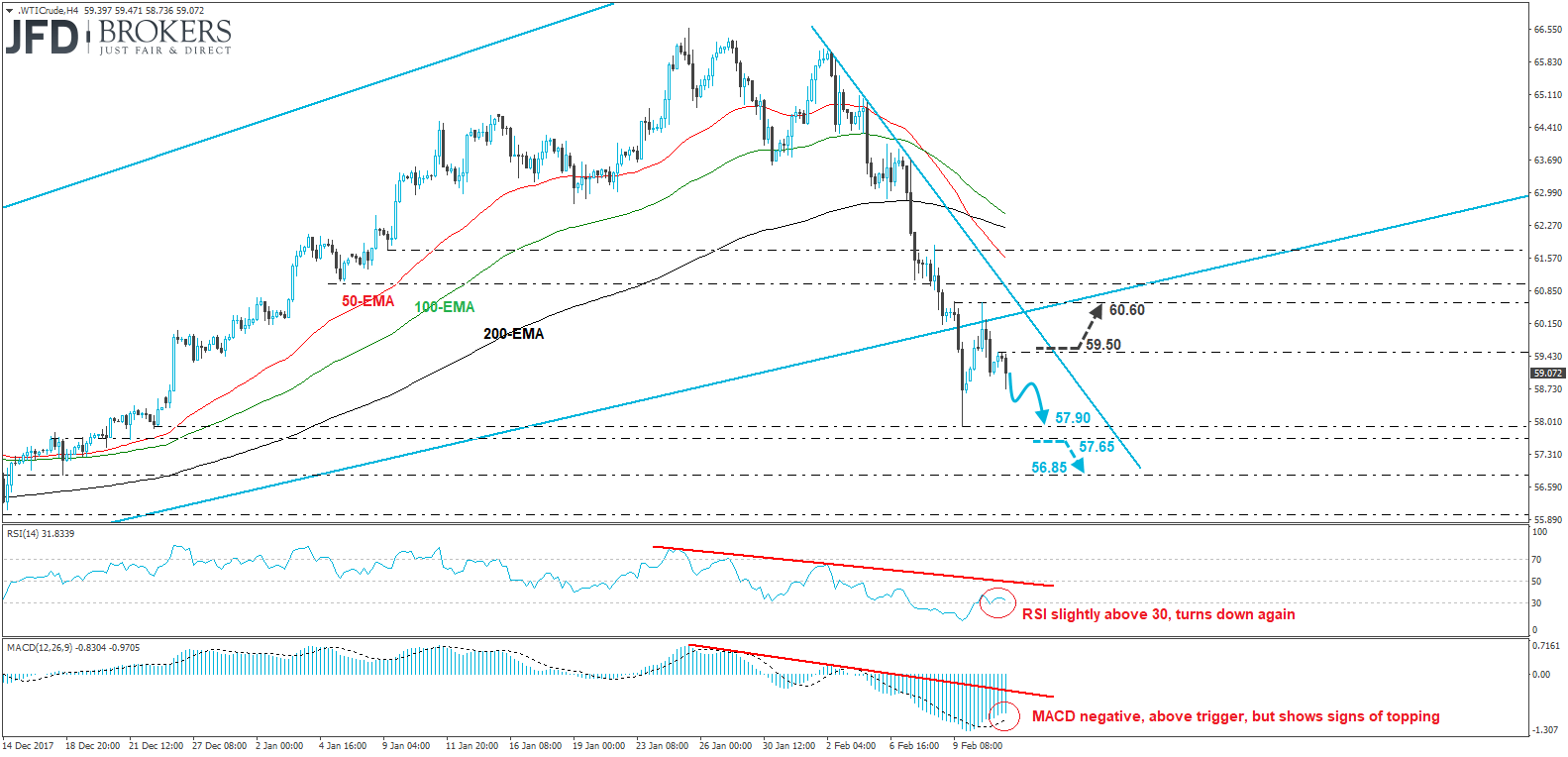
WTI traded lower yesterday, after it hit resistance at 60.60, slightly above the prior medium-term uptrend line taken from the low of the 31st of August. That line was broken to the downside on the 9th of February, a break that led to a tumble towards 57.90. Having that in mind, and also considering that the price structure on the 4-hour chart continues with lower peaks and lower troughs below the short-term downtrend line taken from the peak of the 2nd of February, we believe that the near-term picture is negative for now.

If sellers stay in the driver’s seat, then we may see them aiming for another test near Friday’s low of 57.90. That said, we would like to see a dip below 57.65 before we get confident on more downside extensions. Such a break is possible to set the stage for our next support level of 56.85.

Taking a look at our short-term momentum studies, we see that the RSI, although it recently exited its below-30 territory, it turned down again and appears ready to move back within that zone. The MACD stands below zero, above its trigger line, but shows signs of topping as well. These indicators enhance our view for WTI to continue trading lower, at least towards Friday’s lows of 57.90.

On the upside, a decisive move above 59.50 may signal the break above the short-term downtrend line drawn from the peak of the 2nd of February and may open the way for our next resistance obstacle of 60.60, which stands slightly below the prior medium-term uptrend line taken from the low of the 31st of August.

Are you interested in institutional-grade Research? Sign up for our Weekly Strategic Report HERE – it’s free!
JFD

Article written by Charalambos Pissouros, Senior Market Analyst for JFD Brokers

You want more? Subscribe to our JFD YouTube Channel HERE. To contact Charalambos send an email to [email protected]

Author

More from JFD Team
Share:

Editor's Picks

EUR/USD flirts with daily highs, retargets 1.1900

EUR/USD regains upside traction, returning to the 1.1880 zone and refocusing its attention to the key 1.1900 barrier. The pair’s slight gains comes against the backdrop of a humble decline in the US Dollar as investors continue to assess the latest US CPI readings and the potential Fed’s rate path.

GBP/USD remains well bid around 1.3650

GBP/USD maintains its upside momentum in place, hovering around daily highs near 1.3650 and setting aside part of the recent three-day drop. Cable’s improved sentiment comes on the back of the Greenback’s  irresolute price action, while recent hawkish comments from the BoE’s Pill also collaborate with the uptick.

Gold holds above $5,000 as bears seem hesitant amid Fed rate cut bets

Gold edges lower at the start of a new week, though it defends the $5,000 psychological mark through the Asian session. The underlying bullish sentiment is seen acting as a headwind for the bullion. However, bets for more rate cuts by the Fed, bolstered by Friday's softer US CPI, keep the US Dollar bulls on the defensive and continue to support the non-yielding yellow metal as the focus now shifts to FOMC Minutes on Wednesday.

Week ahead: Data blitz, Fed Minutes and RBNZ decision in the spotlight

The US jobs report for January, which was delayed slightly, didn’t do the dovish Fed bets any favours, as expectations of a soft print did not materialize, confounding the raft of weak job indicators seen in the prior week.

Global inflation watch: Signs of cooling services inflation

Realized inflation landed close to expectations in January, as negative base effects weighed on the annual rates. Remaining sticky inflation is largely explained by services, while tariff-driven goods inflation remains limited even in the US.

Ripple Price Forecast: XRP potential bottom could be in sight

Ripple edges up above the intraday low of $1.35 at the time of writing on Friday amid mixed price actions across the crypto market. The remittance token failed to hold support at $1.40 the previous day, reflecting risk-off sentiment amid a decline in retail and institutional sentiment.













