Will EUR/USD slide further before the Fed speaks?


The euro-dollar is walking on eggshells as we head into a pivotal week for global markets. What started with optimism over a new US–EU trade agreement quickly turned into a reality check for the euro. Traders gave the single currency a moment in the sun - and then rushed back into the dollar. With the Fed expected to leave rates untouched on Wednesday, it’s not the decision itself that matters - it’s everything around it. From central bank tone to key data, EURUSD is heading into a pressure cooker. Will it crack lower, or stage a comeback?
A deal signed, but sentiment sours
The long-awaited US–EU trade deal finally reached a conclusion. President Trump and European Commission President Ursula von der Leyen agreed to scale back tariffs - the US will impose a 15% duty on EU goods instead of the previously threatened 30%. In return, the EU is pouring hundreds of billions into the US economy through energy and defence purchases.
The euro reacted like you’d expect - with a brief surge, climbing to 1.1770. But by the time New York opened, it had reversed sharply, tumbling over 120 pips. The story? Classic “buy the rumour, sell the fact”. The deal might have calmed trade tensions, but the flow of capital and benefits appears heavily skewed in America’s favour. That, paired with strong US data, helped the dollar steal the show.
The Fed might stay put, but markets won’t
All eyes now turn to Wednesday’s Federal Reserve decision. Markets are all but certain the Fed will hold rates steady at 5.25%–5.50%. The twist? Everyone knows that. What they don’t know - and what matters more - is how Powell frames the decision.
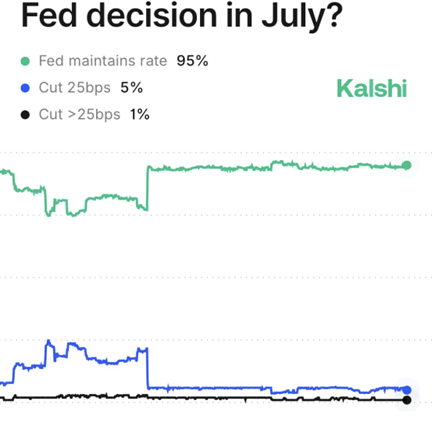
Source: Kalshi, X
The Fed Chair is juggling hot inflation, softening data, and political pressure. If he holds the line with a firm tone - stressing caution over inflation - the dollar could tighten its grip, pushing EURUSD down to test the 1.14 handle or lower. A more dovish message, perhaps hinting at rate cuts in the coming months, could give the euro a much-needed reprieve and send the pair back toward 1.17.
It’s not the decision, but the direction Powell hints at that could set the tone for the rest of the quarter.
Eurozone has little room to boast
While traders parse Powell’s every word, the euro’s own backdrop isn’t exactly inspiring confidence. Inflation data due Friday is expected to dip again - this time to 1.9%, under the ECB’s 2% target.
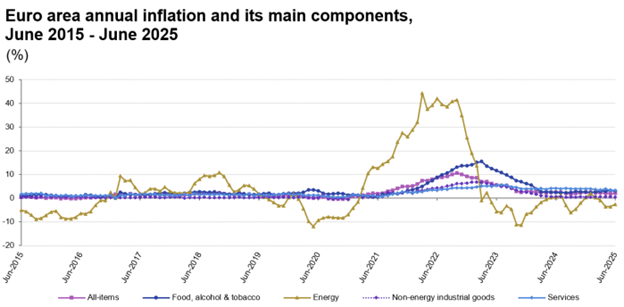
Source: Eurostat
That’s the second miss this year, and it comes at a time when the ECB is clearly divided, caught between an economy slowing on multiple fronts and no longer urgent inflation.
Germany, Italy, and Spain are all showing signs of stagnation, and even if the ECB holds off on further cuts for now, the momentum simply isn’t there for euro bulls. Unless the data dramatically beats expectations, EURUSD will likely remain on the defensive.
The wildcard is still the jobs report
That brings us to Friday’s US Nonfarm Payrolls (NFP). Forecasts suggest a slowdown - 108,000 new jobs expected, down from 147,000 in June. If the data comes in soft, it could reignite talk of a September rate cut and weigh on the dollar.
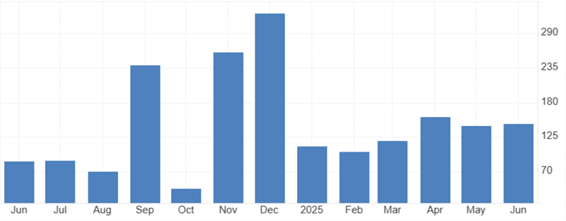
Source: U.S Bureau of Labor Statistics
But a surprise beat, or stickier-than-expected wage growth, could bring the hawks right back. And let’s not forget: the Fed’s favourite inflation measure, the Core PCE Price Index, is also due this week, alongside ISM manufacturing data. That’s a lot of noise packed into just a few trading days.
Where next for EUR/USD? What traders should watch
EURUSD remains under pressure. The pair had been climbing inside a rising wedge pattern - typically a bearish reversal setup - and with resistance near 1.1790 now firmly rejected, the bias looks tilted to the downside.
If Powell surprises markets with dovish commentary and Friday’s US data disappoints, analysts say EURUSD could reclaim lost ground and push back up. However, any rally will likely face stiff resistance from here.
At the time of writing, the pair is plunging towards 1.15000 with sellers dominant on the daily chart. The bearish narrative is also supported by the volume bars showing sell pressure over the past few days. Should the bears keep advancing, we could see prices plunge further to find support levels around the 1.1453 and 1.1298 price levels.
Conversely, if we see a price reversal, prices could surge to find support at the 1.1790 resistance level.
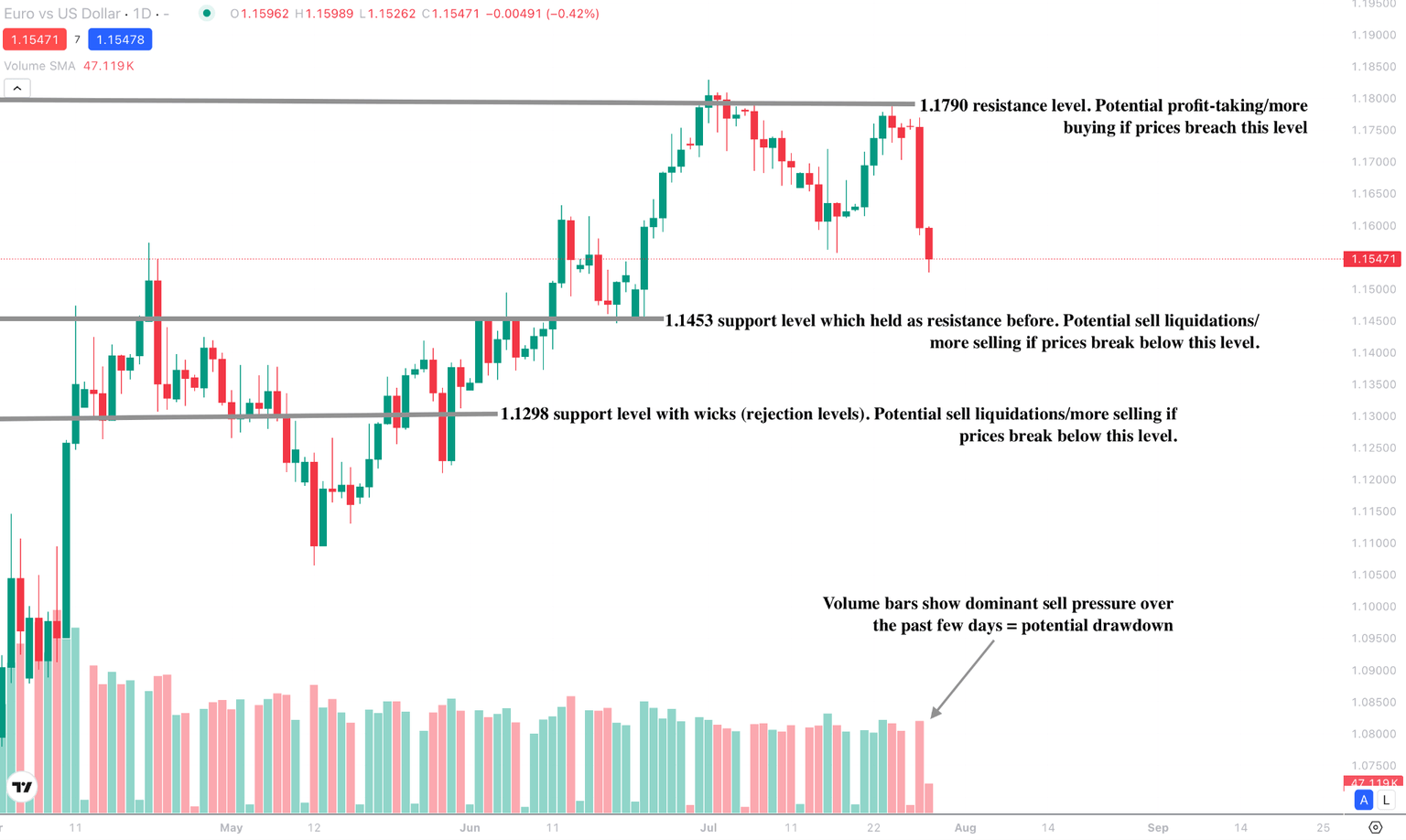
Source: Deriv X
Author
Prakash Bhudia
Deriv
Prakash Bhudia, HOD – Product & Growth at Deriv, provides strategic leadership across crucial trading functions, including operations, risk management, and main marketing channels.