Why Palladium Is on a Tear

Physical palladium and rhodium markets are buzzing. Reported prices for both metals leapt higher in recent days.
The story behind palladium’s move is that a physical shortage has developed in London. Traders sold metal they didn’t physically possess. Now they are being asked to deliver the bars and they are scrambling to secure the metal needed, bidding prices higher.
It looks like bullion bankers selling paper metal are finally getting called for selling way more than they can actually deliver!
People have complained about this practice in precious metals markets for decades.
More and more contracts have been sold, but inventories of actual physical metal have not kept pace. Price discovery is broken when the paper price of metal is detached from physical supply-and-demand fundamentals.
Today, there are hundreds of paper ounces floating around for every ounce of physical metal eligible for actual delivery.
As soon as a few contract holders lose confidence in their ability to redeem the paper for actual metal, the jig is up. The rush for physical bars will drain exchange vaults quickly and anyone still holding paper when the music stops will be out of luck.
That may be happening now in the market for palladium.
Sellers with an obligation to deliver physical metal can lease bars, rather than purchase them. But that is now a very expensive proposition. Lease rates spiked to near 30% last week in London.
Lessees must promise to return the quantity leased plus 30% in additional palladium ounces.
New Cautions on Rhodium
Rhodium prices have surged along with palladium. Price discovery in rhodium works differently than for other precious metals, so investors need to be especially careful.
The “spot” price for rhodium surged to $9,985 last week. However, that price does not come from a market where regular trading produces live, real-time prices.
Rather, the rhodium ask price is simply declared by major refiners. Johnson Matthey is one of the firms which publishes a price.
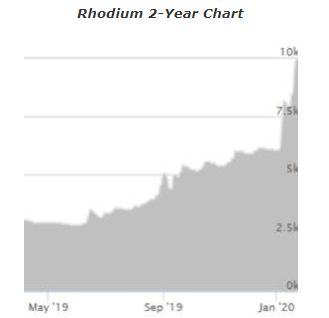
The price is generally updated twice per day during the trading week.
Lately the published ask prices jumped dramatically higher. Bid prices, on the other hand, have not kept up.
The bid/ask spread in the thinly traded rhodium market has always been wider than in other precious metals, but it’s wider now than ever. Current bids are roughly $2,000 below the published ask price.
If there really are industrial users paying the refiners’ $10,000 ask price for physical rhodium, it is quite an opportunity for arbitrage. Traders could theoretically purchase bars at the bid price and sell them at a very healthy profit to anyone paying the ask price.
That isn’t happening, at least as far as we can determine. Someone may have published a $10,000 ask price, but we can’t locate anyone actually paying that sum for rhodium bars.
Despite what the surging “spot” price for rhodium may imply, the bid for physical rhodium remains weak.
Money Metals has taken dozens of calls per day from sellers trying to cash in on spot prices near $10,000/oz. Many are disappointed to find actual prices are far lower which is a result of wholesalers dropping their bids. We believe one major rhodium buyer will cease further buying soon.
The rhodium market is tiny and illiquid. Price discrepancies like the one we are seeing are common. Our advice to clients would be not to put much credence in the “spot” price they see published until the spread is much tighter than it currently is.
The true price of rhodium, like all assets, is based on what real buyers are actually paying. That is currently closer to $8,000/oz, not $10,000/oz.
To receive free commentary and analysis on the gold and silver markets, click here to be added to the Money Metals news service.
Author

Clint Siegner
Money Metals Exchange
Clint Siegner is a Director at Money Metals Exchange, the national precious metals company named 2015 "Dealer of the Year" in the United States by an independent global ratings group.
















