|

What’s driving the GBP today?

All about the December 12 election

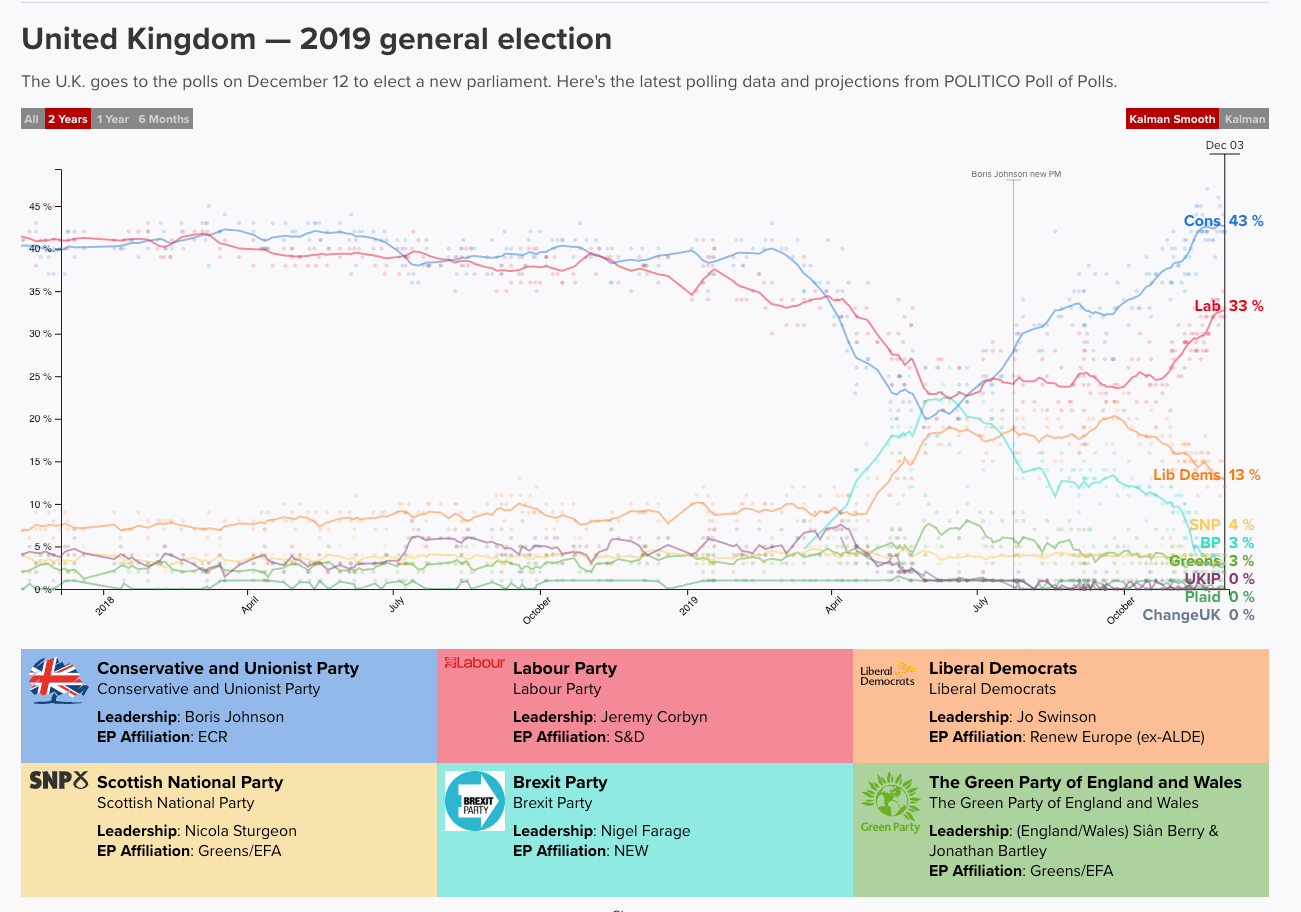
The GBP is being moved around on the upcoming UK general election due to take place on December 12. The GBP is being bought on the anticipation of a Conservative victory. The reason this is good news for the GBP is that a Conservative majority means that Prime Minister’s Boris Johnson Brexit Withdrawal Agreement Bill (WAB) Is much more likely to be voted through. A Conservative majority will in fact, pretty much guarantee it passes through the House of Parliament and is enacted into British Law. Take a look at the chart below for a snapshot of the latest polls.
Chart

The potential for a buy the rumour sell the fact trade

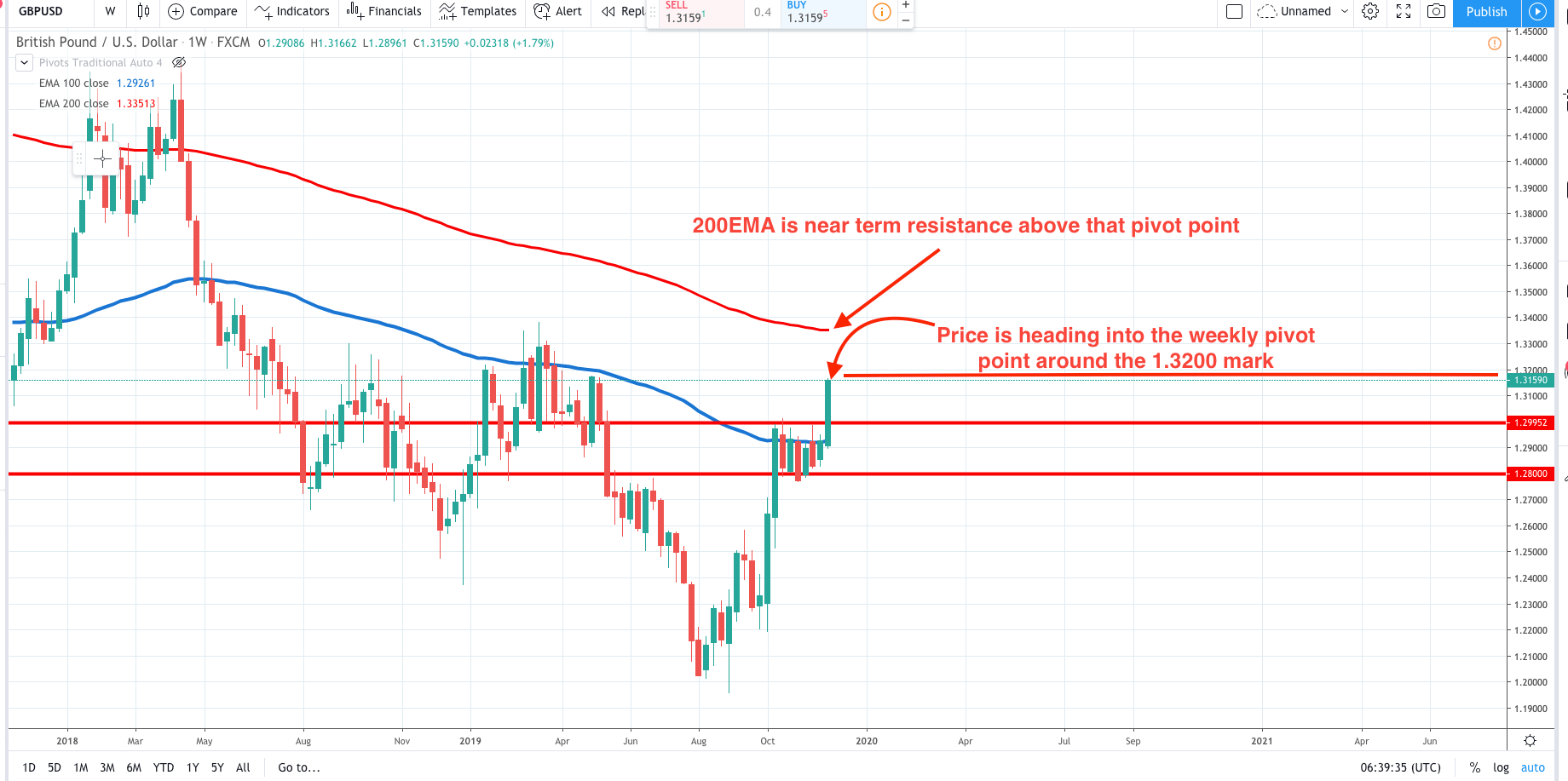
A Conservative victory is being priced into the GBP and there is a potential for a ‘buy the rumour’ sell the fact type of trade setting up on the GBP. GBPUSD is up above 1.31000 and making its way up to key weekly resistance at the 200EMA around 1.3350. If the conservatives do win a majority it is quite possible that the GBPUSD pair spikes up and then sells off in the immediate aftermath of a Conservative election.

What happens to the GBP after the UK election?

Let’s, for the sake of argument, assume that the Conservative party do win the election. What then for the GBP in the medium term? ( we may well see a buy-the rumour- sell the fact response in the short term). Well, from there I am expecting further uncertainty around the ongoing relationship between Britain and the EU. Furthermore, the institute for Fiscal studies said that neither the Conservatives or Labour parties have a credible fiscal plan. The Institute warn that higher taxes are ahead than either party has indicated. Therefore, there very well may be more downside in the GBPUSD for the medium term.
Chart

Learn more about HYCM

Author

Giles Coghlan LLB, Lth, MA

Giles is the chief market analyst for Financial Source. His goal is to help you find simple, high-conviction fundamental trade opportunities. He has regular media presentations being featured in National and International Press.


More from Giles Coghlan LLB, Lth, MA
Share:

Editor's Picks

AUD/USD holds above 0.70 as RBA hike becomes a done deal

The Aussie Dollar dives 0.10% versus the US Dollar as market sentiment deteriorates amid fading US-Iran peace hopes, pushing US bond yields higher while US equity markets fall. Also, price action remained subdued, ahead of the Reserve Bank of Australia monetary policy decision. The AUD/USD trades at 0.7016.

USD/JPY climbs back toward 158.00 after BoJ minutes amid firm USD

USD/JPY finds dip-buyers and reverses part of Friday's slide driven by speculation that authorities will step in again to prop up the Japanese Yen. However, the BoJ's dovish Minutes cap the JPY. Meanwhile, the US Dollar regains traction as the US-Iran standoff supports crude oil prices, fueling inflation fears and reaffirming bets for an October Fed rate hike. This further supports the pair, driving it back toward 158.00.

Gold tumbles below $4.150 as US bond yields, oil prices rise

Gold price falls to near $4,125 during the early Asian session on Tuesday. The precious metal faces some selling pressure as rising US Treasury yields and expectations of further Federal Reserve interest rate hikes sap demand for the non-yielding metal.

HBAR, QNT rally as AI safety and tokenized deposits fuel institutional momentum​
Hedera (HBAR) and Quant (QNT) are among the crypto market’s strongest performers on Monday, as fresh developments around artificial intelligence (AI) and tokenized banking drive renewed institutional attention. HBAR briefly surged above $0.130 before settling around $0.123, gaining 30% over the past 24 hours.
The week ahead: A key moment for the global economy as threats rise

UK diesel hits a record, as economic concerns rise. The market expects an aggressive Fed rate hiking cycle, but is it necessary? Oil supply concerns ease, even as oil prices rise. What’s next for the AI trade.

Fed vs BoJ: Both hiked. The market only believes one of them – and the chart shows which

The Fed and the BoJ have just done something remarkably similar. Both central banks raised interest rates by 25 bps last week, both are confronting inflation risks, and both signal that future decisions will depend on incoming economic data.