|

What you need to know about trading in August

The start of August

The generally received wisdom is that summer is a quiet month for trading. Traders are on holiday and markets quieten down. That’s the expectation among many. However, the reality is that August can be one of the most volatile trading months of the year. According to Bloomberg’s Market’s Live blog, the Cboe volatility index has risen an average of+11% in August over the past 15 years. So, August is time of volatility. Given the unusual nature of 2020, this could be a very volatile year!

Why does volatility rise in August?

Well, volatility rises in August for the very same reason that you sometimes get large price swings on the Sunday open in FX markets. Liquidity drops, volatility rises. Liquidity is basically the presence of orders in the market: buy limits, sell limits, buy on stops and then traders placing market orders etc. The more participants, the more liquidity. However, at the Sunday open there are often less orders and so liquid is said to be ‘thin’. This lack of liquidity in the markets can result in large price jumps as the price moves into liquidity voids (areas without many orders in) and skids through.Take a look at the chart below to see the volatility increase for August.
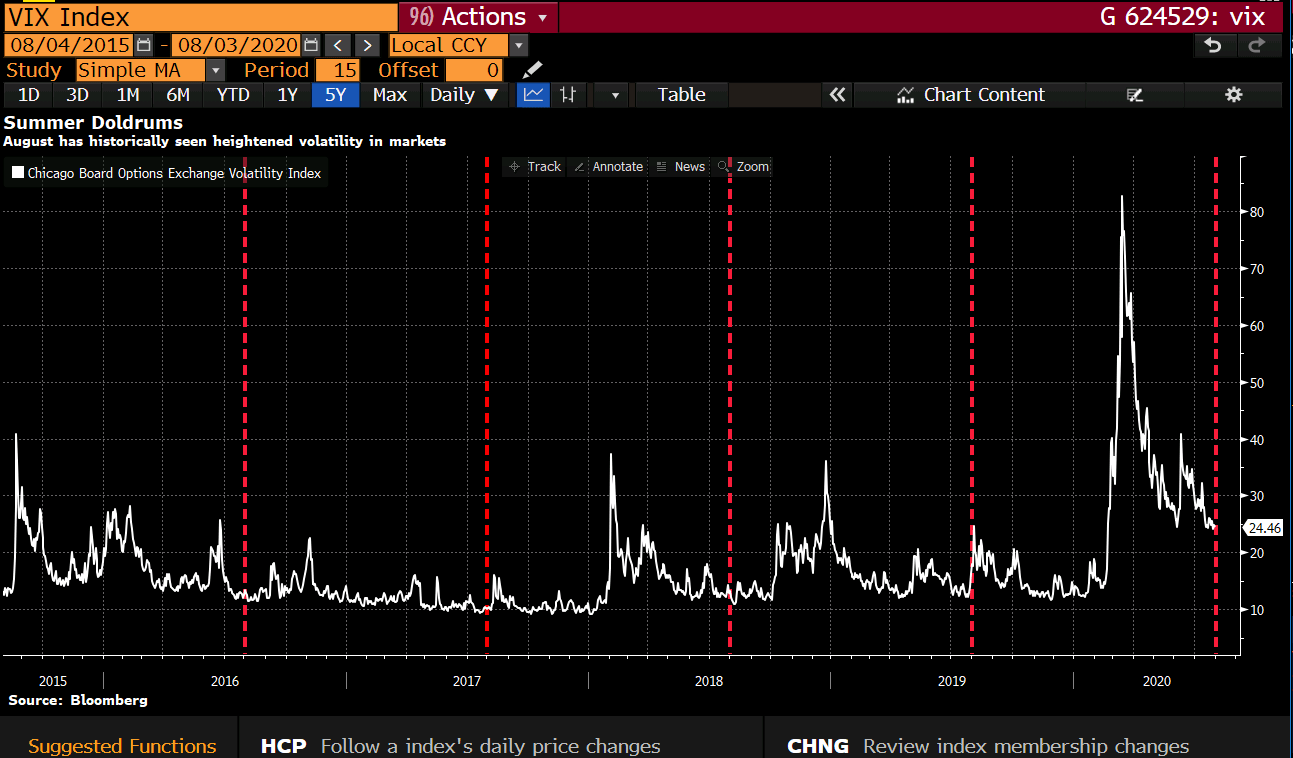
VIX

Could this be gold’s catalyst to hit $2000?

One chart to watch carefully is the gold chart. Many analysts see a pullback for gold in the near term, but the break and close beyond the weekly resistance level last week signals at least another attempt at a run for higher prices. Whether it makes new highs this week remains to be seen. However, a move higher in gold could combine with the thin liquidity of August and have a race to $2300 on the cards sooner than anyone expected. This is one chart to be keeping a close eye on as the USD index has resumed its move lower this am.
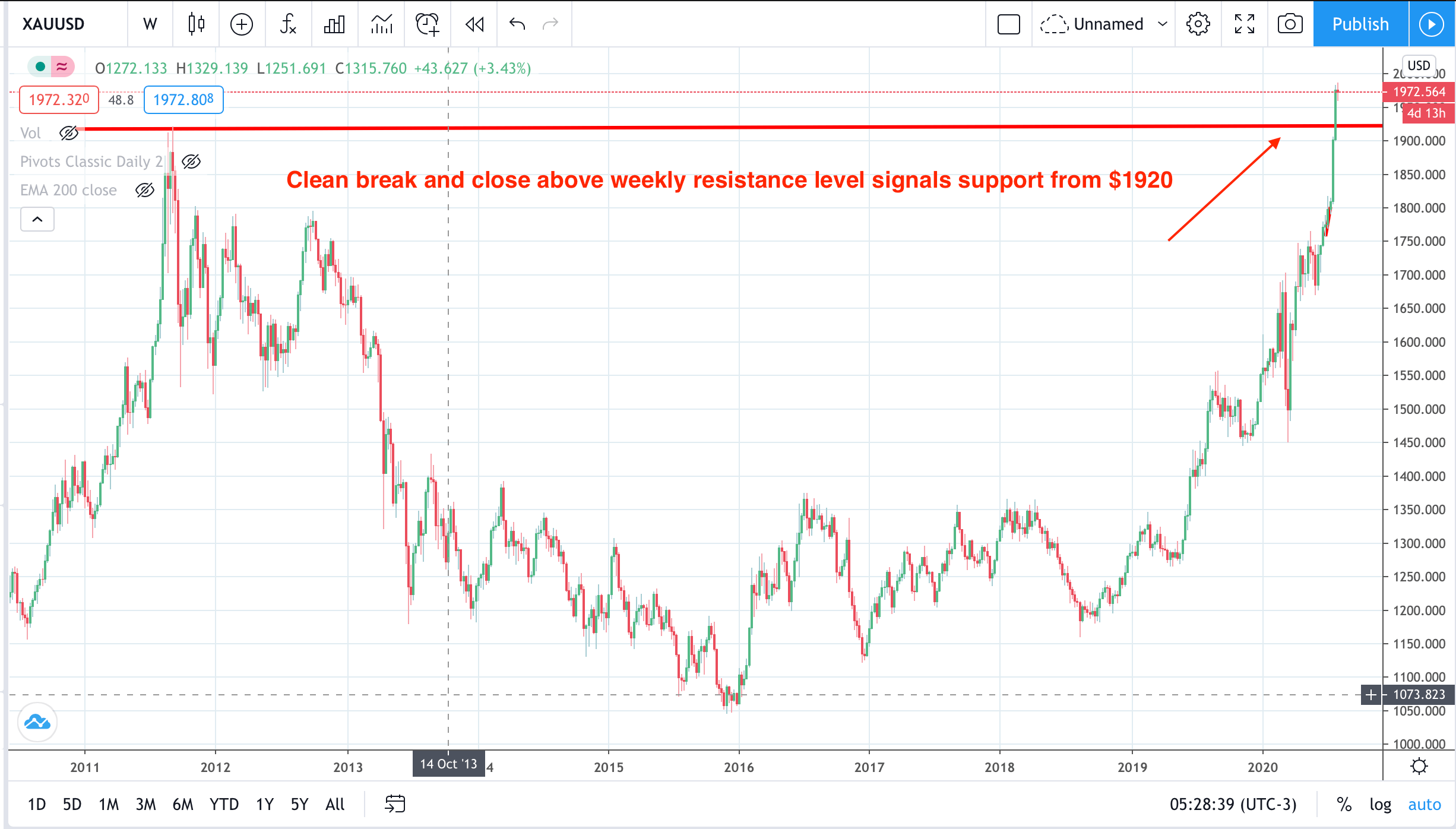
XAUUSD

Learn more about HYCM

Author

Giles Coghlan LLB, Lth, MA

Giles is the chief market analyst for Financial Source. His goal is to help you find simple, high-conviction fundamental trade opportunities. He has regular media presentations being featured in National and International Press.


More from Giles Coghlan LLB, Lth, MA
Share:

Editor's Picks

GBP/USD bounces off lows, back above 1.3200

After bottoming out near 1.3160, GBP/USD manages to regain a bit of shine and reclaim the 1.3200 mark and beyond at the end of the week. Stronger-than-expected UK Retail Sales data seem to be helping the British Pound limit its losses, while the chaotic UK political environment keeps the bulls at bay for now.

EUR/USD looks consolidative around 1.1460

EUR/USD stages a modest rebound after slipping to a three-month low below 1.1420 at the end of the week. That said, the pair now looks to consolidate humble gains just above 1.1460 despite growing uncertainty surrounding the next round of US-Iran negotiations, which keeps the US Dollar’s downside contained.

Gold slips back to six-day lows, targets $4,100

Gold retreats for the third consecutive day on Friday, eroding gains seen in the first half of the week and approaching the key $4,100 mark per troy ounce. Indeed, the precious metal continues to face headwinds from the Fed's hawkish stance and renewed uncertainty surrounding the next round of US-Iran negotiations.

Solana extends correction despite ETF inflows, RWA adoption

Solana (SOL) price edges below $70 extending its losses for the fourth straight day this week. The institutional demand for Solana is building, with steady inflows so far this week and Morgan Stanley’s amended S-1 filing for a Solana-focused Exchange-Traded Fund.

The Iran war didn't break the US economy, but what happens next?

Nearly four months after the start of the Iran war, the US economy remains remarkably resilient. While the conflict initially triggered a severe disruption to global energy markets and a sharp rise in Oil prices, recent diplomatic progress between Washington and Tehran has eased concerns about a prolonged supply shock.

Regime change: Inside Kevin Warsh's first move to make the Fed unreadable on purpose

The rate did not move. That was the least interesting thing about Kevin Warsh's first meeting in charge of the Fed. The FOMC held its benchmark at 3.50%-3.75% for the fourth straight meeting, exactly as priced, and then the new chair used his first press conference to dismantle the machinery the market has leaned on for a decade.