What can Powell say to disarm the bond boys?

Outlook
The disappointing ADP result yesterday and almost meaningless jobless claims today combine to set up tomorrow’s payrolls for an outsized response. Bloomberg reports claims will likely show an increase to 750,000, given data yesterday showing 15 states had record-low employment-population ratios in 2020. Tomorrow’s payrolls are likely 200,000 new jobs in February.
As noted before, we don’t like any of this data. It’s inherently inaccurate and leads to bad inferences. The important thing is that the US lost over 20 million jobs to the pandemic and has recovered only about half. One remedy, the Biden recovery bill, is still in the clogged Congress, albeit with hopes for passage before jobless benefits expire on March 14.
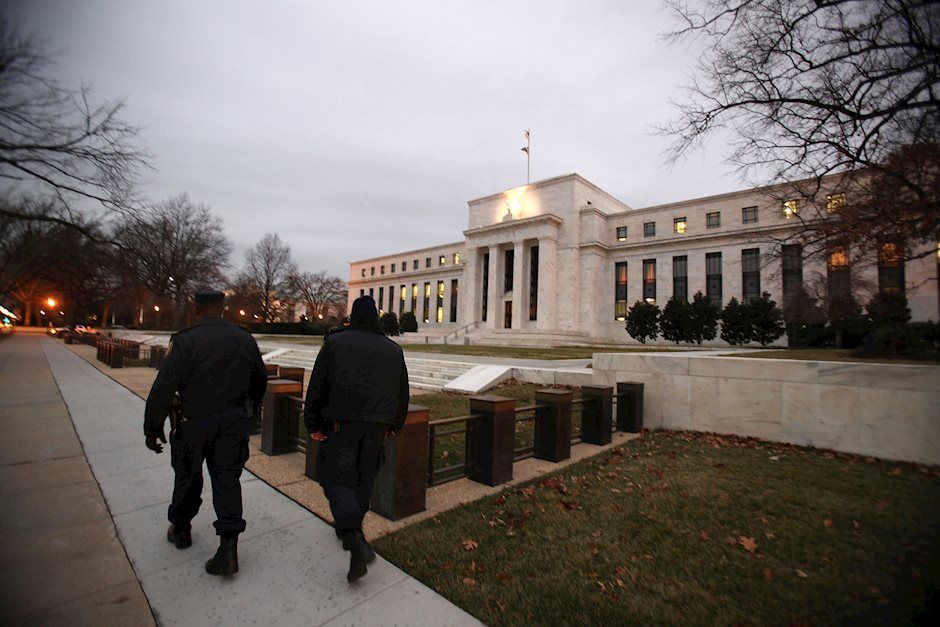
The big issue that far overshadows employment data is the Powell speech today. This is very much a showdown at the OK Corral. The bond boys have drawn their guns and nobody can say whether Powell will shoot first or duck. The Fed chief almost always ducks.
What can Powell say to disarm the bond boys? There are three issues. First is inflation. That’s fairly easy–"not happening and even if and when it does happen, it will be temporary. Besides, the Fed has said at stupefying length that inflation can run hot for a while (over 2%) to average it out over the decade of under-target rates.
Then there is the yield curve shift, for which there are two fixes–"curve control and the Twist, altering the ratio of short to long purchases. So far the Fed has shown no appetite to change anything. Powell can halt the current rise in yields with a simple threat. Why would he not do that? Well, consult military strategists. To shift your stance is to disclose fear and weakness. To stand pat is to present the image of someone who knows better. The latter has a history of not working in the bond market. Powell surely knows that, but to expect hard action is wishful thinking.
Third is the buildup of cash in the banking system and changing the banks’ reserve and capital requirements, due at end-March. As noted before, this is an easy fix–"keep it the same instead of prolonging the subsidy or change the interest rate to scoop up all that purportedly inflation-causing money supply.
Powell speaks around noon. It will be live-streamed at the WSJ and no doubt Bloomberg and other TV channels.
One big fat reason for Powell to hold his fire is the Fed policy meeting coming soon (March 17) at which we get official new forecasts as well as any change in policy thinking. Reuters reports “Investors are anxious to see if Powell expresses concern about a recent volatile sell-off in Treasuries and if there is any change in his assessment of the economy before the Fed’s next meeting…” Well, right off the bat we have to say that the Fed never expresses “concern” about free market behavior. And let’s not forget that the Fed doesn’t target the stock market.
The Fed customarily allows the bond market to find its own level without verbal interference. Unless Powell breaks with tradition, he may note the changes in yields without expressing an opinion one way or the other. If he says the Fed is “monitoring” yields, it’s a signal of disapproval or worry, and he’s not going to do that. Bottom line, we judge Powell is going to take a hands-off stance–"let the bond boys go wild if that’s what they want to do. There will probably be a comeuppance for them down the road when some big slice of the bond market figures out that the market went too far. Too bad. Losses must be expected in free markets. For Powell to sit on his hands also implies the Fed has confidence in the institutional structural stability. And that’s saying something.
This means more of the same and right away–"the newly favored dollar against the low-yielding Swissie and yen can keep going. Even the euro is vulnerable, although the AUD may be fairly safe on its own yield story and a robust economy. Other adjustments are hard to judge–"how much is dollar short-covering? And does the stock market continue to feel unhappy?
A rising dollar should be rocky and weirdly, result in even lower FX volatility due to conflicts in interpretation and analysis. Rangey moves can be next, punctuated by sharp reversal-seeming one time big bars.
Politics: The Trumpy insurgents were planning another insurrection today in Washington, and the US intelligence community is ready for them this time. We like Steve Schmidt’s comment–"shoot ‘em. The Congressional testimony about how the establishment failed to ride to the rescue on Jan 6 is deeply unsatisfying. The Capital Police failed to see the warning memos and the National Guard was held up, apparently deliberately and apparently by Trump personally or at least his lackeys. By the time we get clarity, if we ever do, Jan 6 will have fallen off the radar. A pity.
This is an excerpt from “The Rockefeller Morning Briefing,” which is far larger (about 10 pages). The Briefing has been published every day for over 25 years and represents experienced analysis and insight. The report offers deep background and is not intended to guide FX trading. Rockefeller produces other reports (in spot and futures) for trading purposes.
To get a two-week trial of the full reports plus traders advice for only $3.95. Click here!
This is an excerpt from “The Rockefeller Morning Briefing,” which is far larger (about 10 pages). The Briefing has been published every day for over 25 years and represents experienced analysis and insight. The report offers deep background and is not intended to guide FX trading. Rockefeller produces other reports (in spot and futures) for trading purposes.
To get a two-week trial of the full reports plus traders advice for only $3.95. Click here!
Author
Barbara Rockefeller
Rockefeller Treasury Services, Inc.
Experience Before founding Rockefeller Treasury, Barbara worked at Citibank and other banks as a risk manager, new product developer (Cititrend), FX trader, advisor and loan officer. Miss Rockefeller is engaged to perform FX-relat

















