What AI really means for Gold
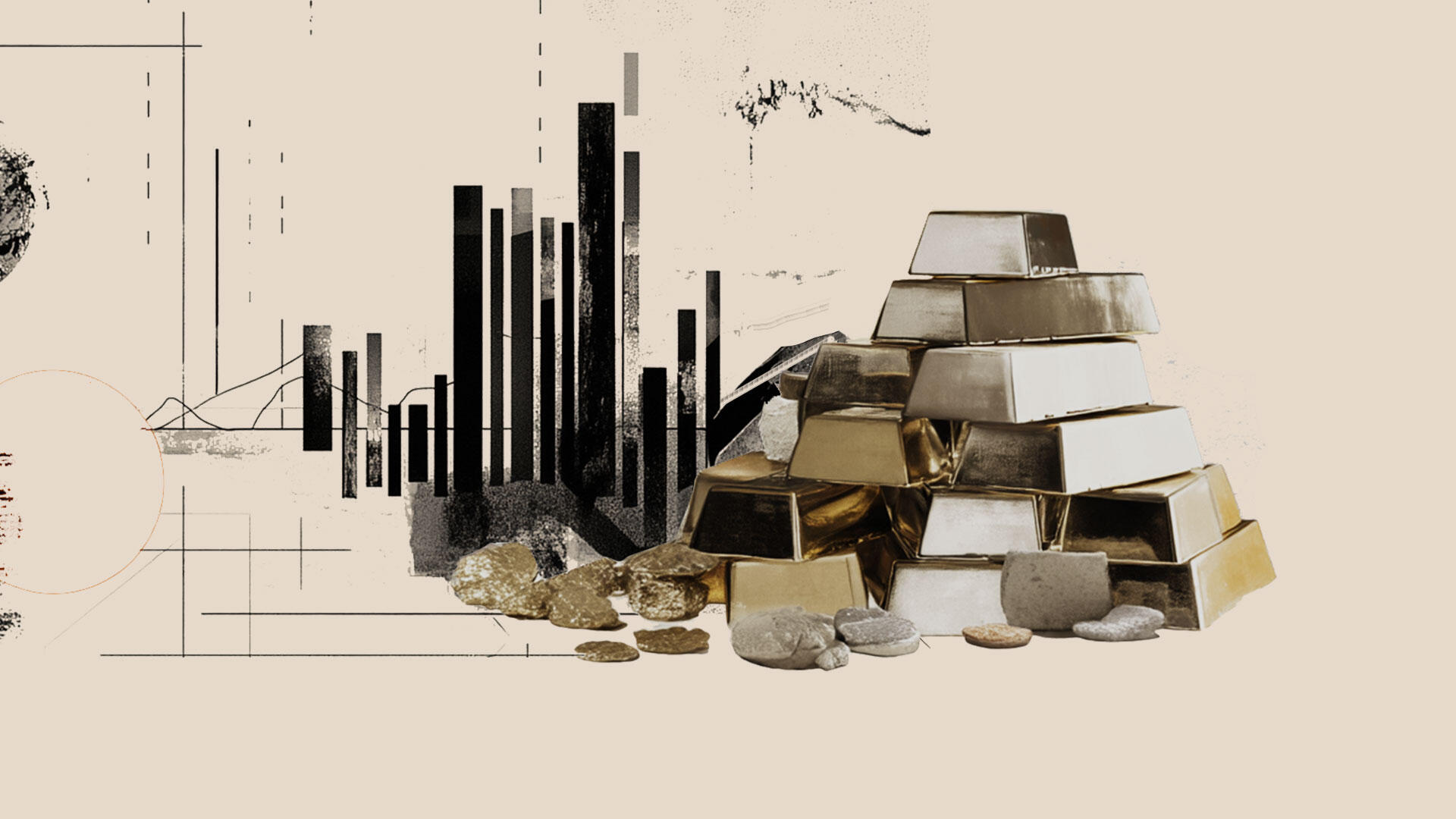
AI is now affecting all aspects of everyday life, including but not limited to business, finance, manufacturing, education, healthcare, science and technology, security, and public administration.
Artificial intelligence has also started affecting precious metals. However, the full impact of this factor on the gold and other precious metals markets still remains to be seen. But in the future, it could prove to be very significant. But let's try to predict this in advance.
Here is the first way that AI can affect the gold and silver markets: artificial intelligence is beginning to be used in the discovery of new precious metal deposits.
For example, earlier this year, a Canadian company, Equinox Gold (EQX), announced new results of its 2025 diamond drilling program at its Valentine gold project in Canada. According to the company’s report, a new deposit was discovered thanks to the fact that geological data were processed by artificial intelligence. As a result, the Minotaur prospective zone at the Valentine project was discovered, where gold content in samples reached 650 grams per ton. This is highly significant because previously, gold content at the project's deposits did not exceed 7 grams per ton. According to the company, the discovery was made using VRIFY's DORA AI-based exploration software. "Using DORA, the Equinox Gold team combined different types of data, like geochemistry, geophysics, and structural geology, which helped them find the Minotaur Zone as a key area for drilling," the company said in its press release. Furthermore, startup Earth AI in Australia used AI to analyze archival geological data and identified promising deposits in two regions of Australia. Copper, cobalt, and gold deposits were all discovered in the country’s northern territory. Silver, molybdenum, and tin, meanwhile, were found in New South Wales, about 500 kilometers northwest of Sydney.
Secondly, precious metals can be used to construct AI-based technical systems. Silver is the most heavily demanded metal in AI technologies. Over 50% of global annual silver consumption is due to industrial uses, and much of this is now associated with AI technology: power distribution, connectors, chip overheat protection, printed circuit boards and conductive inks, 5G infrastructure, and specialized equipment. Silver's role in AI technical infrastructure is determined by its properties, including high conductivity and corrosion resistance.
Even though gold is less often used for industrial purposes (approximately 6-7% of gold demand), it still plays a key role in AI systems. For example, it is used in chip packaging and connecting wires and also to produce printed circuit boards.
Third, the current AI investment boom can have a heavy impact on the gold and other precious metals markets. I fully agree that an AI bubble continues to inflate in financial markets and is about to burst. Many experts say that AI investments are not even paying off yet. However, the AI race is unstoppable due to competition between IT companies but also due to the ongoing battle for global AI supremacy between the US and China. The US government has already invested trillions of dollars in AI development. Some market observers even claim that the AI "fever" is one of the reasons for the dramatic US national debt growth, which is already nearing $40 trillion.
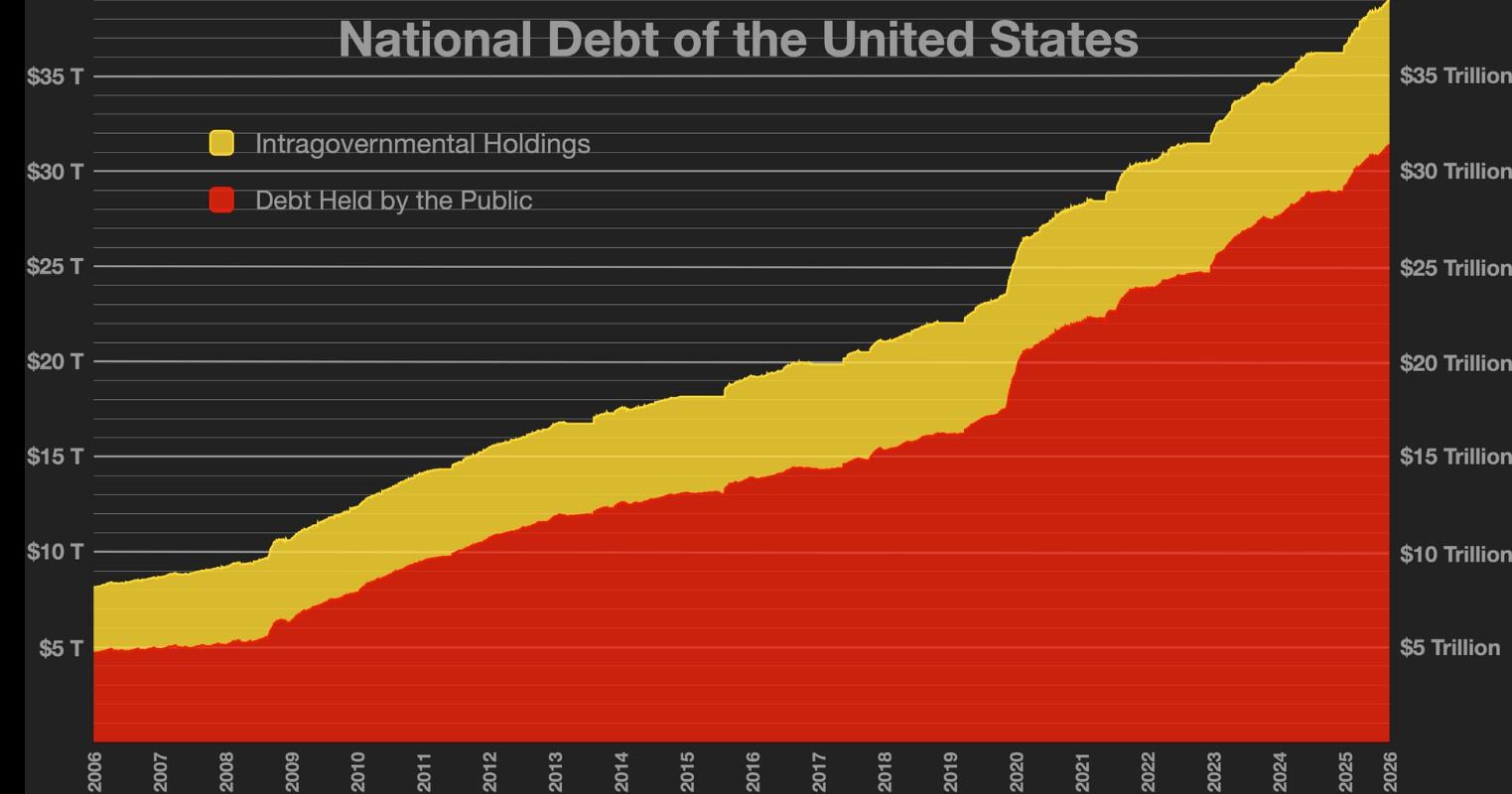
Source: Wikipedia
This heavily affects the gold and other precious metals markets because the AI "fever" is driving inflation in America, thus increasing demand for precious metals. As soon as the AI stock market bubble bursts, we can enter a full-blown economic crisis. Moreover, a tech boom requires money. The US government, meanwhile, has been recording budget deficits for many decades. That is why new money has to be printed to finance the AI revolution. Unfortunately, money-printing is the only way to finance enormous government spending. For example, due to the Covid-19 pandemic and the resulting lockdowns, the Federal Reserve added more than $4 trillion to its balance sheet between 2020 and 2022, and the AI revolution will likely trigger even higher expenses and lead to a higher debt load.
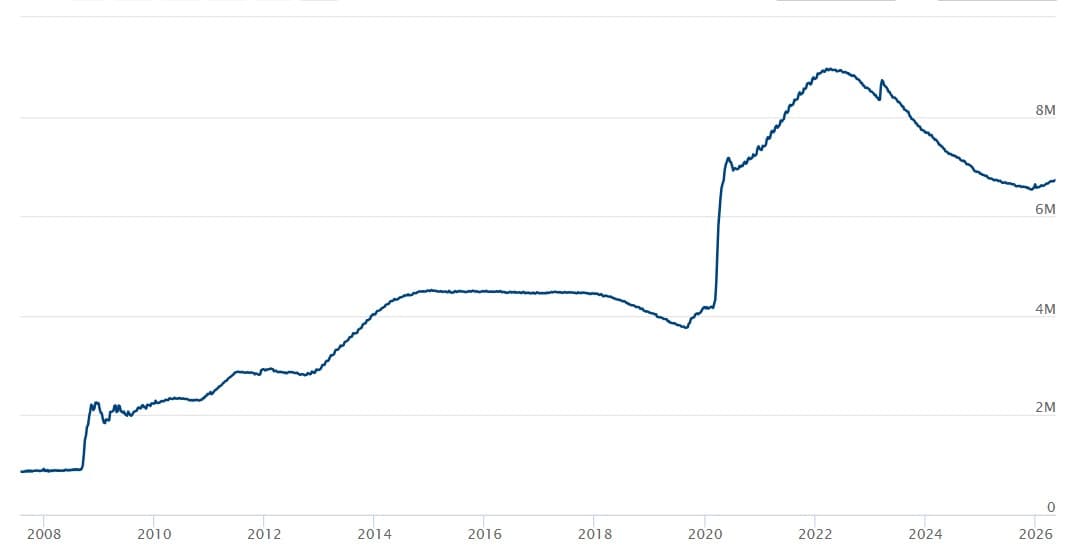
Source: The Federal Reserve
In many countries all over the world, not just the US, governments are already subsidizing chip manufacturing, green infrastructure, and AI development. Obviously, this will be a good-enough excuse for central bankers to print money. This money has to go somewhere—and it's not going into raising GDP. Instead, it fuels asset bubbles, government deficits, and, logically, inflation. While Silicon Valley and wars in the Middle East make headlines, the Fed is printing dollars. In a world where fiat money is continuously losing value, gold is the only real hedge that is absolutely free of counterparty risk.
Also, AI is useful for analyzing and forecasting precious metals markets. To forecast gold prices, AI processes various types of data, including macroeconomic indicators, sentiment analysis, and quantitative market data, namely historical prices, trading volumes, and volatility.
That is why AI is used in trading, investing, and asset management. For example, some investment funds use AI algorithms to rebalance portfolios, with gold being a safe haven. There are also AI-powered tools that help investors develop strategies based on market data analysis and predictive models.
However, it is important to remember that AI is merely a tool. So, can AI predict the prices of gold? The answer is not so simple. The truth is that artificial intelligence is not an oracle. It cannot provide a 100% accurate forecast of the gold prices tomorrow or a year from now simply because the market depends too much on unpredictable human decisions and random events. At the same time, ignoring this AI revolution means knowingly putting yourself at a disadvantage. The future of investing in precious metals, as timeless as time itself, will likely be determined not by the struggle between human beings and machines, but by the combination of the two.
Author

Anna Sokolidou
Independent Analyst
A research analyst, a freelance finance writer and an economics teacher looking for interesting investment opportunities. I have been investing for years. I am mostly interested in writing about commodities, precious metals and large corporations.