Weekly data Oil and Gold: Price review for the week ahead

This preview of weekly data examines USOIL and XAUUSD, with economic data expected later this week as the primary market drivers of the near-term outlook.
Highlights of the week: US inflation, BoC & ECB interest rates, US GDP
Wednesday
● Chinese inflation rate at 01:30 AM GMT. The market is expecting this figure to tick upwards by 0.1%, reaching 1.3% in May.
● US Inflation rate at 12:30 PM GMT, where the consensus is for an increase of around 0.4%, reaching 4.2% for May. At the same time, core inflation is also expected to increase by 0.1%. This data is rather critical at this point because interest rate probabilities have shifted, and a surprise on the actual figures of inflation could create more fluctuations in the probabilities of a hike or stability of the rates.
● Bank of Canada Interest rate decision at 13:45 GMT is expected to remain stable at 2.25%. In case of a surprise hike in the interest rates would support the loonie in the short term, while in the event of a
rate cut, it might create some turmoil for the currency.
Thursday
● European Central Bank Interest rate decision at 12:15 PM GMT. The market consensus is that the European Central Bank will raise interest rates for the first time since August 2023, from the current 2.15% to 2.40%. If expectations are met, the Euro might find support against other major currencies, while, in the unlikely event of a rate cut, it might result in short-term losses. Investors and traders are also focused on the subsequent press conference following the release, which will provide hints about the monetary policy steps ahead.
● U.S Producers Price Index (PPI) at 12:30 GMT. Market participants are expecting the figure to come out at 0.7% from 1.4% in the previous reading. If this is confirmed, then it could potentially hint to potential lower inflation figures in the coming months.
Friday
● British GDP growth at 06:00 AM GMT. The market consensus is that the figure will decrease from 0.3% to -0.1% month over month. This might not have a major effect on the pound since it is for April; however, it would provide some hints on the overall economic performance of the British economy.
USOIL, daily
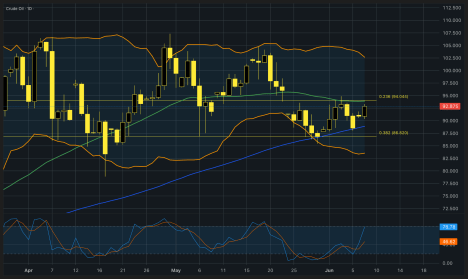
Oil jumped as renewed fighting between Iran and Israel threatened the fragile ceasefire and raised fears of prolonged supply disruptions. The key concern remains the Strait of Hormuz, where restricted oil flows are tightening global supply. Markets are increasingly pricing in the risk that a peace deal is still some way off, keeping a geopolitical risk premium embedded in crude prices. Even if a deal is reached, a full recovery in oil exports could take months. OPEC+ also approved a further production increase of 188,000 barrels per day for July, although export disruptions in the Persian Gulf are preventing many members from fully bringing those additional barrels to market.
From the technical analysis perspective, crude oil found support on the 100-day simple moving average and has rebounded in the opening of the Asian market. Currently, it's trading in the dynamic resistance area between the 50 and 100-day simple moving averages while the Stochastic oscillator is on the move to reach extreme overbought levels. The Bollinger Bands are quite expanded, showing that there is sufficient volatility in the market to support any sharp moves. At the same time, the $94 area is a major technical resistance level consisting of the 50-day moving average and the 23.6% weekly Fibonacci retracement level. If there is a valid break above this area, then the next major resistance level could be found around the $100, which is a psychological resistance of the round number and also an area of price reaction in early and mid-May.
Gold-dollar, daily
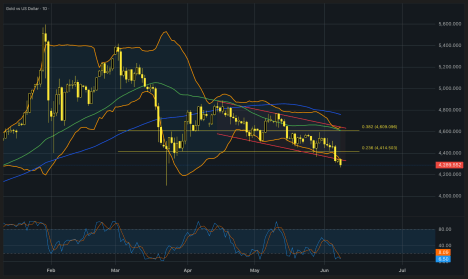
Gold extended its decline, driven by strong US non-farm payroll and unemployment data, which reinforced expectations of tighter monetary policy, lifting both the US dollar and bond yields. In addition, the increased tensions in the Middle East have reignited inflation fears that push the probabilities of rate hikes by the Fed further, putting pressure on the non-yielding gold. These factors have outweighed gold's traditional appeal as a safe-haven asset. Despite the weakness, support remains from central bank demand, with China adding to its gold reserves for a 19th consecutive month, highlighting continued long-term interest in the metal.
From a technical point of view, gold has been trading in a declining channel formation for almost two months, and the decline has been more aggressive after the strong US job report late last week.
Currently, the price is trading below the lower band of the Bollinger Bands, showing strong momentum from the bears pushing the Stochastic oscillator into extreme oversold territory. If the price continues its free fall, then the area of $4,100 could be retested, which is also the medium-term low reached in late March. The moving averages are also validating the overall bearish trend while the Bollinger Bands have started expanding showing that volatility is returning in the market for gold.
Author

Antreas Themistokleous
Exness
Antreas has been trading CFDs since 2018 using a combination of fundamental and technical analysis.