Weekly Column: A “special” full Moon in the sense that the opposition implied by the full moon is intensified

Review and preview
Employers added 261,000 nonfarm jobs, more than expected and in line with the previous month’s 263,000. The unemployment rate edged higher to 3.7%, up from 3.5% in September. Hourly pay remained brisk rising at 4.7% year over year, matching September. – “October’s Jobs Report Solid, Making Fed’s Inflation Fight Harder," November 4, 2022.
“Since 1942, there have been 20 midterm elections… US stocks climbed higher in the next 12 months after every single one.” – Stephen McBride, Risk-Hedge Report, “Should You Sell Your Stocks Ahead of Tuesday’s Big Election?” November 3, 2022.
We are back to the state of five retrograde planets following the turn of Mars on October 31. This, on top of the potent T-square between the Sun/Venus in Scorpio opposing Uranus in Taurus and square Saturn in Aquarius, November 5-11, now in its orb of influence. And this is in addition to the lunar eclipse on November 8, right in the middle of the T-square, and also the date of the U.S. mid-term elections. The good news is that the geocosmic hurricane/tsunami season for financial markets (and geopolitics) ends after that.
For now, financial markets are starting off every bit as wild as these cosmic signatures suggested they would. On Wednesday, the DJIA reached 33,071, its highest level since August 26 and up over 4400 points since its yearly low of three weeks ago. By the next day, Thursday, November 3, it had dropped to 31,727, a swing of 1344 points in one day. The next day, Friday, it was back up over 400 points. It makes one wonder what will happen now that both Venus and the Sun will oppose Uranus November 5-9, with Saturn square to each through November 11.
The pattern was similar in many world indices. That is, most have rallied since their yearly lows of September 28-October 3 or October 13, to highs last week, followed by quick, sharp declines into Thursday and a rally on Friday. In Europe, the rally into Friday was most significant for the German DAX and London FTSE indices, which soared to their highest levels since September 13-14.
In Asia and the Pacific Rim, the pattern was similar for the Nikkei and the Australian ASX. Both continued to make new cycle highs into November 2 since their lows of October 3, then both sold off into Thursday-Friday. In India the Nifty also made a new cycle high on November 2, but didn’t sell off much before recovering on Friday. The high of November 2 was its highest mark since January 18. For China and Hong Kong, it was a little different. The Shanghai Composite in China made a double bottom on October 31, as Mars turned retrograde, to its yearly low of April 27, then rallied sharply into Friday. The Hang Seng of Hong Kong dropped to a new multi-year low, also on October 31, and then like the SSE, rallied sharply into Friday. It appears the Chinese markets are coming out of their long slumber, which would bode well for the rest of the world’s stock markets.
There was greater excitement in precious metals last week. Gold fell to a new yearly low of 1618 on Thursday, but by Friday, it was back up above 1680 to its highest price in three weeks. Silver fell to 18.80 on Thursday, well above its recent lows, and then blasted off on Friday to a high of 20.96. This fits well with our forecast based on cycle studies, which suggest we could see $30 Silver soon if 21.50 can be exceeded.
Bitcoin and Ethereum are showing renewed life as well. Both rallied to their highest prices since September 13. If they can avoid a major selloff this week, both may be the early stages of a new bullish run.
With Jupiter returning to Pisces on October 28, Crude Oil prices are also rising smartly, soaring to a new multi-week high of 92.87 on Friday, making President Biden’s “trade” of drawing down the Strategic Petroleum Reserves when the price was in the low 80’s – to their lowest price since the 1980’s – while publicly announcing he would buy back at $70-75, a questionable decision involving national security and speculative use of taxpayers’ monies for possibly political reasons. The timing appears to be an unsuccessful and costly attempt to drive down oil prices going into the mid-term elections. Why would he announce his “trading plan” publicly at the time? Or at any time, in a matter related to national security?
Short-term geocosmics and longer-term thoughts
The oil industry “has not met its commitment to invest in America and support the American people,” Biden said. They’re not just making a “fair return” he said, they’re making “profits so high it is hard to believe. I think it’s outrageous. If they passed those profits on to consumers, gasoline prices would be down about 50 cents.” – Reuters, “Biden Calls on Oil, Gas Companies to Stop ‘War Profiteering,’ Threatens Windfall Tax,” November 1, 2022.
“I’m not sure [I] understand the argument for a windfall profits tax on energy companies,” Summers said on Twitter Tuesday morning. “If you reduce profitability, you will discourage investment which is the opposite of our objective.” – Larry Summers as reported by Matt Egan, “Biden’s Oil Windfall Tax Would Backfire, Warns Larry Summers,” November 1, 2022.
The windfall tax proposal repudiates everything Mr. Biden says about wanting lower energy prices. – Wall Street Journal Editors, “Energy Policy for Dummies,” November 2, 2022.
We are not big fans of fossil fuel drilling and oil companies making huge profits in a time that inflation is affecting large segments of the population. But we are concerned about the existential threat involved in national security with Jupiter set to return to Aries in mid-December. Therefore, we still need to produce oil and gas while at the same time continuing to grow the alternative and renewable energy markets, just as the state of Oklahoma is doing, as reported in “Oklahoma’s Energy Balancing Act” by Alex Irwin-Hunt at www.fdiinteligence.com (September 23, 2022). Our focus in this column pertains to the education of geocosmic signatures related to movements in financial markets. In this case, rising energy prices correlate with the return of Jupiter into Pisces, October 28-December 20, 2022.
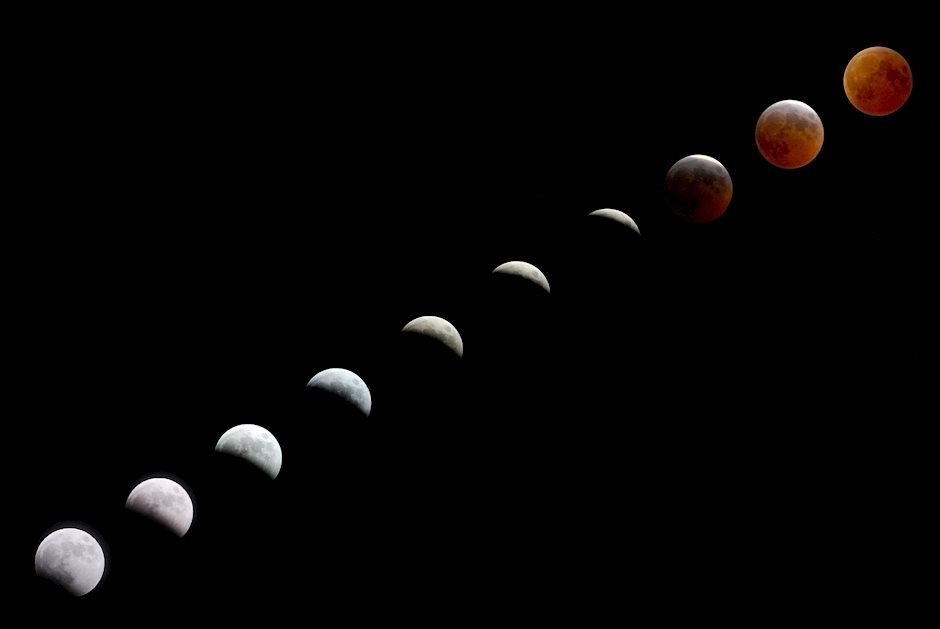
For the week ahead, we have the lunar eclipse in Taurus (Sun in Scorpio) on Tuesday. A lunar eclipse is when the shadow of the earth blocks out the view of the Moon. The Earth is in between the Sun and Moon. This makes it a “special” full Moon in the sense that the opposition implied by the full moon is intensified. It’s a time of conflict, in the study of astrology, which can be transitioned into a period of heightened awareness. The challenge is to resolve the conflict, whatever it is, between the past (emotional, Moon) and the future (vitality, Sun). In other words, you can’t advance cleanly into the future as wished until the emotional issues of the past, sometimes referred to as “karma,” are confronted and resolved. Once resolved, a big weight is removed and a lightness of being is created in relationships.
With the lunar eclipse Taurus, people want security, stability, comfort and safety. The Moon is exalted in Taurus. But the Sun in Scorpio likes to court danger and taboo. While the Moon in Taurus is also conjoined with Uranus, the Moon is not likely to get its wish for comfort and safety through diplomacy or just being “nice,” for Uranus is the planet of disruption, disagreement, refusal to acquiesce, and often the result of an urge to get attention, even if via shock. Thus, we need to be prepared for a “shock” of some sort, whether in the geopolitical or financial realm, or via nature. Also, the time frame in which a lunar eclipse is operative seems to be about three weeks before and after the actual cosmic event. Although the peak of “energy,” of course, is during the moment of the event itself.
Once the eclipse period is over, there are no further “disruptions” by Uranus until the last few days of December when Jupiter returns to Aries (December 20) and forms its last of three semi-squares to Uranus (December 23-24). The most recent semi-square to Uranus was on September 28, which was near the end of the last stock market plunge to their yearly lows. But relax. Third passages are not usually as strong as the first two. The future looks brighter and a little more stable in 2023, especially after mid-May. We cover that in great detail in the forthcoming Forecast 2023 Book.
Author
Raymond Merriman, CTA
The Merriman Market Analyst
Raymond A. Merriman is the President of the Merriman Market Analyst, Inc and founder of the Merriman Market Timing Academy.