Weak job data sends Canadian Dollar slips to four-month low


The Canadian dollar is showing limited movement on Monday. In the European session, USD/CAD is trading at 1.3598, up 0.06%.
Canada and the US both released March employment reports on Friday, with Canada posting a weak reading while US nonfarm payrolls blew past expectations. The Canadian dollar showed some volatility around the release but has since settled down.
Canada’s job growth flat
Employment in Canada missed expectations in March, with a small decline of 2,200. This follows a strong gain in February of 40,700 and was well short of the market estimate of 25,000. It marked the first decline in employment in eight months. The unemployment rate rose from 5.8% to 6.1%, above the market estimate of 5.9%. The 0.3% rise was the largest in almost two years and reflected the rise in population, which continues to outpace job growth.
The job numbers aren’t great, but will probably not cause any changes at this week’s Bank of Canada meeting. The markets are expecting the BoC to hold rates at 5% for a sixth straight time and have priced in an initial rate cut at the June meeting.
It was the opposite story south of the border, as US nonfarm payrolls surged to 303,000 in March, up from a revised 270,000 in February and blowing past the market estimate of 200,000. The unemployment rate dipped lower to 3.8%, down from 3.9% and below the market estimate of 3.9%. Wage growth matched expectations at 4.1%, down from 4.3%.
The strong job numbers could force the Federal Reserve to delay the timing of a rate cut. In the aftermath of the employment release, the markets have trimmed expectations for a rate cut in June or July, while a cut in September has been priced at 88%. The Fed is widely expected to hold rates at the May 1st meeting.
USD/CAD technical
-
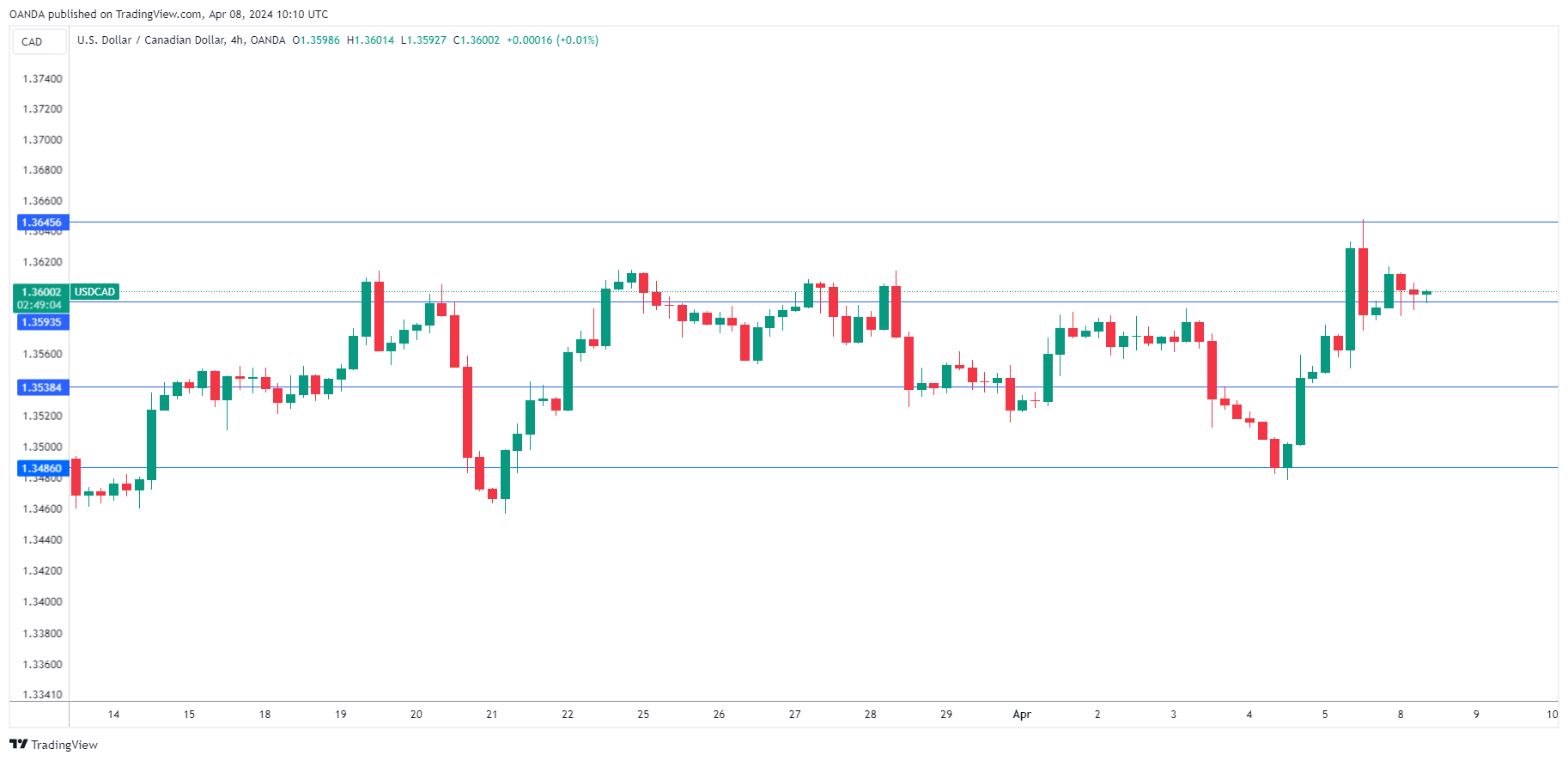
USD/CAD is testing resistance at 1.3593. Then next resistance line is 1.3645
-
1.3538 and 1.3486 are providing support
Author
Kenny Fisher
MarketPulse
A highly experienced financial market analyst with a focus on fundamental analysis, Kenneth Fisher’s daily commentary covers a broad range of markets including forex, equities and commodities.