Walking on a fine line, advanced economies continue to show resilience

After the major upheaval of ‘Liberation Day’, the dust has settled somewhat. The level and scope of the new US tariffs are now largely known, and advanced economies are continuing to show resilience. Despite significant fluctuations in trade in the first half of the year, global trade has been braodly unaffected so far. The combination of headwinds (US tariffs, uncertainty) and tailwinds (low oil prices, Fed rate cuts, European measures) explains the gradual nature of the slowdown (in the US) and the recovery (in the Eurozone). The Eurozone is doing relatively well: with growth expected to strengthen and inflation under control, it is escaping the stagflationary scenario seen in the US, the UK and Japan.
Trade war: After the shock, time to adapt
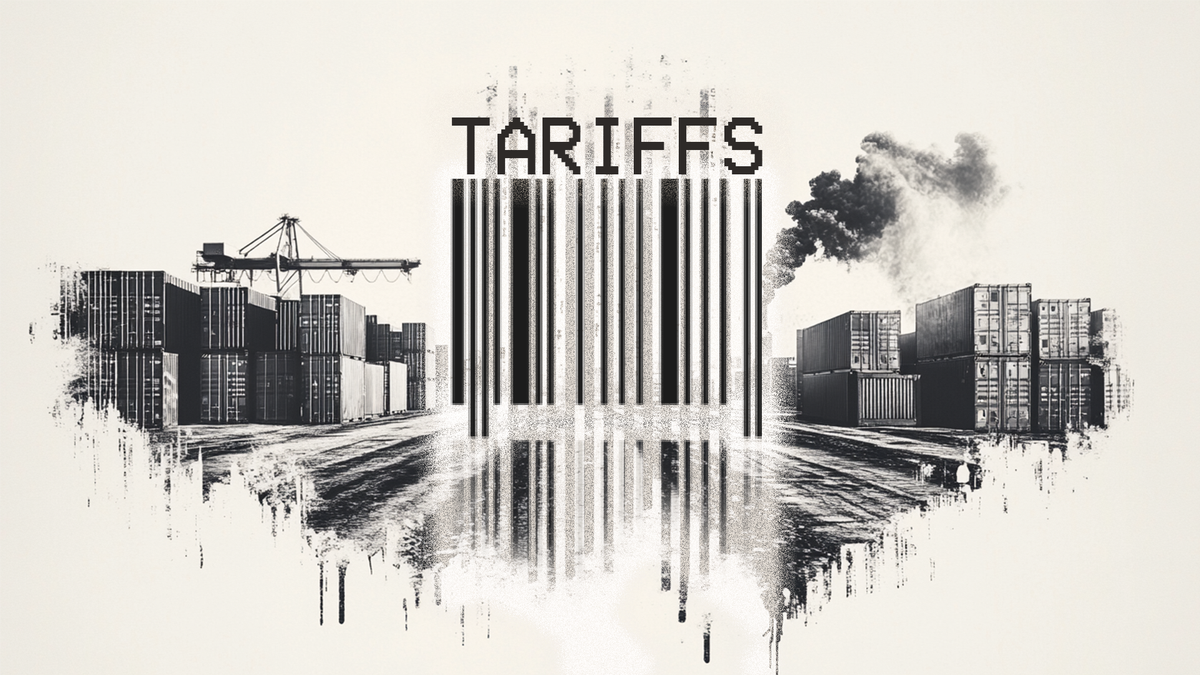
After the major upheaval of ’Liberation Day’ in early April and the multiple reversals and successive announcements on the calibration of US tariff increases, the dust has settled somewhat since late July/early August. The agreement between the United States and the European Union, in particular, followed by the disclosure of the new US tariff list, provide a clearer picture of where customs duties will land and the conditions associated with them. This restores some visibility, but significant and numerous uncertainties remain[1].
The initial impact of this tariff shock on global trade has been both significant and limited. It has been significant in terms of the sharp ups and downs in exports and imports in the first half of 2025, in anticipation of the tariff increases and then in the aftermath. It has also been significant in terms of the rapid adjustment of trade flows to the new tariff situation, as highlighted in our Focus on this topic in this issue. This Focus also shows that the overall impact on global trade is limited, if not non-existent for the time being: its growth rate has not slowed and remains close to the 2024 trend. While trade links with the United States are weakening, they are redeploying and tending to strengthen in the rest of the world.
In terms of the impact on growth and inflation, the full effects of the tariff shock are yet to be felt. Not all countries are in the same boat, but contrary to the prevailing negative discourse, Europe is clearly doing relatively well[2] and the shock, in its current form, appears to be entirely manageable.
The same constraints and supports are still at work
One of the characteristics of the economic developments observed and expected in our central scenario is their gradual nature. The slow pace of adjustments contrasts with the feeling of a world that is changing ever more rapidly. The risk of non-linear effects and a more sudden deterioration in the economic situation, particularly in the US, has certainly increased. The scale of the uncertainties contributes to the feeling that the economic trajectory is on a knife edge. But for now, signs of a slowdown and signs of improvement remain contained, due to the opposing forces that continue to affect the global economy.
Author
BNP Paribas Team
BNP Paribas
BNP Paribas Economic Research Department is a worldwide function, part of Corporate and Investment Banking, at the service of both the Bank and its customers.