USD/JPY Weekly Forecast: Ukrainian in all things
- Russian invasion of Ukraine dominates markets on Thursday and Friday.
- Markets reverse invasion shock, WTI falls below Wednesday’s close.
- Yen gives back all of Thursday’s safety gain, USD/JPY rises.
- The FXStreet Forecast Poll predicts slight weakening in USD/JPY.

A sleepy USD/JPY that closed Wednesday at 115.00, exactly where it had opened on Monday, awoke to gunfire on Thursday.
The ensuing shock and falling US Treasury rates drove the yen as high as 114.40 in a matter of hours. Yet by the market close that day the USD/JPY was 60 points above its open, US equities had closed in the black despite massive early losses and Treasury yields had retraced their initial declines.
-637814004680964213.png)
On Friday morning those directions continued. Stocks in the US, Europe and Asia rallied, except, interestingly, in Hong Kong. Treasury rates in the US rose in all terms, while European and Asian sovereign yields were mixed, with losses in the short end of the curve.
West Texas Intermediate, (WTI) the North American crude pricing standard, was trading at $91.17, below its pre-invasion Wednesday close of $91.92.
-637814005075407056.png)
The rapid recovery of global markets from Thursday's shock leads to a perhaps unpalatable conclusion--Russia will complete its takeover of Ukraine without much difficulty.
European and American sanctions have not targeted the Russian oil industry. Such an effort would be extremely costly to Russia which earns 40% of its revenue from energy, but it would send global oil prices and Western consumer prices sky high. The unwillingness of Western governments to contemplate such a difficult move, while pretending to reserve these harsh sanctions for a future crisis, is the most telltale sign that the Ukranianians are on their own.
Russian President Validimir Putin wants to avoid an occupation of Ukraine and would undoubtedly prefer a compliant but national government in Kyiv. He has already made public calls for cooperation from the Ukrainian military and offered negotiations in Minsk.
The Ukrainian government in turn has proffered Moscow neutrality without specifying any terms.
Ukrainian developments are the determinant factors for global markets. The very preliminary movement towards negotiation has reinforced Thursday’s market recovery.
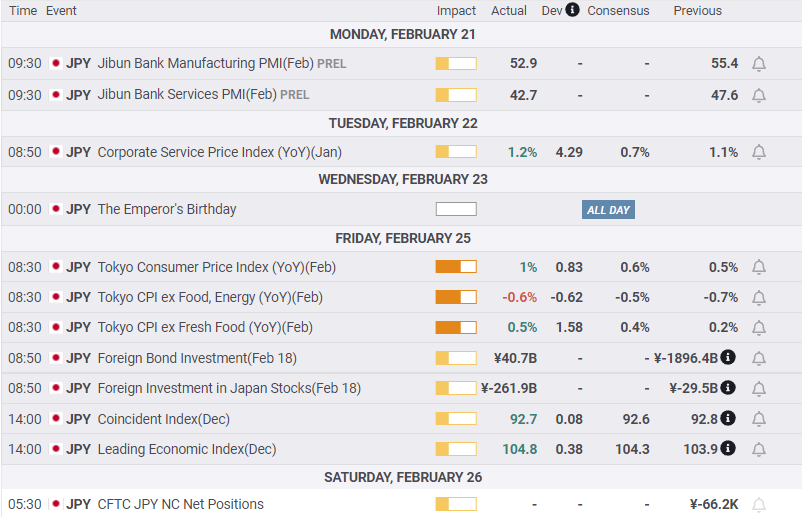
Japanese economic data was mixed. Tokyo CPI in February was a bit stronger than forecast, though the core index was weaker.
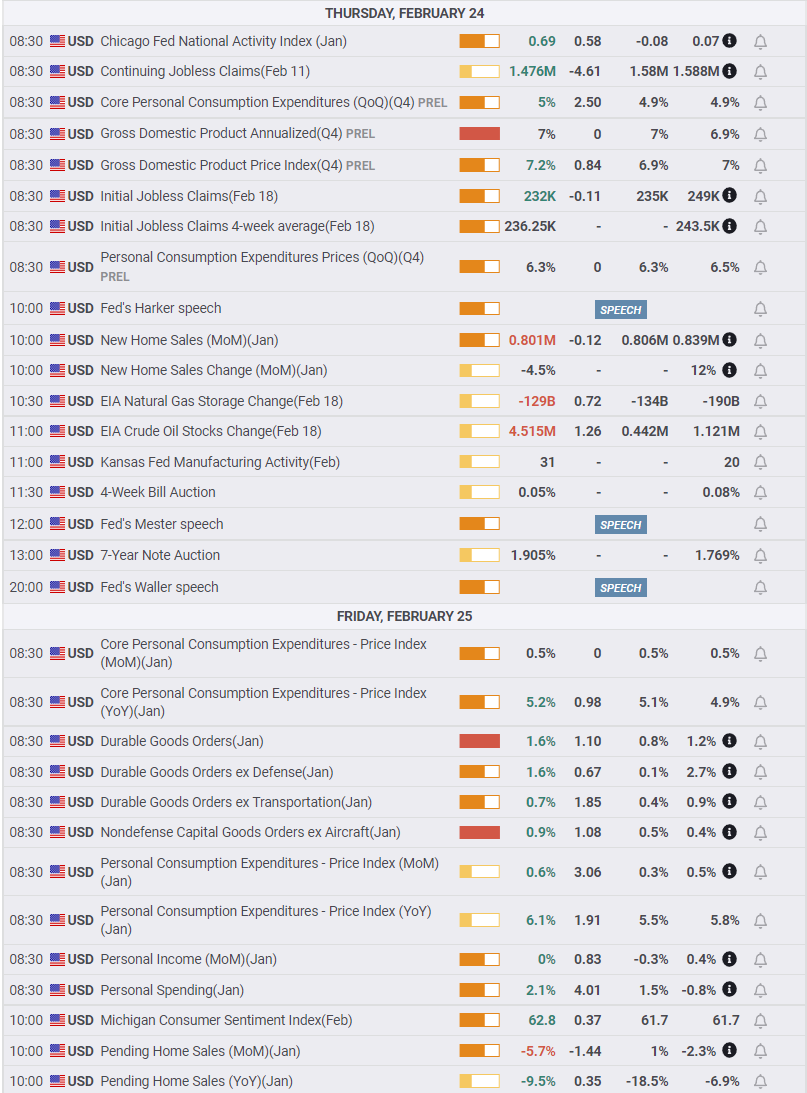
US information was generally better than anticipated. Fourth quarter GDP was revised to 7.2% from 6.9%. Markit’s manufacturing and services Purchasing Managers’ Indexes for February were slightly higher than expected. Durable Goods Orders for January, were, like Retail Sales, much more robust than expected.
USD/JPY outlook
The USD/JPY immediate future will be crafted by the denouement of the Russian–Ukraine conflict. The origin and morality of the dispute is less important to markets than that it is quickly and relatively bloodlessly settled. Whether the result is a newly accommodative Kyiv government under its current President Volodymyr Zelenskyy or another leader is irrelevant. The key is Ukrainian acquiescence and the end of the military conflict.
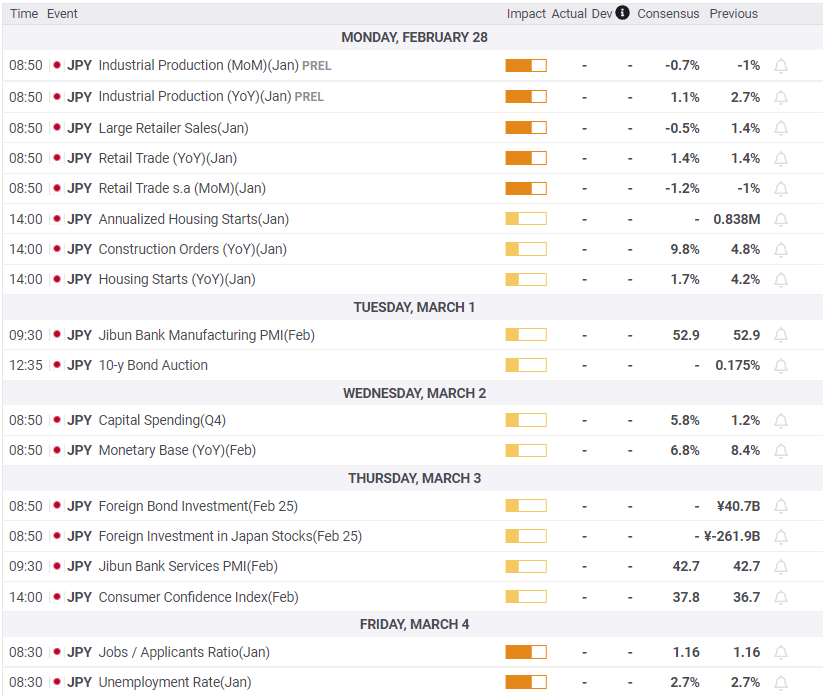
Japanese Industrial Production and Retail Trade (sales) for January will give no impetus for a change of view on the economy.
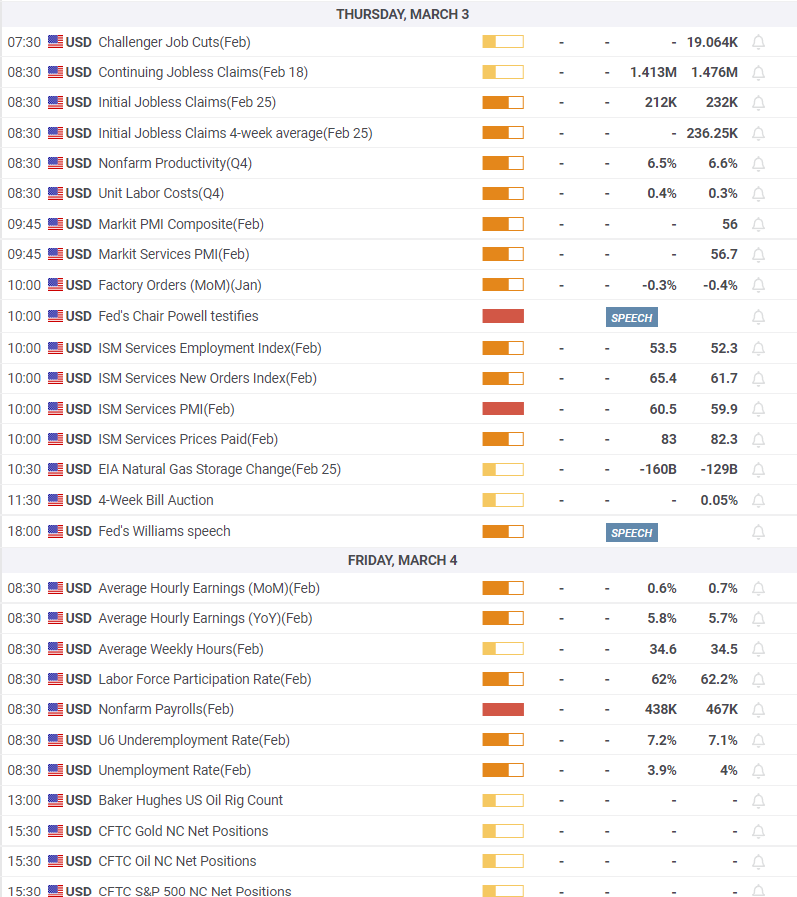
In the US, Purchasing Managers' Indexes and Nonfarm Payrolls (NFP) for February will provide a window on the recovery, but only NFP has the potential to move markets.
Comments from the Federal Reserve Presidents of Clevland, Atlanta and Richmond that inflation was the bank's biggest problem and that rate normalization would procede while noting the potential for Ukraine to disrupt economic picture, helped to support the USD/JPY on Friday.
Given these circumstances the USD/JPY outlook is modestly higher. The widening differential between US and Japanese interest rates is the chief source of dollar strength.
If the Ukrainian war becomes a protracted stalemate the impact on global economics rises in direct proportion to its length and viciousness. The worse the military situation, the more likely the US dollar safety-trade overwhelms the yen's relatively modest haven advantage.
Japan statistics February 21–February 25
US statistics February 21–February 25

FXStreet
Japan statistics February 28–March 4
FXStreet
US statistics February 28–March 4

FXStreet
USD/JPY technical outlook
The MACD (Moving Average Convergence Divergence) reverted to neutral after Thursday's final surge in the USD/JPY. Though still in positive territory it is not a buy signal. The Relative Strength Index (RSI) rose as did the Average True Range (ATR) but both reflect the intra-day movement not trend appreciation. These indicators await a decision on the fundamental and political factors underpinning the USD/JPY.
 tech 1-637814030296808724.png)
The scarcity of resistance lines compared to the abundance of support and the meaningful presence of three of four moving averages (MA) in close proximity below the current level gives the USD/JPY a firm basis for a move higher should the fundamental factors cooperate.
Moving averages: 21-day–115.23, 50-day–114.94, 100-day–114.39, 200-day–112.26
Resistance: 115.75, 116.10, 116.35
Support: 115.40, 115.00, 114.75, 114.50
 tech 2-637814037014212630.png)
FXStreet Forecast Poll
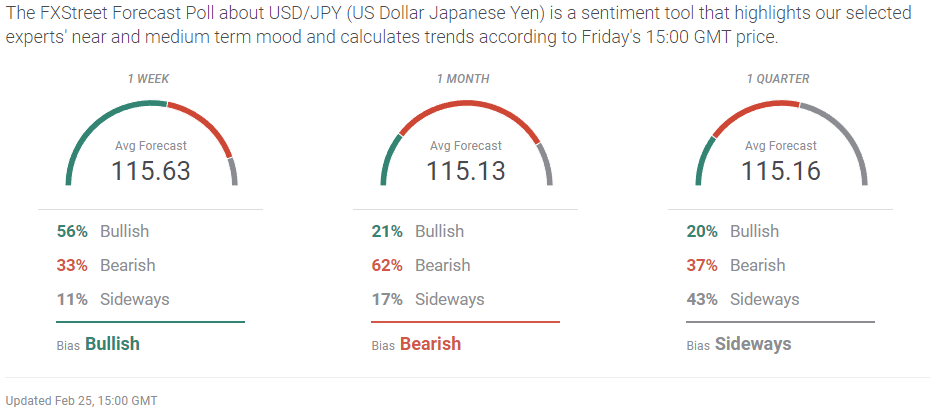
The near-term bullish prediction in the FXStreet Forecast Poll has been superseded by market action. The longer-term assessments are neutral in effect given the very limited range difference.
Author

Joseph Trevisani
FXStreet
Joseph Trevisani began his thirty-year career in the financial markets at Credit Suisse in New York and Singapore where he worked for 12 years as an interbank currency trader and trading desk manager.