USD/JPY Weekly Forecast: A week of surprises and the US economy counterpunches
- Excellent January US job figures drive Treasury rates, dollar higher.
- BoE hikes interest rate as expected, begins bond taper in March.
- ECB surprises, Lagarde indicates rate increases possible.
- The FXStreet Forecast Poll predicts failure at upside resistance.

The Bank of England and the European Central Bank forged ahead in the rate competition this week, dragging currencies with them against the dollar, only to be blindsided, along with the rest of the market, by a stellar US jobs report on Friday.
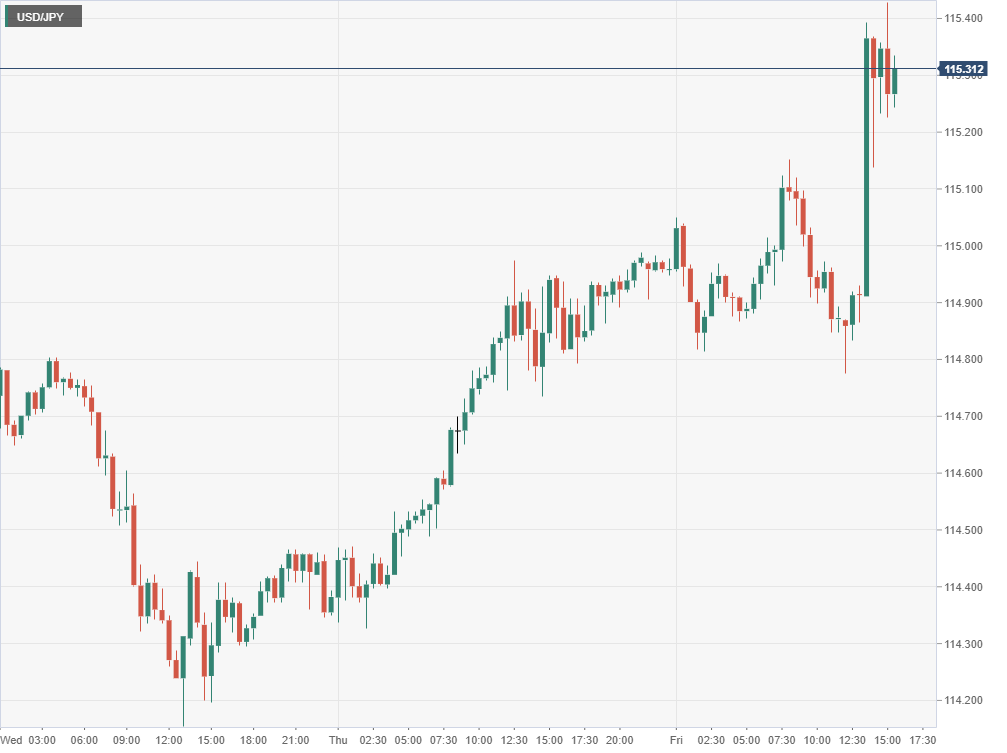
Dollar yen dropped to the week’s low of 114.16 after the Wednesday meetings of the Old World twins and a very weak US private payroll report from Automatic Data Processing (ADP).
The Old Lady of Threadneedle Street (BoE) raised its Bank Rate 0.25% to 0.5%, its second consecutive increase. The governors also approved the start of a passive reduction of its balance sheet in March. The Monetary Policy Committee (MPC) vote was an unusual 5 to.4, with an even bigger surprise that the minority wanted to double the increase to 0.5%.
Christine Lagarde, President of the European Central Bank (ECB), provided another surprise when she noted that inflation on the continent had increased and rate hikes this year were not ruled out.
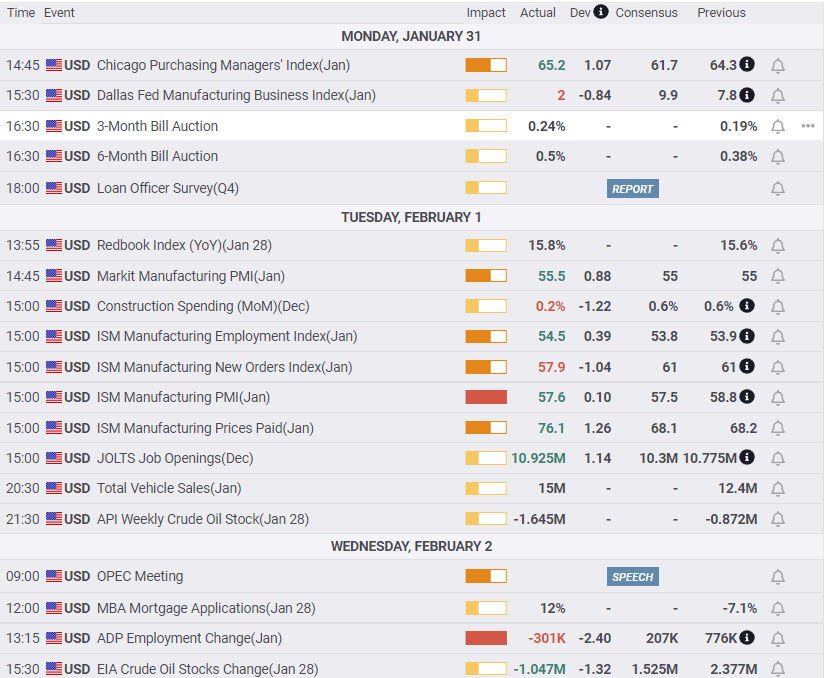
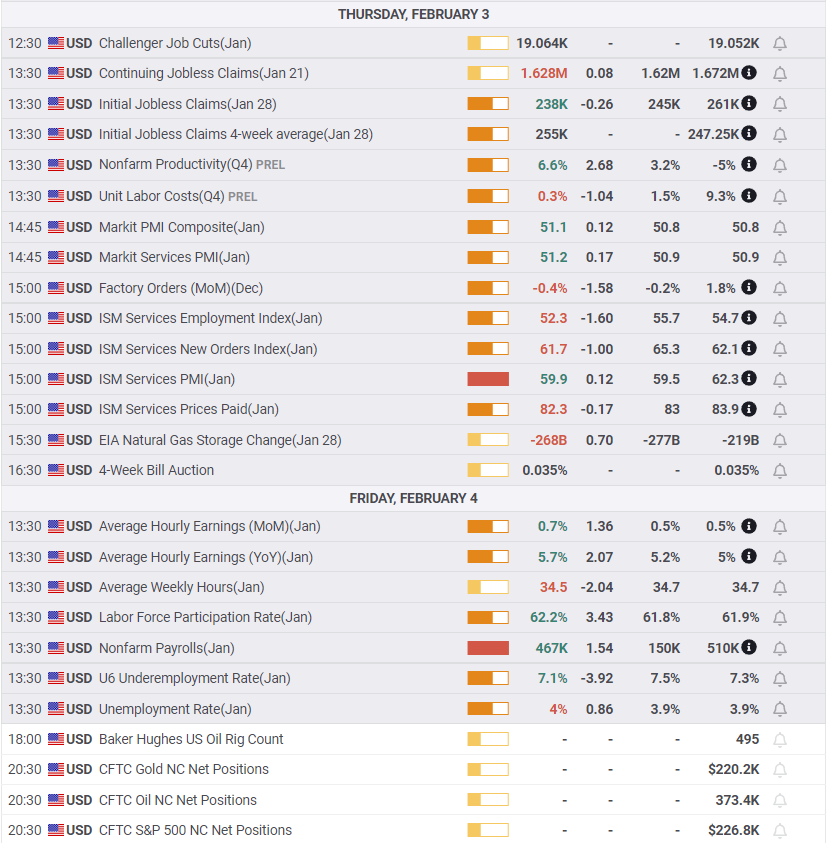
Nonfarm Payrolls in the US delivered the biggest jolt on Friday when January showed a gain of 467,000 well ahead of the 150,000 estimate. Market expectations had tilted to the negative after ADP reported a 301,000 loss and Initial Jobless Claims had shown a steady rise of the last five weeks.
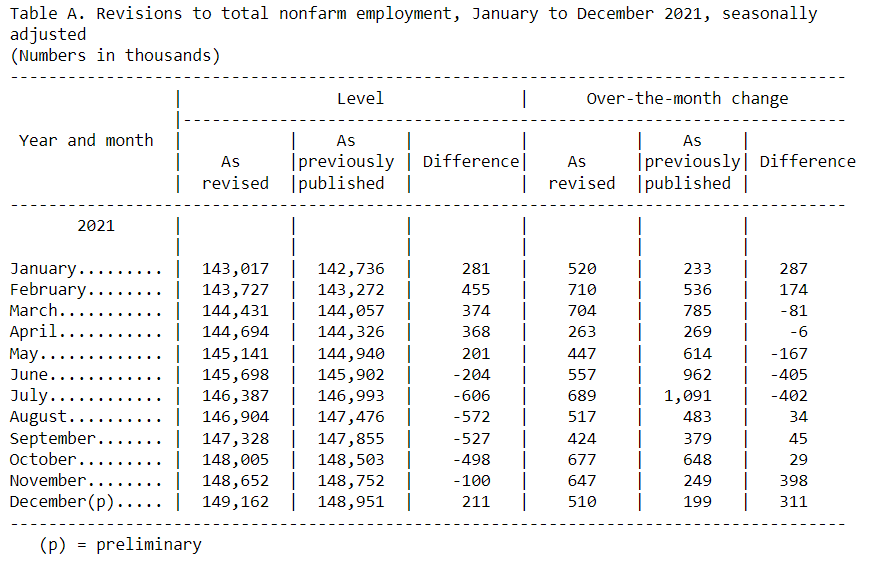
Annual revisions to the NFP numbers were modestly positive over the year adding 217,000. However, the beginnning and ends of the year were much stronger than initial estimates. January and February gained 461,000, November and December added 709,000, to 647,000 and 510,000 respectively , while May June and July lost 974,000.
US Bureau of Labor Statistics
Labor Force Participation rose to 62.2%, its best level since March 2020, suggesting people are rejoining the labor force in large numbers. Annual wages jumped 0.7% on the month and 5.7% for the year, propelled by inflation and figures sure to keep the Fed’s attention.
Treasury yields in the US soared after the NFP report with the 2-year rising 11 basis points in early Friday trading to 1.300% and the commercial benchmark 10-year adding 8 points to 1.908%.
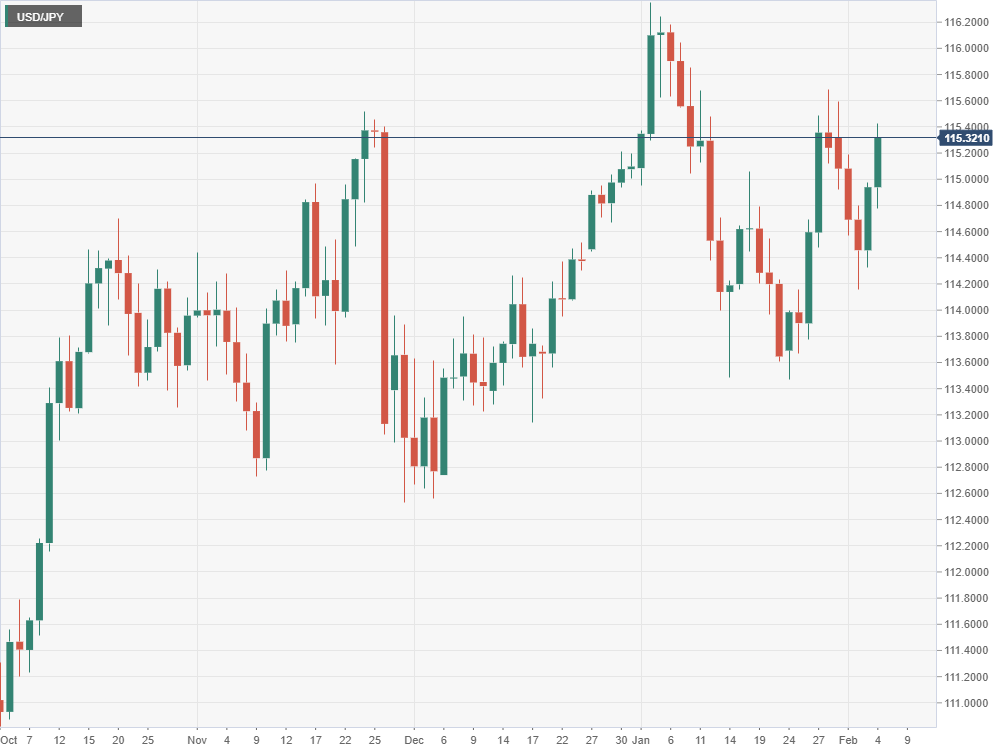
The USD/JPY climbed more than 40 points at the NFP release to resistance at 115.35 which has been the functional top since January 11.
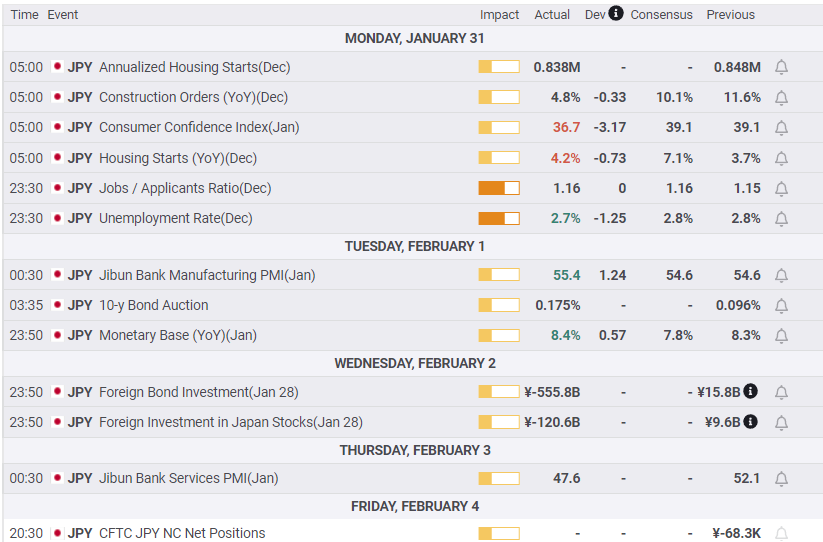
Japanese data showed no evidence of improvement in the economy. Consumer Confidence declined unexpectedly in January to 36.7, its lowest level since May. The Jibun Bank Manufacturing Purchasing Managers’ Index (PMI) slipped to 54.4 in January from 54.6. The services index dropped into contraction at 47.6, its first negative reading in four months. In 2021 services PMI averaged 47.4.
American economic information was generally positive aside from the NFP statistics. Manufacturing PMI rose, new orders fell and employment climbed to its best level in nine months. Services PMI climbed, orders and employment indexes slipped.
USD/JPY outlook
Economic fundamentals in the US and the Fed’s rate program have aligned for the USD/JPY and are driving currency valuations.
Nonfarm Payrolls have allayed the fears, instilled by the initial November and December job totals, that the US economy was beginning to slow. The Federal Reserve’s rate program received a powerful boost, perhaps enabling a March start to the balance sheet reduction.
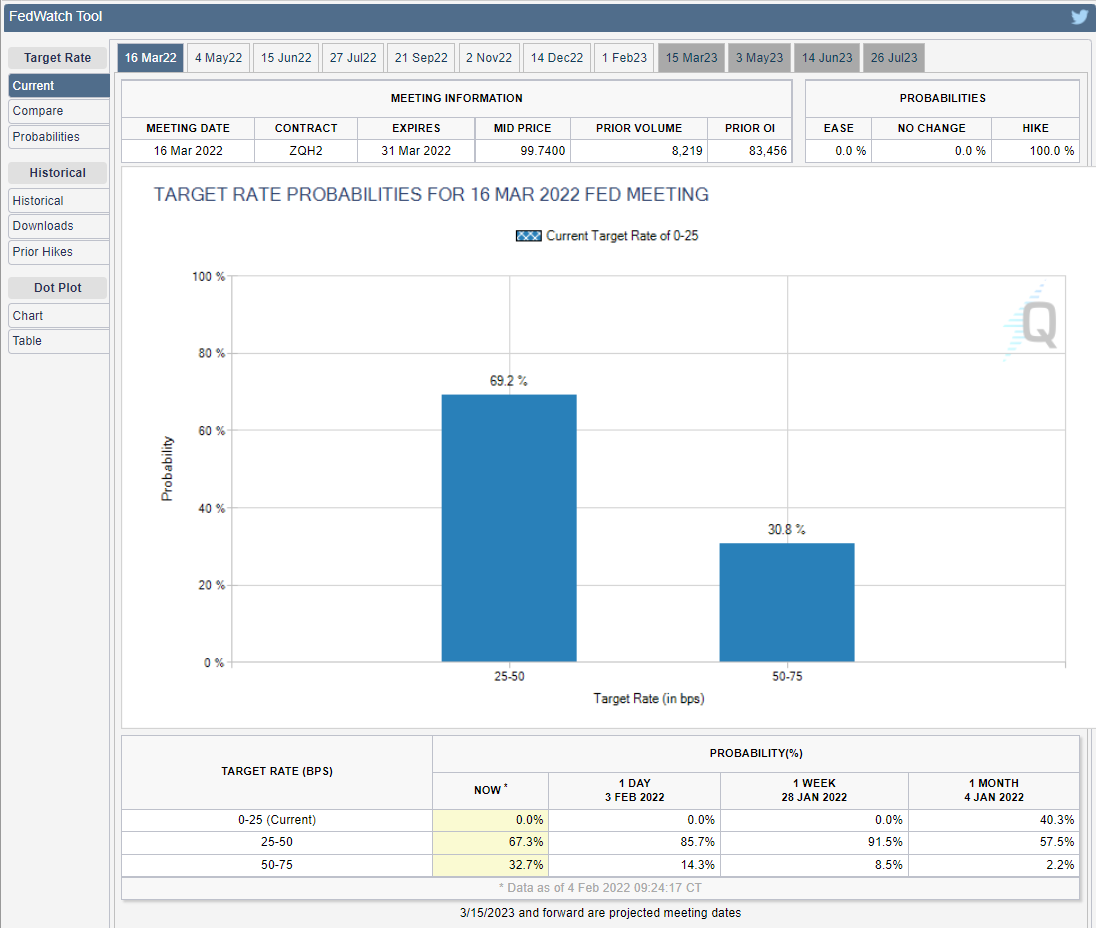
Treasury rates are cleared to rise further as the Fed should cheer the inflation help from higher commercial and government yields. The Fed Futures odds for a 0.5% rate hike at the March 16 meeting, something bank officials have downplayed, rose to 30.8% after the NFP report.
CBOE
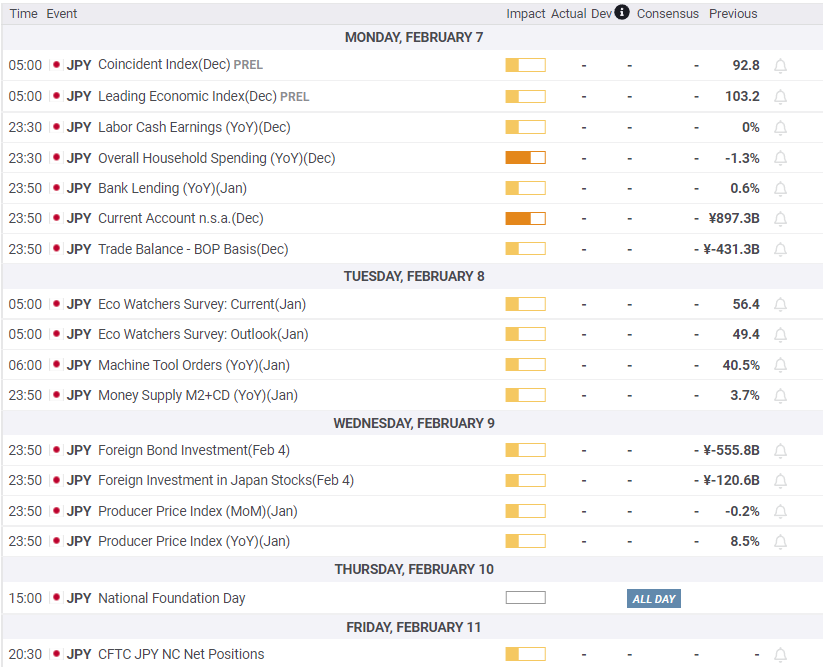
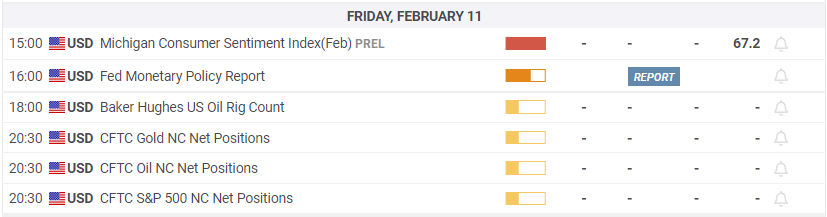
Inflation in the US is expected to continue its ascent in January with 7.3% forecast in the headline and 5.9% in the core when issued on Thursday. Japanese data consists of the Coincident and Leading Economic Indexes for December, the Eco Watchers Surveys and the Producer Price Indexes for January.
Bias in the USD/JPY is higher with resistance at 115.35 and 115.55 the initial goals followed by 116.35.
Japan statistics January 31–February 4
FXStreet
US statistics January 31–February 4
FXStreet
Japan statistics February 7–February 11
FXStreet
US statistics February 7–February 11

FXStreet
USD/JPY technical outlook
The USD/JPY reversal on Thursday and Friday broke no new ground and consequently the MACD (Moving Average Convergence Divergence) and the Relative Strength Index (RSI), while positive, remain subdued. Average True Range (ATR) was nearly flat on the week. Compared to the late December cross in the MACD that prefaced the January 4 breach of 116.00 and the RSI entry to overbought just after, both indicators require movement through resistance at 115.35 and 115.55 before sanctioning a move to the old high close at 116.12 and the top at 116.35.

The long-term trend higher in the USD/JPY is well represented by the 100-day and 200-day moving averages (MA) whose slopes have stayed positive since the first quarte of last year. The pitch of the 100-day MA has steepened since the turn of the year. The 50-day MA at 114.33 provided the base for Thursday's reversal and is now support as is the 21-day MA at 114.66.
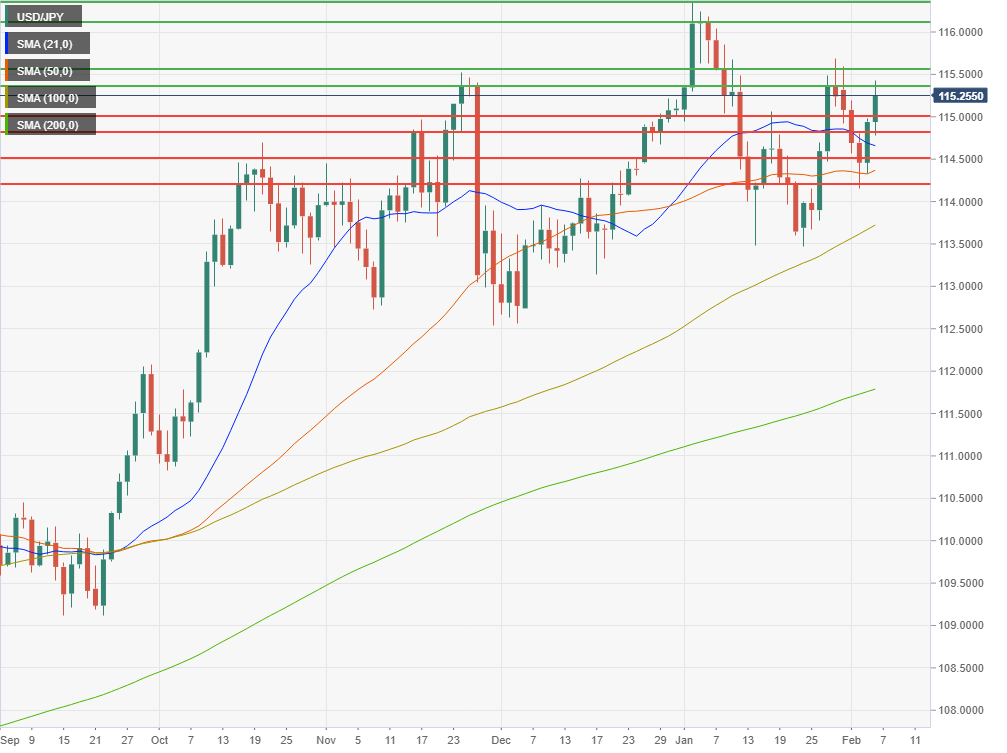
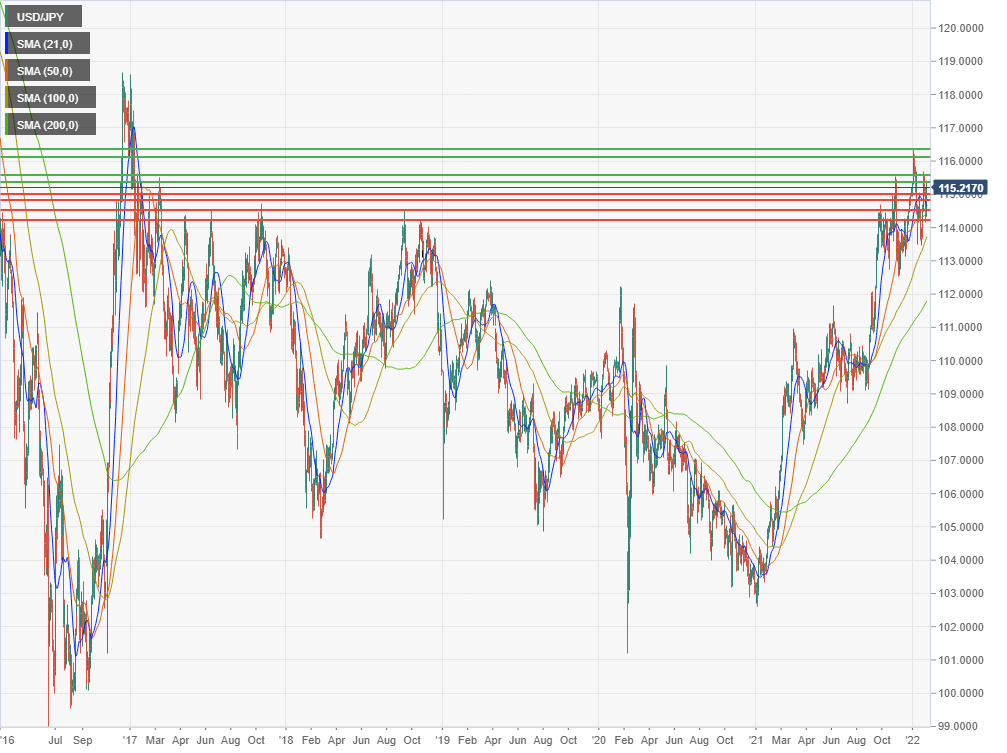
Resistance at 115.35 and 115.55 has been tried several times and proven formidable. Part of the reason is that the area above 116.00, except for the brief foray early in January, has not been visited in four years. Given the steep increase in the USD/JPY since January 2021, it is not yet clear that the rate and economic fundamentals will support further large gains in the pair.
Resistance: 115.35, 115.55, 116.10, 116.35
Support: 115.00, 114.80 114.50, 114.60
FXStreet Forecast Poll
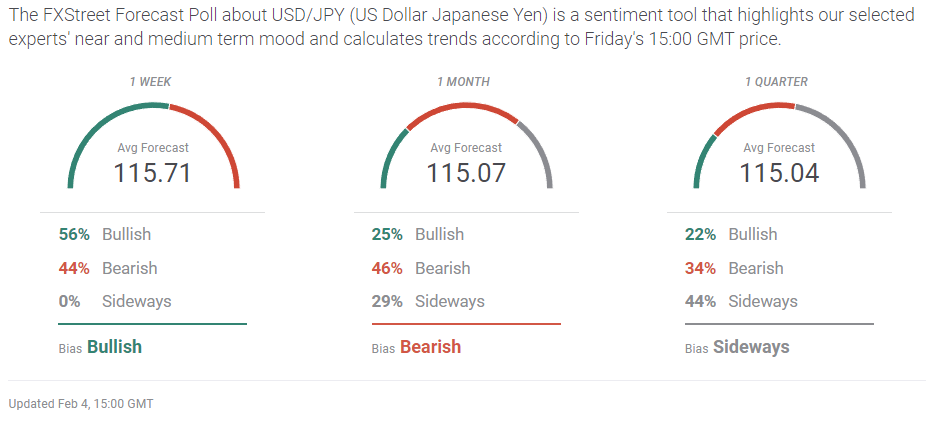
The FXStreet Forecast Poll gives clear indication of the strength of resistance above 115.50.
Author

Joseph Trevisani
FXStreet
Joseph Trevisani began his thirty-year career in the financial markets at Credit Suisse in New York and Singapore where he worked for 12 years as an interbank currency trader and trading desk manager.