USD/JPY edges higher as markets focus on data and the BoJ

USD/JPY edged higher to 157.90 on Tuesday, with the yen remaining within a narrow range. Markets are assessing the direction of Prime Minister Sanae Takaichi’s government, which continues to pursue stimulative fiscal policy despite concerns over the weak yen and the funding of government spending.
In a speech to parliament, Takaichi pledged to cut the consumption tax on food. At the same time, she stressed that the government would seek to finance its spending without issuing additional bonds. This should provide some reassurance to markets amid concerns over rising public debt and yields.
This week, investors are awaiting several key reports from Japan: August wage data, the current account and household spending, as well as September indicators of consumer confidence and machine tool orders.
Attention is also focused on the Bank of Japan. The summary of opinions from its September meeting reflected growing concern that inflation could remain above the 2% target for longer. This keeps the prospect of another rate hike before year-end alive, although the timing of the next move ahead of the October and December meetings remains unclear.
Technical analysis
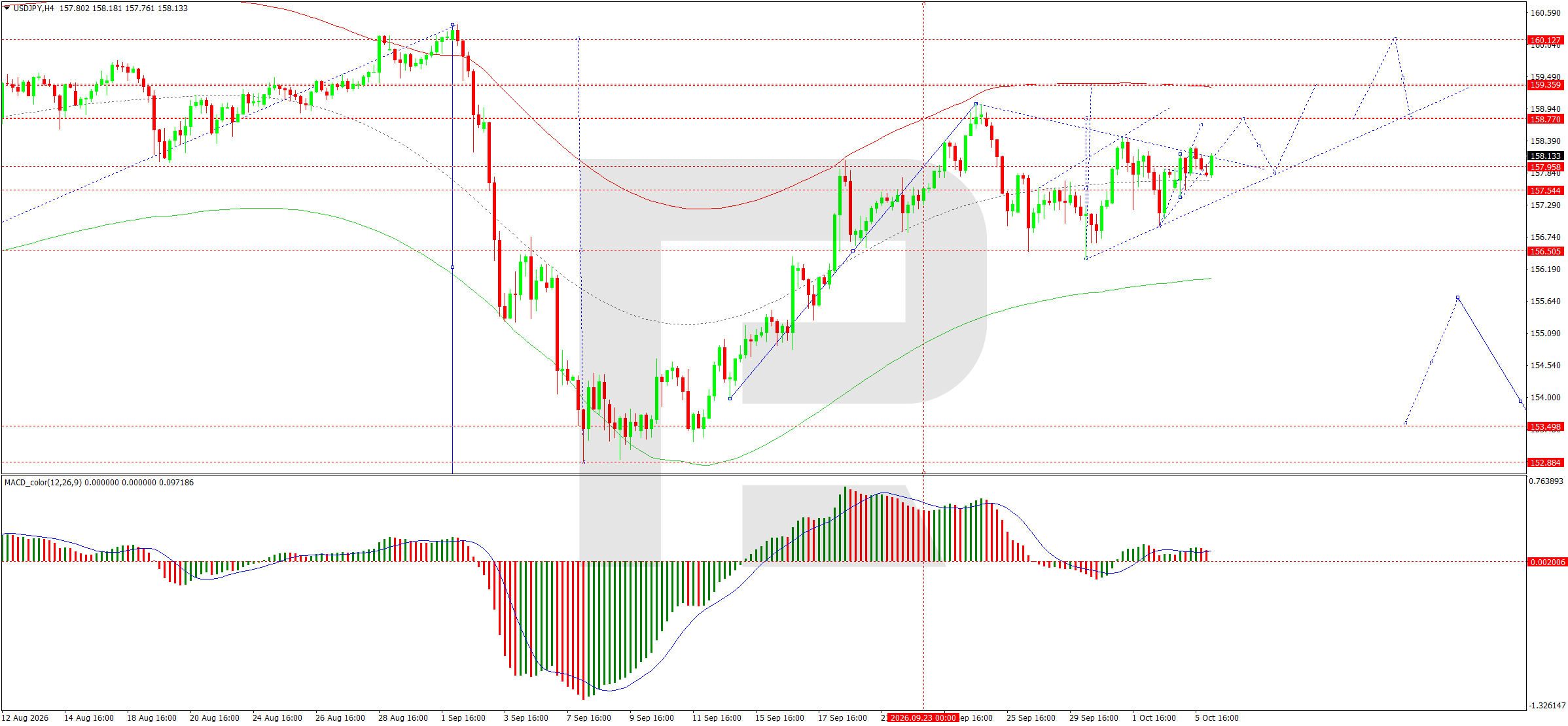
USD/JPY maintains a short-term upward structure but is trading within a narrowing range. On H4, following a recovery from the 156.50 area, the pair settled above 157.54 and formed a consolidation range around 157.86–157.96. The main scenario envisages a further rise towards resistance at 158.77. A break above this level could open the way towards 159.36, although 158.77 remains the primary target for now. After testing this level, a correction back towards 157.96–157.86 is likely.
On H4, the price remains above the ascending support line, while further gains are capped by the descending boundary of the local structure. A triangle is therefore forming, with gradually rising lows. The MACD indicator is near zero: the histogram retains slight positive momentum, supporting the bullish scenario while also indicating moderate buying momentum. A move below 157.54 would weaken the bullish scenario and increase the likelihood of a return towards 156.50.
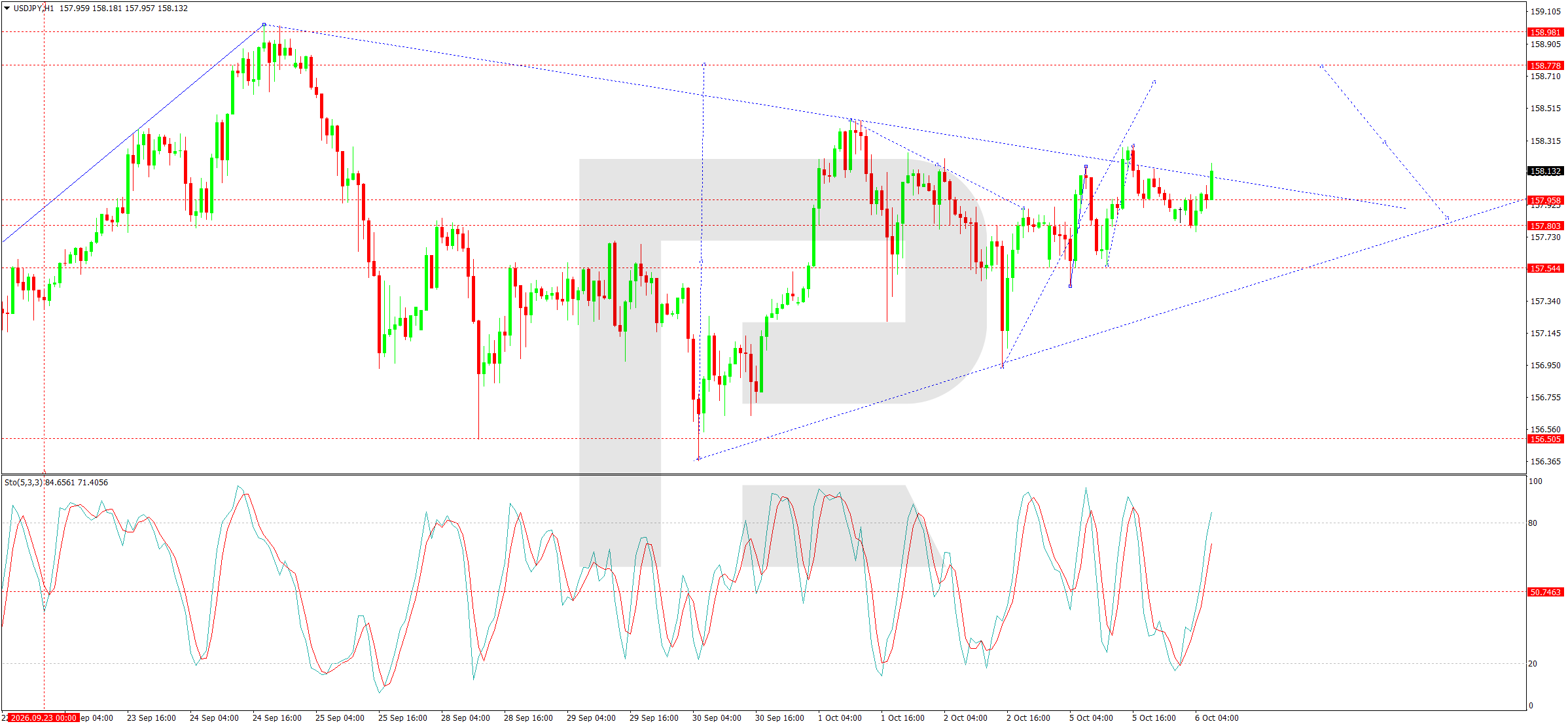
On H1, the pair also remains in consolidation around 157.96. The latest move is higher, and the Stochastic oscillator has risen above 80, confirming buying momentum. At the same time, the oscillator’s position in the overbought zone increases the likelihood of a local pullback following the rise. As long as the price remains above 157.80, the priority is for a move towards 158.77, followed by a correction towards 157.96. A confirmed break and consolidation above 158.77 would bring 159.36 into focus as the next medium-term upside target. Until the triangle is broken, volatility may remain limited, while holding above 157.96 would confirm the current scenario.
Conclusion
USD/JPY is trading marginally higher as markets assess Prime Minister Takaichi’s fiscal plans and await a series of Japanese economic releases. Her pledge to cut the consumption tax on food without additional bond issuance has partially eased concerns over debt sustainability. Meanwhile, the BoJ’s September meeting summary highlighted growing inflation concerns, keeping the prospect of another rate hike before year-end alive, although the timing remains uncertain. Technically, the pair maintains a mild bullish bias within a narrowing triangle, with 158.77 as the immediate target and 159.36 as the next medium-term target. A break below 157.54 would weaken the bullish scenario and expose 156.50, while holding above 157.96 would reinforce the current scenario.
Author

RoboForex Analysis Department
RoboForex
RoboForex Analysis Department provides timely market insights, expert technical analysis, and actionable forecasts across forex, commodities, indices, and equities.