USD/JPY Analysis: Traders seem non-committed, US CPI awaited
- A combination of factors assisted USD/JPY to regain positive traction on Wednesday.
- Worries about a surge in COVID-19 cases in Japan acted as a headwind for the JPY.
- A shift in Fed rate expectations prompted USD short-covering ahead of the CPI report.

The USD/JPY pair came under some renewed selling pressure on Tuesday, albeit lacked any follow-through and managed to find some support near the 108.35 region, or monthly lows. A sharp fall in the global equity markets forced investors to take refuge in traditional safe-haven assets. This was seen as a key factor that benefitted the Japanese yen and exerted some pressure on the major. The global risk sentiment took a hit amid escalating conflict between Israeli and Palestine. This comes amid worries that rising inflationary pressures in the US might force the Fed to hike rates earlier than expected, which further dented investors' confidence.
However, a combination of supporting factors helped limit any deeper losses, rather assisted the pair to attract some dip-buying at lower levels. Concerns that the recent surge in COVID-19 cases could hinder Japan's fragile economic recovery continued acting as a headwind for the JPY. Bullish traders further took cues from a goodish pickup in the US Treasury bond yields, led by a shift in Fed rate expectations. This, in turn, triggered a modest US dollar short-covering move ahead of the release of the latest US consumer inflation figures and was seen as another factor that drove the pair higher during the Asian session on Wednesday.
The headline CPI, due later during the early North American session, is anticipated to accelerate to 3.6% YoY in April. This would be significantly above the Fed’s 2% target and add to the worries that maybe inflation is something more than transitory. Nevertheless, the data will play a key role in influencing the near-term USD price dynamics. This, along with the broader market risk sentiment, should assist investors to determine the next leg of a directional move for the major.
Short-term technical outlook
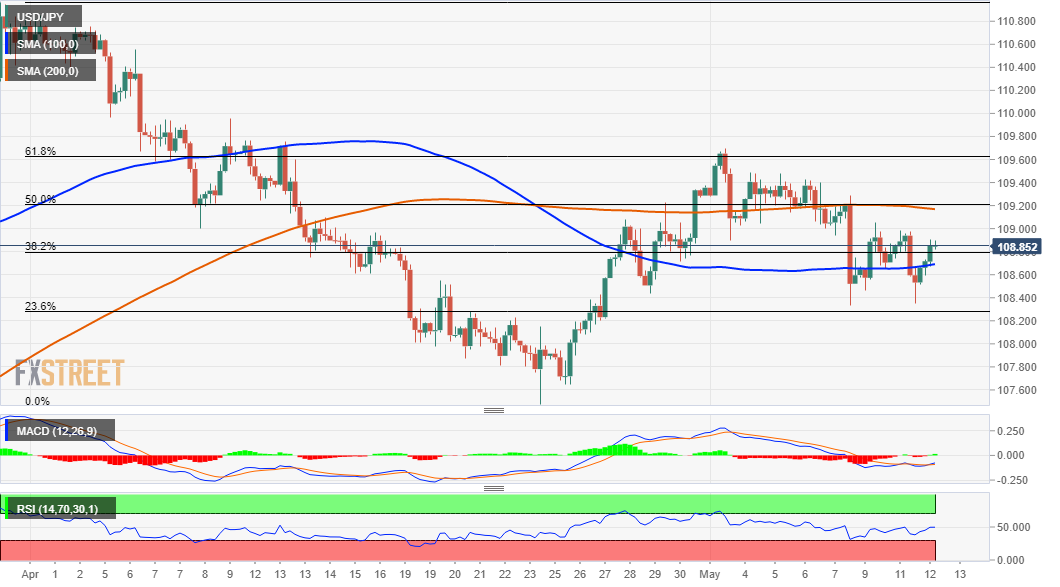
From a technical perspective, the recent pullback from the 61.8% Fibonacci level of the 110.97-107.48 downfall continues to find decent support near the 108.35 region. The latter coincides with the 23.6% Fibo. level and should now act as a key pivotal point for short-term traders. A convincing break below now seems to turn the pair vulnerable to break below the 108.00 mark and accelerate the fall further towards April monthly swing lows, around the 107.50-45 region. Some follow-through selling will be seen as a fresh trigger for bearish traders and set the stage for an extension of the recent pullback from the vicinity of the 111.00 mark, or one-year tops touched on March 31.
On the flip side, the pair, so far, has been struggling to find acceptance above the 109.00 mark. This is closely followed by resistance near the 109.25 region (50% Fibo. level). A subsequent strength will negate any near-term bearish bias and push the pair further beyond the 61.8% Fibo. level resistance near the 109.65-70 region. The next relevant target on the upside is pegged near the key 110.00 psychological mark, above which bulls are likely to push the pair further towards the 110.70 intermediate resistance en-route the 111.00 mark.
Author

Haresh Menghani
FXStreet
Haresh Menghani is a detail-oriented professional with 10+ years of extensive experience in analysing the global financial markets.