US Purchasing Managers’ Indexes hint at an economic slowdown, credit markets demur
- Manufacturing PMI drops to an 18 month low, New Orders at 22 month bottom.
- Orders for manufacturing fall the most in a single month since April 2020.
- Prices Paid in manufacturing are the highest since June 2021, in services the price index is the second highest on record.
- US Treasury yields fly higher on Fed comments suggesting rapid acceleration in rates.

Economic turning points are often hard to see. Credit market inflections are much more dramatic.
Case in point is the March Purchasing Managers’ Indexes (PMI) for the service sector and Tuesday's surge in US Treasury yields.
Overall PMI from the Institute for Supply Management (ISM) rose to 58.3 from 56.5 in February, besting the consensus forecast of 58.0. It was the first gain in four months and the 22nd straight month of growth. Readings above 50 in the ISM indexes signal expansion.
Services PMI
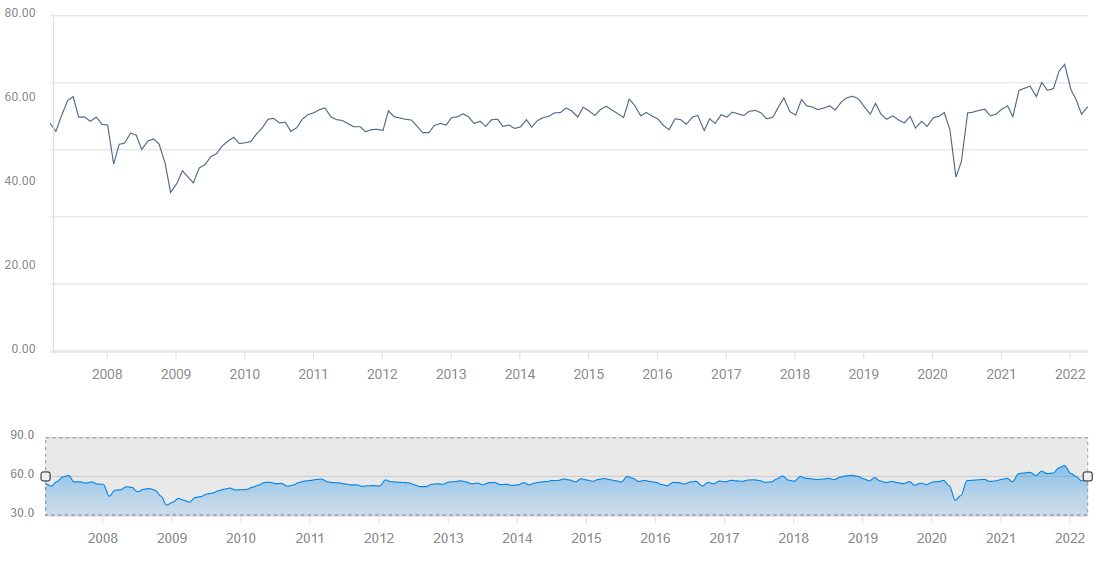
Except for the February score, it was the lowest PMI in 13 months, since 55.9 last February, and reinforces the decline from 68.4 in November. Which interpretation better represents the trend? The one month gain or the four month trend?
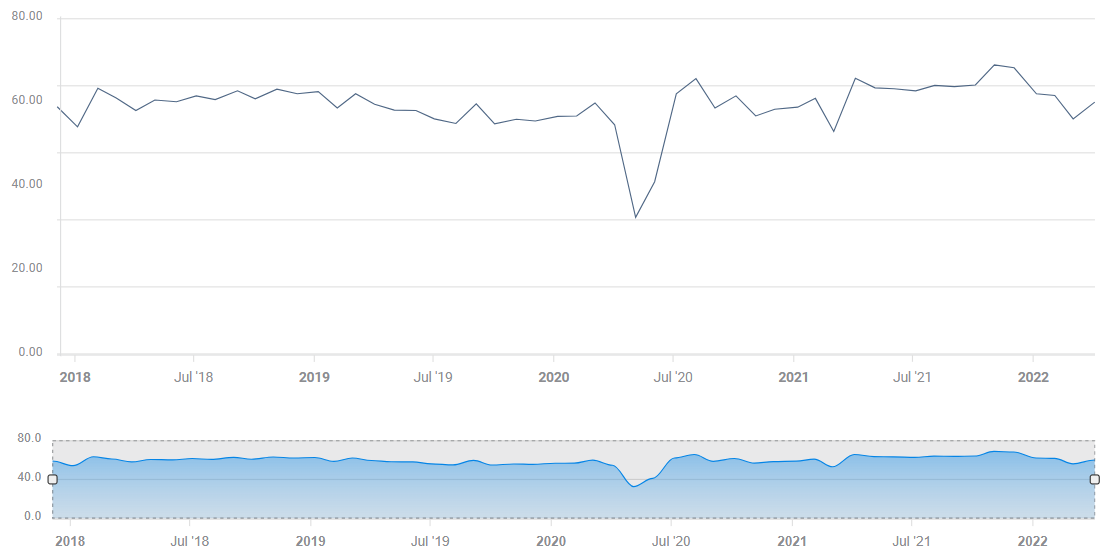
The New Orders Index, probably the most important measure for future business, rose to 60.0 in March from 56.1, missing the 64.9 projection by a considerable margin. It was also the first increase in four months, continued the downdraft from October’s 69.0 score and was the second lowest score in 13 months.
Services New Orders
FXStreet
The Prices Paid Index rose to 83.8 last month, higher than the 83.3 forecast and February’s 83.1. March’s number missed being the highest on record by 0.1, December had registered 83.9.
Services employment was the only unambiguous improvement in March, rising to 54.0 from 48.5, well ahead of the 50.3 expectation. It was the best score since December’s 54.7.
In three of the four main service indexes the negative cast seems clear despite modest one month improvements. Even though employment was the best figure in three months, it was only just over the midpoint for the last 18 months. There has been no hiring trend.
When the service sector indexes are analyzed in conjunction with those from manufacturing, which came out last week, the slippage in outlook becomes more obvious.
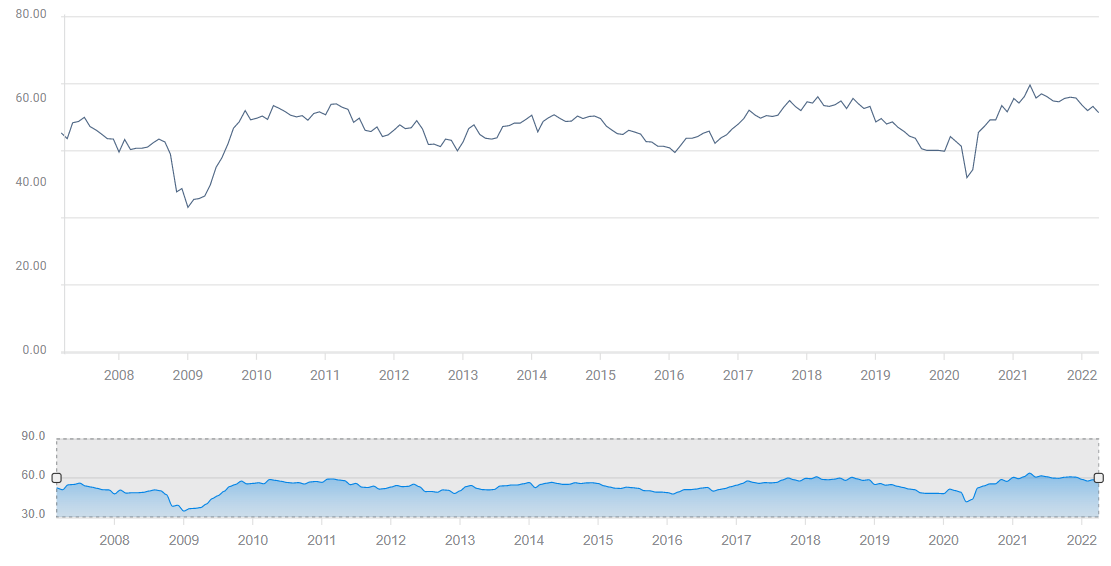
Manufacturing PMI dropped to 57.1 in March, missing the 59.0 forecast and fading from 58.6 in February. It was the weakest level in 18 months and a continuation of the declining trend from October’s high at 60.8.
Manufacturing PMI
FXStreet
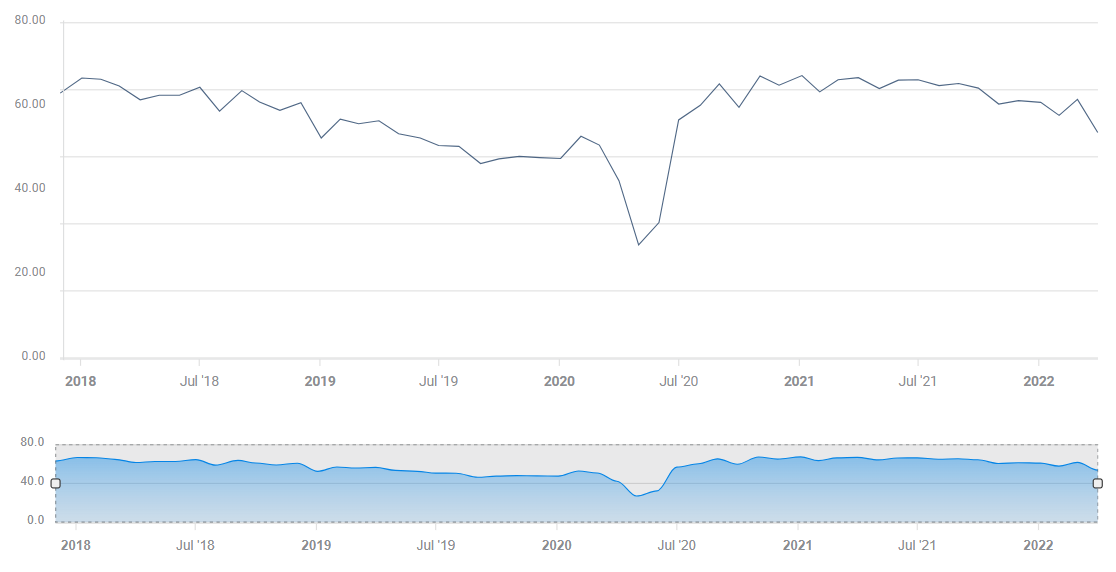
New Orders plunged to 53.8 in March from 61.7, a substantial disappointment on the 59.8 forecast. This crucial index reached a 22 month low, with the poorest business prospects since it registered 32.2 in May 2020.
Manufacturing New Orders
The Prices Paid Index jumped to 87.1 last month from 75.6 in February. The consensus prediction had been 80. It was the strongest price inflation in nine months.
Employment’s index rose to 56.3 from 52.9, for the best reading in a year and the second-best in the pandemic era. The estimate was 53.7.
Inflation, consumption and economic growth
Perhaps the most logical way to interpret the ISM results is in the context of current economic concerns and the historical role of manufacturing in economic direction.
Inflation and its impact on the US consumer are the chief current economic worries. Will inflation's record ascent and the much higher increases for many necessities, especially gasoline and energy, force a pullback in consumer spending? At 70% of US GDP, robust consumption is essential for the recovery.
On these topics, the ISM indexes are not ambiguous. Prices paid by manufacturing businesses have jumped sharply after subsiding at the end of last year. The gain in services pricing is less, but manufacturing costs have historically been the leader in this area. If factory production costs are escalating, service sector expenses will soon follow.
New Orders are the other telltale. The 7.9 point drop in the manufacturing index is the steepest one month decline since the pandemic shuttered economy of April 2020. If factory orders are falling it is because their customers, retailers, are seeing less business.
Consumer Spending was slightly weaker than expected in February at 0.3% vs 0.4%, with the GDP component Control Group down 1.2%. Personal Consumption Expenditures rose just 0.2%, less than half the 0.5% forecast. Spending and expenditures were both up sharply in January, 4.9% and 6.4% respectively, so on a statistical basis, first quarter consumption is strong.
Economic growth in the US has slowed substantially from the fourth quarter's robust 6.9% pace. The Atlanta Fed latest GDPNow estimate for the first three months is 0.9%.
Alone, the ISM results are not conclusive. When they are combined with soaring inflation and a Federal Reserve that seems determined to make up for its recent policy mistakes by rapidly increasing rates, the prognosis for the US economy becomes much more problematic.
Treasury yields and the Fed
The entire Treasury yield curve lurched higher on Tuesday after comments from two Federal Reserve officials made it clear they prefer higher rates and an aggressive reduction of the central bank's balance sheet.
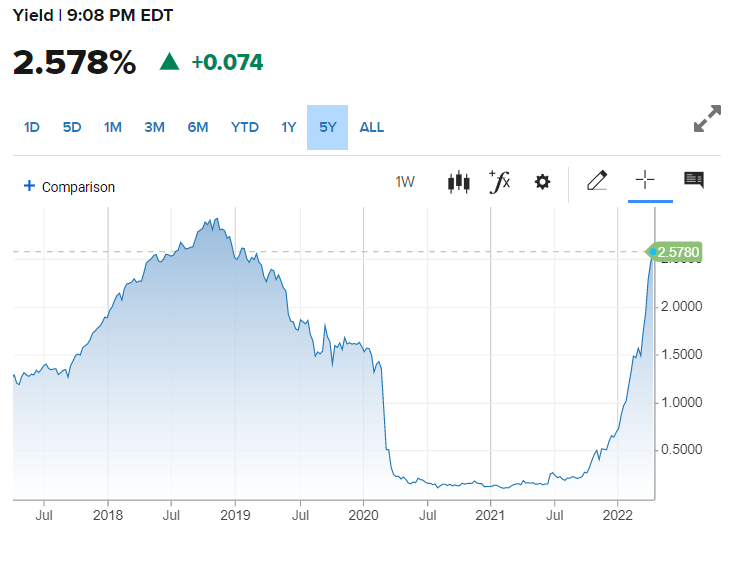
The 2-year Treasury yield added 15 basis points on Monday’s close to 2.578%.
2-year Treasury yield
CNBC
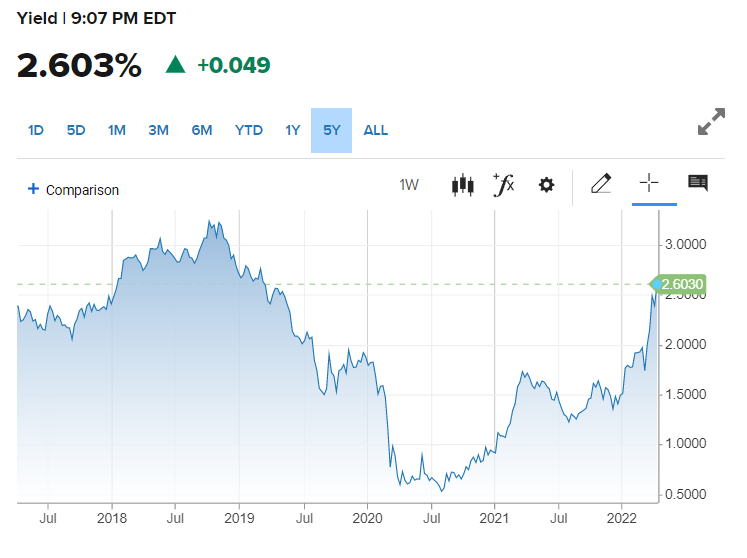
The 10-year climbed 19 points to 2.603% and the 30-year return rose 15 points to 2.621%.
10-year Treasury yield
CNBC
“It is of paramount importance to get inflation down,” observed Federal Reserve Governor Lael Brainard in a bank webinar on Tuesday. The Fed “will continue tightening monetary policy methodically through a series of interest rate increases and by starting to reduce the balance sheet at a rapid pace as soon as our May meeting.”
San Francisco Fed President Mary Daly, speaking later in the day to the Native American Finance Officers Association said that inflation at a 40-year high, “is as harmful as not having a job.”
Ms Brainard made her policy preference specific. Reducing the $9 trillion balance sheet, “will contribute to monetary policy tightening over and above the expected increases in the policy [fed funds] rate.”
The comments of both women were more notable because they had been considered among those favoring less restrictive monetary policy and lower rates.
Yield spreads have collapsed. The 2-10 spread was 2.5 points and the distance between the 2-year note and the 30-year bond was 4 basis points.
Normally, a flattening yield curve occurs when economic prospects deteriorate and credit markets anticipate lower interest rates in the future. It is those farther rates that move lower in a classic indicator of trouble ahead.
The rise in Treasury yields this year has an entirely different origin. Near term rates have surged as the artificial restraints of the Fed's pandemic policy have been lifted.
Does the nearly inverted yield curve signal an economic slowdown? The ISM indexes suggest a possibility but no more. Markets should be skeptical. This credit market prediction should be treated with caution.
Author

Joseph Trevisani
FXStreet
Joseph Trevisani began his thirty-year career in the financial markets at Credit Suisse in New York and Singapore where he worked for 12 years as an interbank currency trader and trading desk manager.














