US May PCE inflation preview: Data likely to reaffirm FOMC's hawkish tilt
- Core PCE inflation is expected to rise to 3.4% in May.
- USD stays resilient against its rivals following the FOMC-inspired rally.
- Gold could extend last week's slide if USD capitalizes on PCE Price Index data.

The US Bureau of Economic Analysis will release the Personal Consumption Expenditures (PCE) inflation report on Friday, June 25. Markets expect the Core PCE Price Index, the Federal Reserve’s preferred gauge of inflation, to rise to 3.4% on a yearly basis in May from 3.1% in April. On a monthly basis, the PCE Price Index and the Core PCE Price Index are forecast to arrive at 0.3% and 0.6%, respectively.
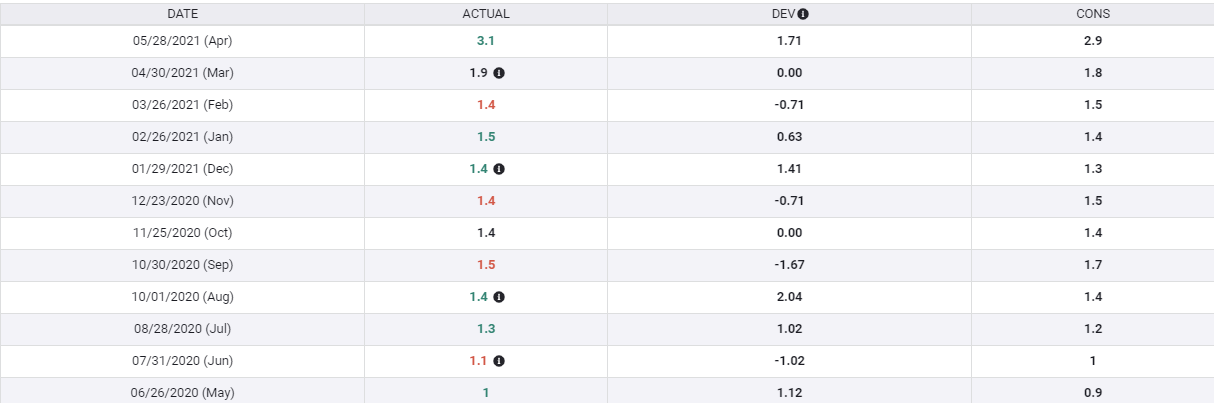
Historical PCE inflation data
In its updated Summary of Economic Projections (SEP), the Federal Reserve noted that it sees the annual Core PCE inflation averaging 3% in 2021, compared to 2.2% in March’s estimate, before returning to 2.2% in 2022.
In the press conference following the FOMC’s June meeting, FOMC Chairman Jerome Powell said that they are not dismissing the possibility that inflation will stay high for longer than expected. Moreover, the SEP revealed that the number of policymakers who see a lift-off in the fed funds rate from zero in 2023 rose to 13 from seven in March. In its policy statement, “the Committee will aim to achieve inflation moderately above 2% for some time so that inflation averages 2% over time and longer‑term inflation expectations remain well-anchored at 2%,” the Fed reiterated.
The hawkish shift seen in the FOMC’s policy outlook amid increasing price pressures provided a boost to the USD and the US Dollar Index (DXY) surged 2%, posting its largest weekly percentage gain since the beginning of the pandemic.
The DXY started the week on the back foot and retraced a portion of last week’s rally. Although investors seem to have already priced in high inflation expectations, a stronger-than-anticipated annual Core PCE Price Index reading could help the greenback continue to outperform its rivals. On the other hand, a soft inflation print could force the DXY to extend its correction. Nevertheless, a single figure is unlikely to cause market participants to change their views with regards to the Fed’s policy outlook and an adverse reaction in the USD could remain short-lived.
Eyes on gold
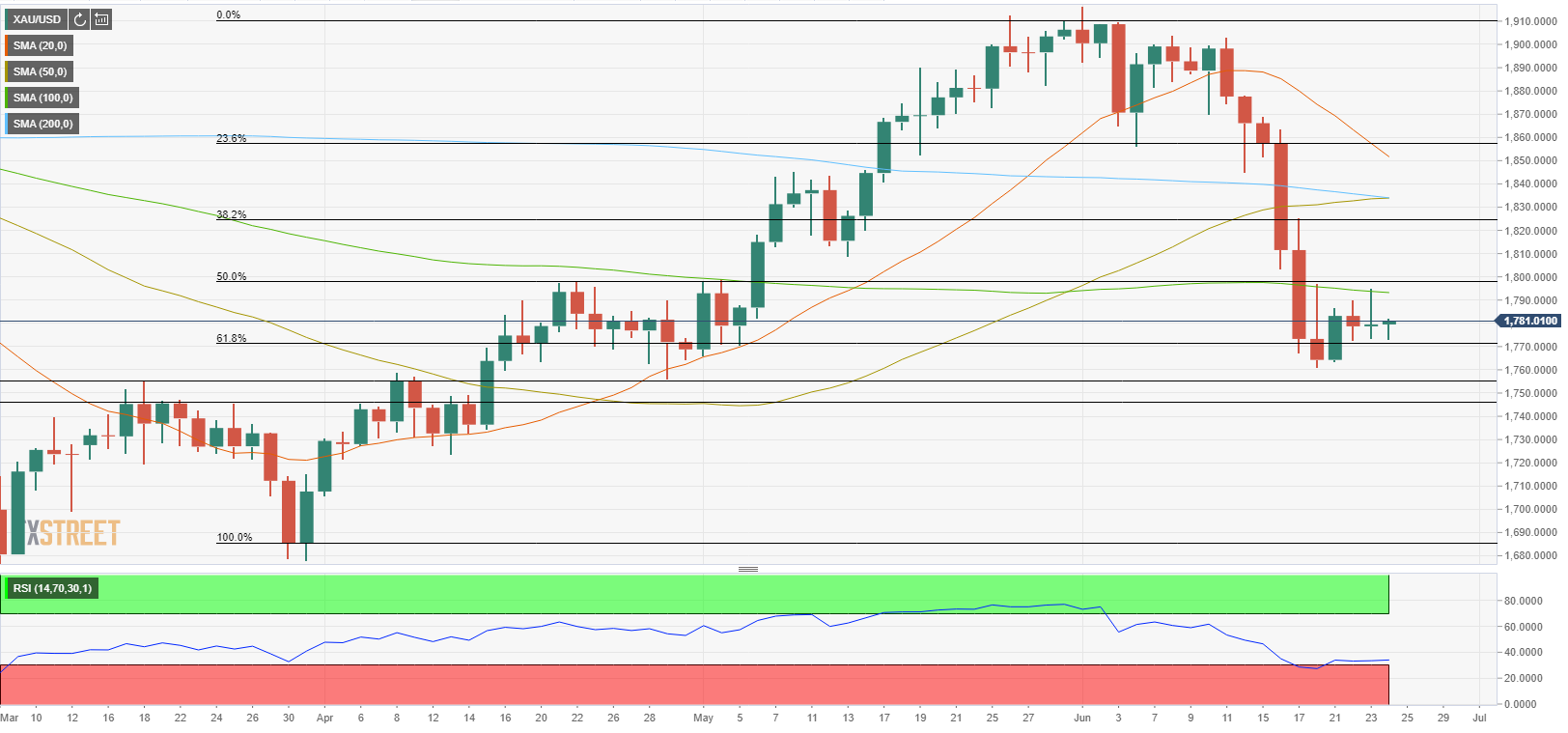
After losing more than 5% last week, gold staged a rebound during the first half of the week but struggled to break above key resistance levels, suggesting that buyers are struggling to take control of the price. Moreover, the Relative Strength Index (RSI) indicator stays well below 50, confirming the view that XAU/USD sellers are dominating the action.
A stronger-than-expected PCE reading could trigger a USD rally and cause gold to target $1,770 (Fibonacci 61.8% retracement of April-June uptrend) ahead of $1,756 (April 29 low, static level) and $1,745 (static level, previous resistance)
On the other hand, XAU/USD will need to clear the $1,795/$1,800 resistance area, where the Fibonacci 50% retracement level, 100-day SMA and the psychological hurdle coincide. In case gold manages to finish the week above that level, it could extend its rebound toward $1,825 (Fibonacci 38.2% retracement) and $1,835 (200-day SMA).
Author

Eren Sengezer
FXStreet
As an economist at heart, Eren Sengezer specializes in the assessment of the short-term and long-term impacts of macroeconomic data, central bank policies and political developments on financial assets.