US: Fed should not ignore recent events
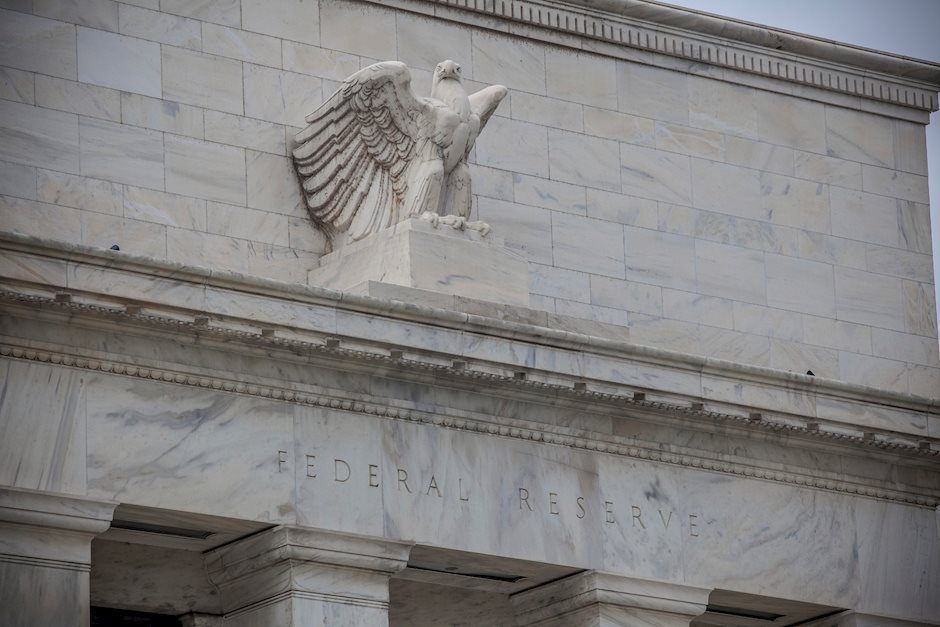

Next week, the FOMC, the US Federal Reserve's monetary policy-making body, will meet. Even before the turbulence surrounding the ultimately insolvent US bank Silicon Valley Bank (SVB), the outcome of the upcoming meeting was uncertain. Expectations ranged between a rate hike of 25 or 50 basis points (bp). With the SVB bankruptcy, expectations have shifted downward, so now the decision will likely be between a 25bp rate hike or unchanged policy rates.
We expect a 25bp hike in policy rates. The bankruptcy of SVB (and Signature Bank) should leave its mark on the decision-makers. At the same time, however, the stronger than expected economic data in February had Fed Chairman Powell saying (before the SVB bankruptcy) that a 50bp hike was ‘on the table’ at the March meeting. This would have been an accelerated approach after the 25bp hike in early February. A 50bp hike is now likely to be off the table again. Between the alternatives of a 25bp hike or none, it could be a close call.
Almost more exciting than the rate decision next week will be the outcome of the new survey of FOMC members. The survey will show expectations for GDP, inflation, the unemployment rate and policy rate for the coming years. In his recent testimony to the US Congress last week, Powell had announced an increase in interest rate expectations from the last survey in December. The median at that time was for a rate peak of 5.1%, up another 50bp from current levels. The question next week will be whether the new survey will show a higher interest rate peak. In our view, this is unlikely. The SVB may well have been the weakest link in the chain, but was still an indicator of the pressure the entire banking sector is facing from the rapid rise in interest rates. To ignore this and carry on as if nothing had happened would be daring. This is because the reaction of the markets is difficult to assess and thus entails considerable risks.
In summary, we therefore expect the following: In addition to a 25bp hike in policy rates, the new survey of FOMC members should see rates peaking at about the same level as in December. This corresponds to rate hikes of another 50bp from current levels. If the rate peak is seen higher, we expect to see accompanying softening statements that emphasize the high level of uncertainty and highlight the possibility of pauses in the ongoing process of monetary tightening. Anything that indicates a more cautious approach by the FOMC should be received positively by the markets.
EZ – Business sentiment could cloud over
Next week (March 24), a first flash estimate of Eurozone PMI data for March will be published. In February, sentiment among service providers brightened considerably. At the country level, sentiment has brightened substantially, especially in Spain and Italy. In contrast, sentiment in manufacturing deteriorated slightly in February. However, the decline is due to a shortening of delivery times, which points to a continued easing of the supply chain situation.
For March, the sentiment of Eurozone companies could cloud over slightly because it can be assumed that the turmoil in the US banking sector will also cause uncertainty in the Eurozone. Together with China, the US is the Eurozone's most important trading partner. If the US economy cools down more than assumed so far due to the problems in the financial sector, this would also have a dampening effect on the growth prospects of the Eurozone. For the time being, we are not making any changes to our growth forecasts for the Eurozone, as they are conservative. However, developments in the US banking sector have increased downside risks to the economic outlook. For example, prices for cyclically sensitive commodities such as crude oil and copper have already come under significant pressure in recent days.
Author
Erste Bank Research Team
Erste Bank
At Erste Group we greatly value transparency. Our Investor Relations team strives to provide comprehensive information with frequent updates to ensure that the details on these pages are always current.

















