US Durable Goods Orders April Preview: If the automobile dealerships are closed, how do you buy a car?
- Durable goods order set to match largest decline on record.
- Business spending proxy, non-defense capital goods, to drop 10%.
- Markets have already absorbed the brunt of economic disaster news.


As if any further proof is required that the US economy has experienced the fastest and deepest collapse in consumption and economic growth in its history, orders for durable goods are expected to match or surpass their largest declines on record.
April sales are forecast to fall 19% after plunging 15.3% in March which would equal the largest prior decrease in the 28 year series of August 2014. The range of estimates in the Reuters survey of economists is from -1.2% to -35%.
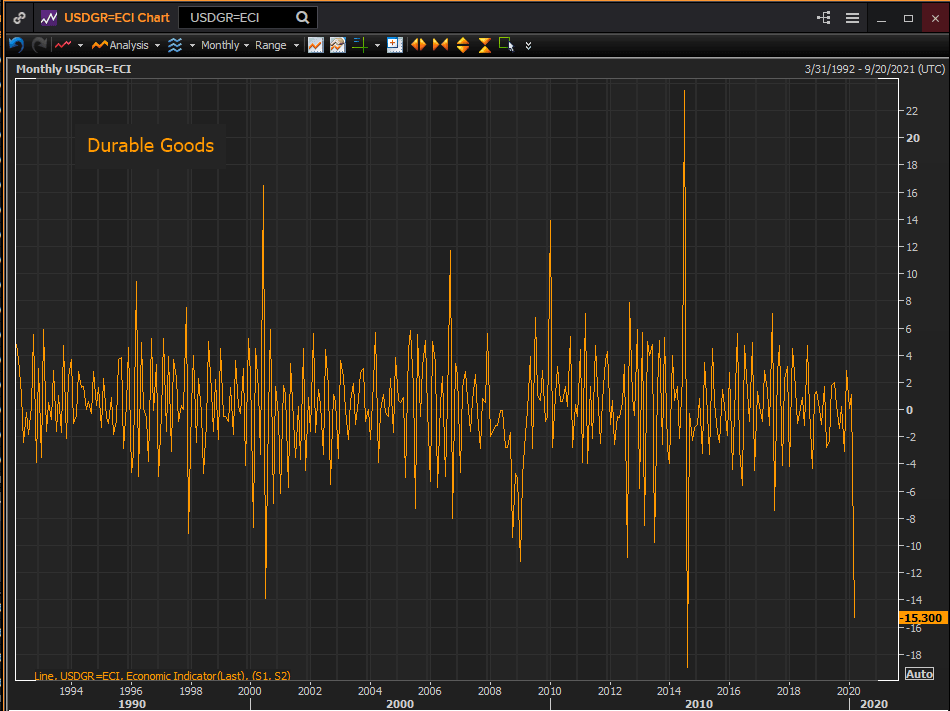
The proxy category for business investment, non-defense capital goods ex-aircraft, is forecast to tumble 10%, just shy of its all-time drop of 10.9% in January 2009.
The tallies for these long lasting consumer and industrial goods are the latest evidence that the forced closure of the much of the US economy due to the coronavirus pandemic has precipitated the greatest retreat in consumption in US history. Retail sales dropped 16.4% in April following the March 8.3% decrease and the control group, the GDP component, plummeted 15.3%.
These figures and others have brought estimates for second quarter GDP to an annualized rate of -41.9% in the Atlanta Fed GDPNow model.
Labor market and collapse of buying power
The catastrophe that has overtaken the job market is a well-known story. Over 38 million people have filed for unemployment insurance in the past nine week with another 2.1 million expected on Thursday. Continuing claims are over 25 million and so far have shown no trace of returning workers. By Thursday evening almost 25% of the US workforce will have been laid off in just over two months.
Even though those millions of workers are collecting six-month of jobless benefits, the destruction of spending power and the real and perhaps increasing possibility that there will be no job at the end, combined with the mandated shutdown of most of the retail establishment has crippled the economy that barely two months ago was enjoying near record employment and the longest expansion since the Second World War.
If nothing else it is a severe lesson in the fragility of a modern industrial economy.
Shutdown to recovery
At one point in late March or April every state had imposed some form of social restrictions and most had also ordered varying degrees of business and commercial shutdowns.
This month all states, even New York, and New York City, the national epicenters of cases and fatalities, have begun to loosen their regulations.
Georgia, Florida and Texas were the first to restart their economies almost all others have since followed with more strictures removed week by week. The reopening of the economy is expected to bring millions of unemployed back to work, though the number returnees has, so far, made no impact on the on the unemployment statistics.
Consumer sentiment as reported in the Conference Board and Michigan surveys edged higher in May, and it is possible that April will be the bottom for outlook and consumption.
Even with widespread unemployment the burgeoning release of the retail and restaurant sectors from their imprisonment will help to revive consumption.
Conclusion: Market response
Markets have already absorbed the most dire economic news and durable goods will add little of importance to the picture.
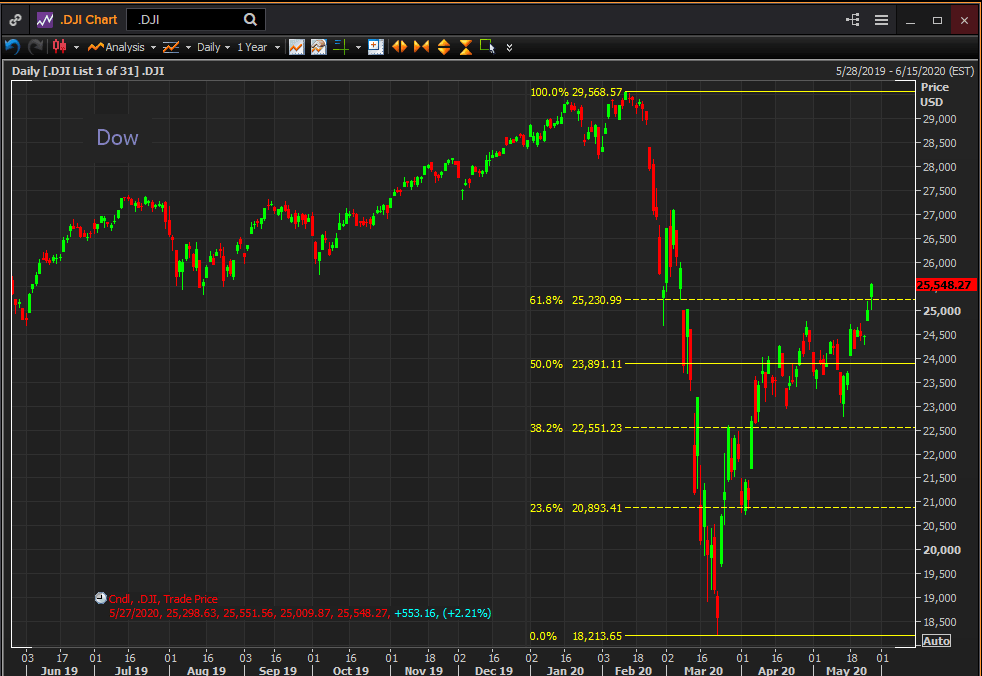
Equities and the dollar have turned their attention to the future. The Dow passed the 61.8% retracement on Wednesday of the February 12 to March 23 collapse.
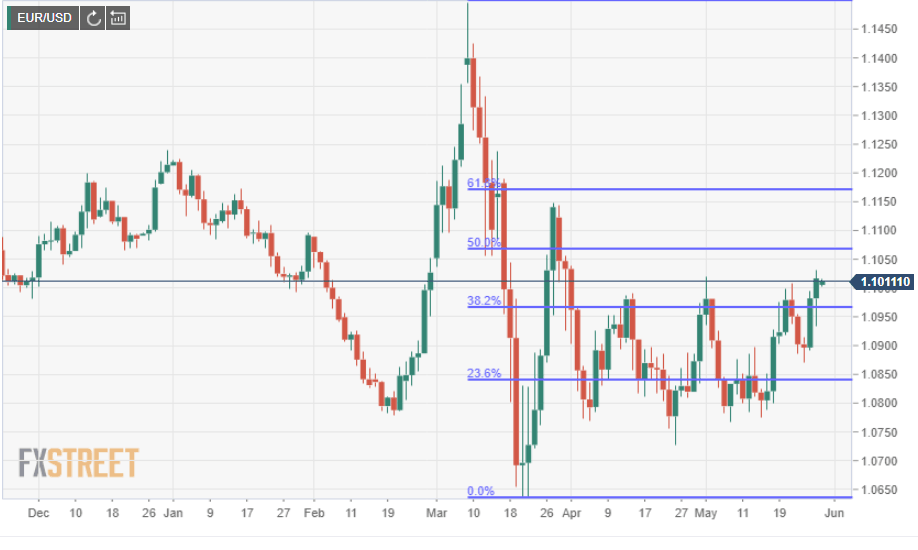
The dollar has also surrendered the bulk of its March risk-aversion gains.
Author
Joseph Trevisani
FXStreet
Joseph Trevisani began his thirty-year career in the financial markets at Credit Suisse in New York and Singapore where he worked for 12 years as an interbank currency trader and trading desk manager.