UK retail sales Preview: Retail sales are set to slump in September
- The UK retail sales are expected to fall -0.8% over the month in September.
- The retail sales excluding motor fuel sales are seen falling -0.2% m/m.
- The UK retail sector is expected to lower its contribution to GDP growth to a minimum.
- The UK retail sales slumping are set to weigh on Sterling hammered by Brexit uncertainty after the Brexit deal failure.

The total UK retail sales are expected to fall -0.8% over the month in September with core retail sales stripping the basket off motor fuel sales expected to fall also -0.2% m/m, the Office for National Statistics is expected to report on Thursday at 8:30 GMT.
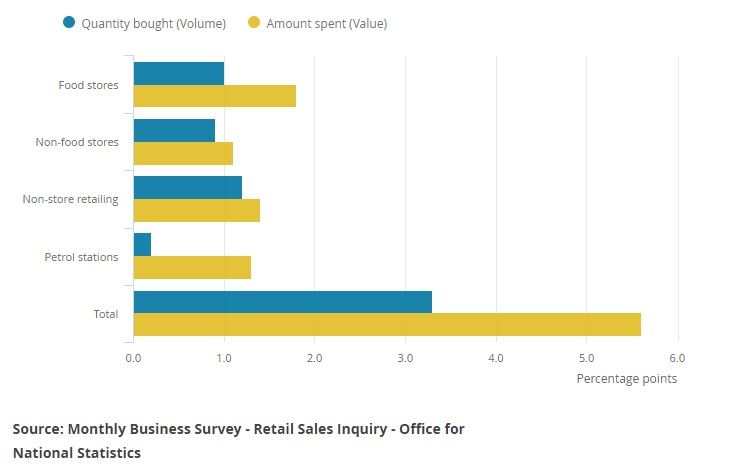
When compared to a year ago, the total retail sales are seen rising by 3.3% y/y in September, unchanged from August while core retail stripping the gauge off motor fuel sales are expected to accelerate to 3.6% y/y from 3.5% y/y in August.
Deleceration in the UK retail sales had already been indicated by the report from the British Retail Consortium (BRC) in cooperation with KPMG that monitored the retail sales between August 26 and September 29 this year. September report saw the UK retail sales decreasing by 0.2% on a like-for-like basis from September 2017, when they had increased by 1.9% from the preceding year as back-to-school sales did not match the summertime sales.
“Grocery continued to perform, but growth in the category retreated in September. The non-food categories, however, continued to disappoint. The historically reliable back-to-school push did not elevate apparel sales,” Don Williams, UK Retail Partner from KPMG said in the August retail sales monitor.
The situation in the UK retail business is getting harder for the lobby group representing retailers calling for the UK government support.
“Retail represents 5%of the economy and pays almost 25%of the business rates bill, and this disproportionate cost burden is especially hard to bear given the current trend in sales. The effect can be seen in the fact that there have been 3,200 UK store closures in the past three years,” Helen Dickinson from British Retail Consortium wrote in the September report.
The retail sales monitor from the BRC in cooperation with KPMG measures changes in the actual value of retail sales including VAT, excluding automotive fuel and therefore it is an indication of total retail sales.
Contribution to the UK retail sale growth y/y
Author

Mario Blascak, PhD
Independent Analyst
Dr. Mário Blaščák worked in professional finance and banking for 15 years before moving to journalism. While working for Austrian and German banks, he specialized in covering markets and macroeconomics.