UK Budget preview: One month out, what we know so far

It is now 4 weeks to go before John Healey’s crucial first Budget as Chancellor. Pressures are building on all sides: Andy Burnham wants to deliver ‘real change’ as quickly as possible, businesses and households are concerned about tax increases and rising energy costs including a record high for the diesel price, and geopolitical headwinds are causing oil prices to spike and UK Gilt yields to surge to multi-decade highs.
Healey opts for low profile conference speech
The Chancellor’s speech at the Labour Party conference on Monday did not give much away. If it is a precursor to the Budget, then we can expect a low-profile event on 28th October. The key points from his party conference speech that lay the groundwork for the Budget include, a firm commitment to stick to the fiscal rules, and some commentary on easing the welfare bill, which he said was not ‘progressive’ and benefits should be a ‘bridge to work’. There was no further detail, but one can assume that this means that further welfare giveaways are unlikely in this Budget.
Healey is being pulled in two directions: he has a mountain to climb to persuade Labour party members that this Budget should show spending restraint, yet he also knows that the market backdrop will not allow more spending or borrowing, especially if it is to fund welfare. 7
Gilt yields act as a brake on Budget ambitions
In the past month, UK Gilt yields have reached multi-decade highs, which will act as a brake on this Budget’s ambitions. The 2-year UK yield is higher by more than 30bps, and the 10-year yield is higher 25bps. So far this year, 10-year Gilt yields have jumped by 91bps. While this has been a global phenomenon, the Chancellor appears to understand that he needs to face fiscal realities.
Spending wish list
The Chancellor did not allude to the ‘flexibility’ within the fiscal rules in today’s speech, although this is something that Andy Burnham has spoken about. It is likely that the Chancellor will allow spending on public sector infrastructure to be offset against the borrowing figures, although we doubt that the Chancellor can rely on this method to meet all of his party’s long list of spending ambitions.
How to make UK energy cheaper
Instead, it may focus on defence spending. The chancellor did say that £6bn of defence contracts would be deployed to British shipyards, but aside from this there were no new spending commitments. Healey’s promise of a ‘new age of industrialisation’ will need a rapid shift in energy pricing policy, but again we will need to wait for the Budget to hear more.
We have some of the highest energy costs in the UK, and new infrastructure and more domestic oil and gas production will be needed to make Healey’s dream a reality. He has also said that he wants the UK to be at the heart of the AI revolution, which will require even more energy, so we expect this topic to be on the agenda when he delivers next month’s budget.
Healey avoids tax references
This conference speech did not mention the word tax. Burnham has been clear that the bulk of tax raising from Labour has been done, after Rachel Reeves increased taxes more than £65bn while she was chancellor.
Talk of equalising capital gains tax with income tax has quietened down, as Healey tries to stop the flow of wealthy people leaving the UK.
Andy Burnham spoke at the weekend about a social care revolution, which he envisions will be paid for by a new tax, probably a death tax, However, the PM has made clear that this will not be introduced in this parliament, and instead it will be on the Labour Party manifesto at the next election.
Why Healey can’t afford to rock the boat on 28th October
We think the Chancellor and the Prime Minister will aim to rock the boat as little as possible with this Budget. The economic environment is tough, but the UK’s GDP is holding up well, and growth rose by 0.4% last quarter. There were also some much-needed productivity gains. Gilt yields are rising sharply, but they are in line with global norms for now. Also, the pound is fairly stable this year and is mid-table compared to its G7 peers. This suggests that we are not in a fiscal crisis, yet.
Why tax rises could be off the menu
The main tax increases Healey could announce at this Budget include: lowering the mansion tax threshold to £1.5mn, from £2mn currently, although that is deeply unpopular with Labour MPs who represent London constituencies. He could also put forward a land value tax, although this seems incredibly inefficient and will take a long time to implement and bring in revenue. Wealth taxes are popular with some of the left-wing, but multiple analyses suggest that they will cost the country money.
Softer targets to raise money include banks and oil companies. Bank profits could be charged at a higher rate of 31%, up from 28%, and there could be a specific windfall tax on oil companies who are benefitting from the oil shortages created by the war in the Gulf. If Healey does this he is likely to face calls of being anti-business, but he may accept this as these measures are likely to be popular with the public.
There are other smaller targets that the Chancellor may focus on to bring in more revenue, including more anti-avoidance measures, and even capping the capital value of ISAs, but we expect the latter point is unlikely to get off the ground.
Potential tax cuts
In terms of tax cuts, we expect these to be few and far between, but we envisage that the fuel duty increase scheduled for 1st January 2027 will now be scrapped as the price of diesel reached a record high on Monday, and some green taxes may also be scaled back. The PM has stated his ambition to increase the personal tax allowance, however, this is expensive, and there is unlikely to be any money for this right now. Instead, the chancellor is likely to focus on getting young people back into work. Measures might include cutting income tax or employee national insurance for those entering the workforce for the first time.
Healey expected to reverse some of Reeves’ measures
The latter point is worth noting, as it would reverse part of the employer national increase implemented by Rachel Reeves, which has been blamed for the large increase in unemployed young people. Earlier today, Healey spoke at length about apprenticeships and the need to get young people into work, so we expect some of these measures to be enacted next month. There may also be further remedial work on Rachel Reeves’ prior budget announcements, including reducing business rates for high street shops.
The market view
Gilt yields were rising in the background of this speech, but this increase is part of a global move, and is not down to anything that John Healey said. As you can see in the chart below, UK 10-year Gilt yields may be higher than elsewhere, but they are moving in lockstep with US and European yields.
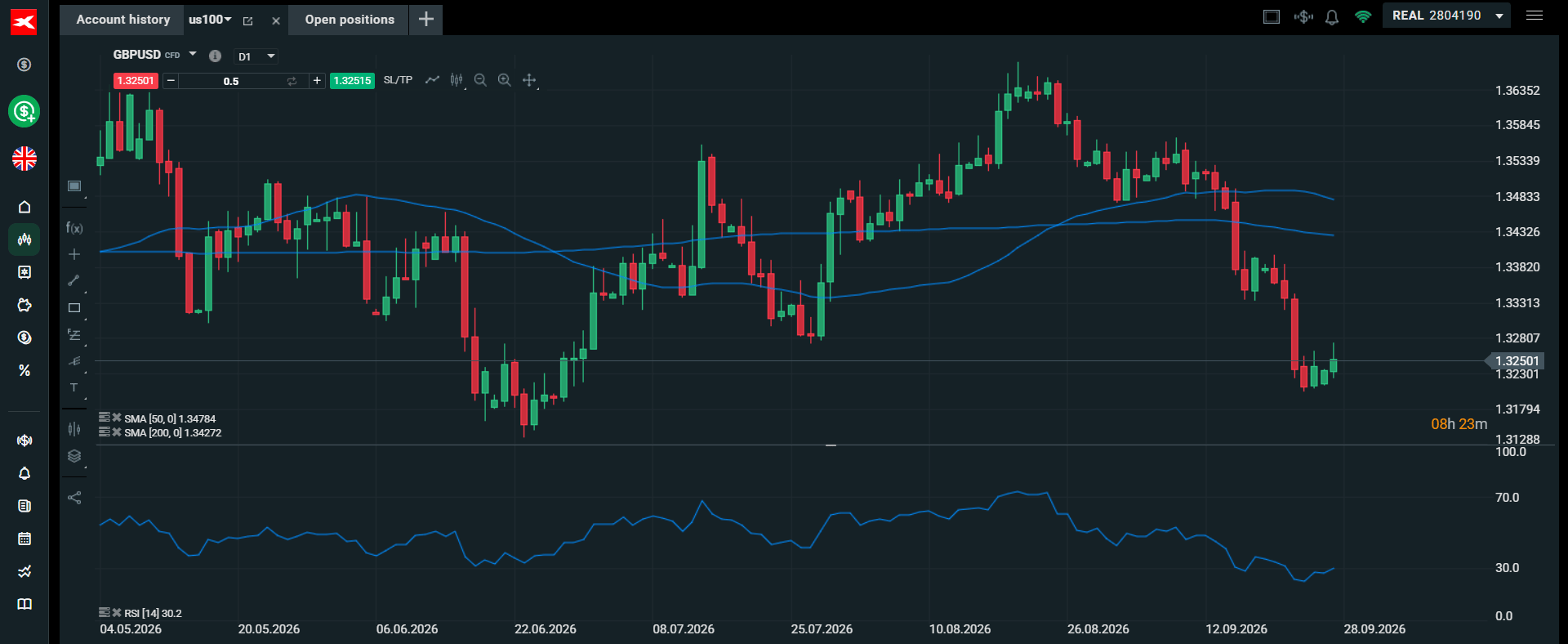
Added to this, GBP has fallen sharply against the dollar, but it has not yet reached the lows from June, which is a sign that the UK is not having a full blown fiscal crisis, even though sovereign yields are at multi-decade highs.
If there is no meaningful change to the geopolitical situation and energy prices remain elevated, then the Chancellor will deliver his budget with an even more menacing economic backdrop. This is not something that John Healey can change, but it adds to the challenges that are building up as we lead up to October’s main event.
Chart 1: UK, US and Italian 10-year bond yields
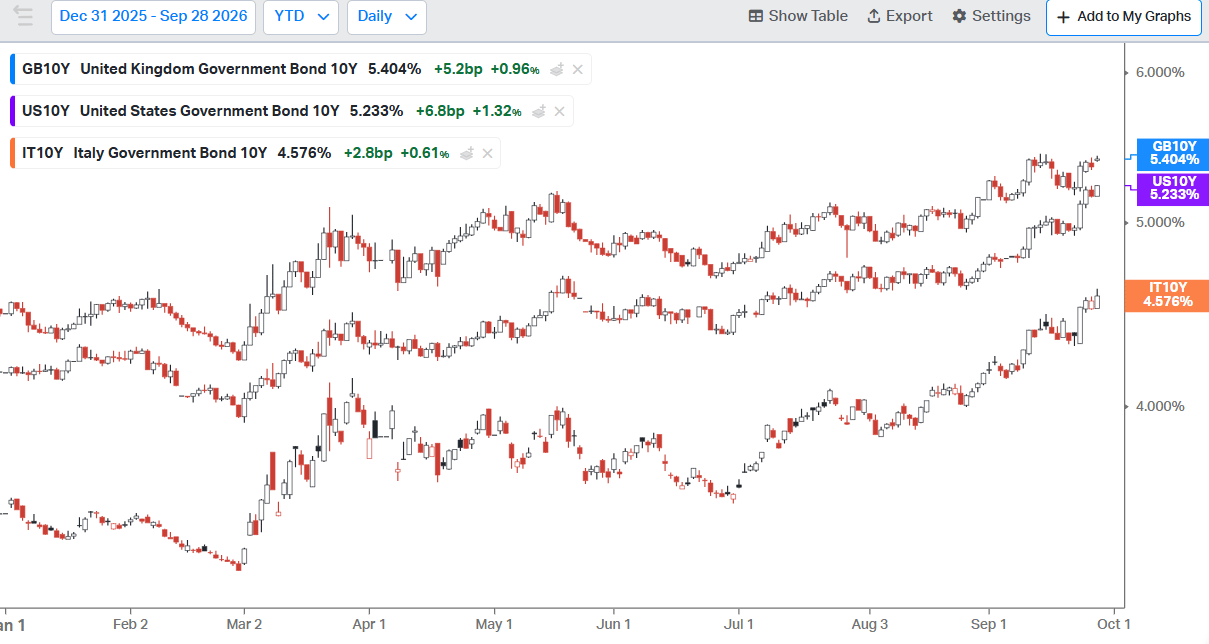
Chart 2: GBP/USD, down, but not out
Author

Kathleen Brooks
XTB UK
Kathleen has nearly 15 years’ experience working with some of the leading retail trading and investment companies in the City of London.