Times up for buying yen crosses as intervention rumours loom
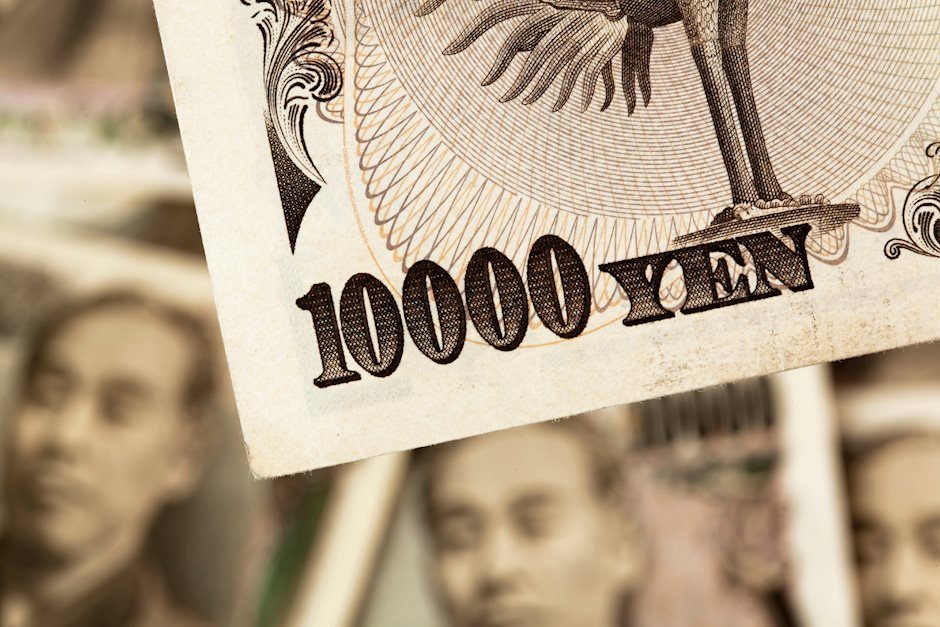

The Japanese Yen has depreciated almost 15% this year as traders took advantage of the ‘carry trade’. That’s where investors invest in the higher-yielding currencies and sell low-yielding currencies to take advantage of the interest rate differentials. The hawkish stance of the Fed, along with the major developed economies is the mirror opposite of the ultra-low policy stance from the Bank of Japan. The USDJPY is not flirting with the 145 area last seen at the time of the last round of BOJ intervention. Ueda was questioned last week about the possibility of Central Bank intervention. He was happy to say they are monitoring the situation. The Japanese finance minister, Suzuki, said last week that they would “take appropriate steps” to do whatever is necessary to support the Yen. The last time the BOJ started their intervention was at the 150 level and again at 145. This ultimately led to a 15% surge in the Yen.
Buying Yen crosses, which means selling the Yen, has been the most profitable trade in town for the past 6 months but this could now be running out of steam. It does not matter which currency you buy against the Yen, the 145 USDJPY is significant. Even if the BOJ does nothing in the run-up to 150, the very fact that they are there in the wings, ready to act could be seen as support for the Yen and therefore cap any more significant gains.
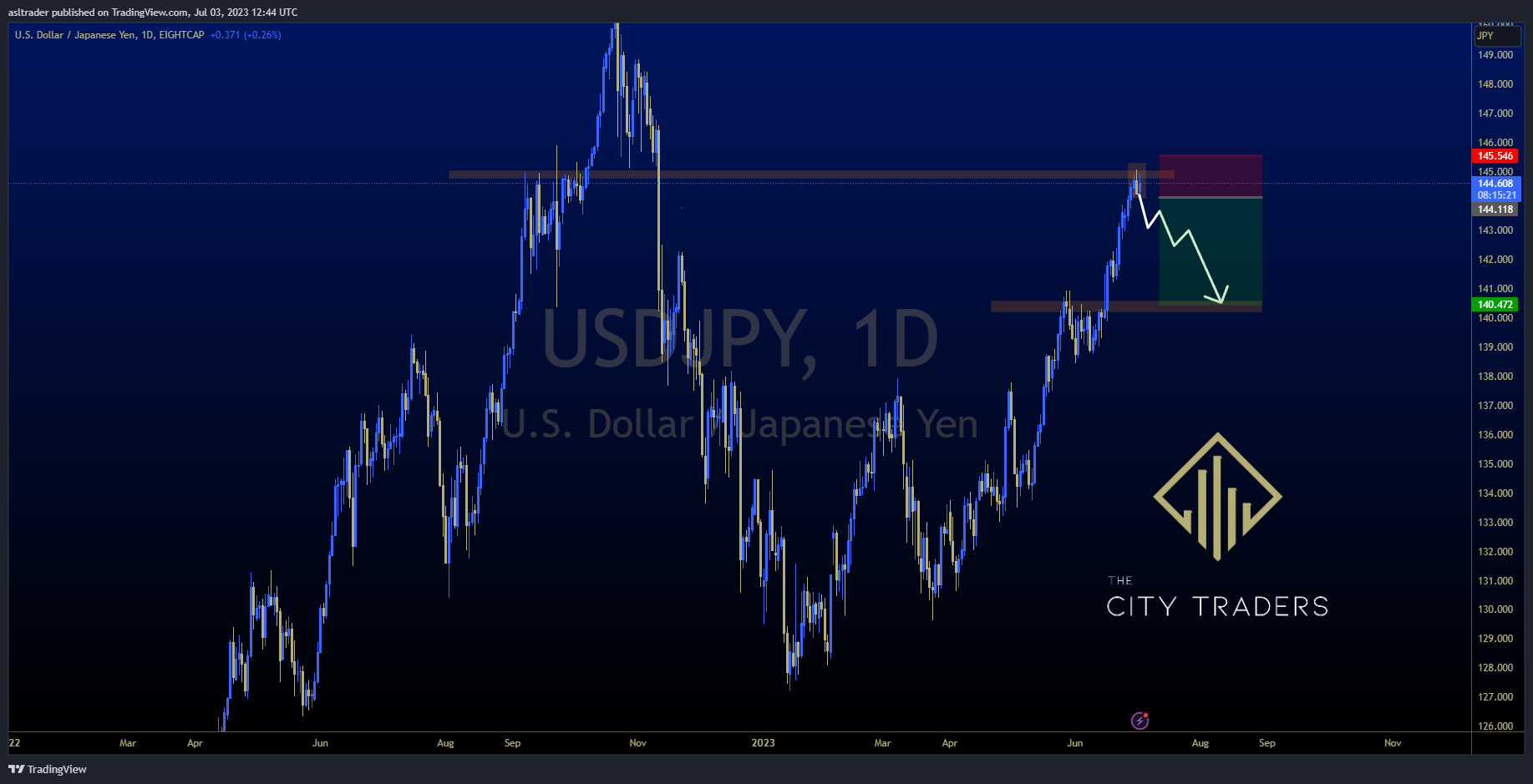
The USDJPY put in a bearish naked rejection setup last week indicating the market is respecting this zone as major resistance. If price breaks and clears 144.20 to the downside, it could indicate either Central Bank intervention or simply a large pool of institutional unwinding of carry trades.
Either way, it will be seen as a break of support and further capitulation back down to 140.50 With stops above 145.50 makes for a decent risk-reward play.
Author
Andrew Lockwood
The City Traders
30 + years veteran trader registered and authorised under Financial Services Authority FSA (disbanded in 2013). Futures and Options trader on the London International Futures and Options exchange (LIFFE).