The shifting dynamic between Japanese and US bond markets

For years, ultra-low Japanese Government Bond (JGB) yields drove Japanese investors, the largest foreign holders of US Treasuries, to seek higher returns abroad. That trend is now reversing.
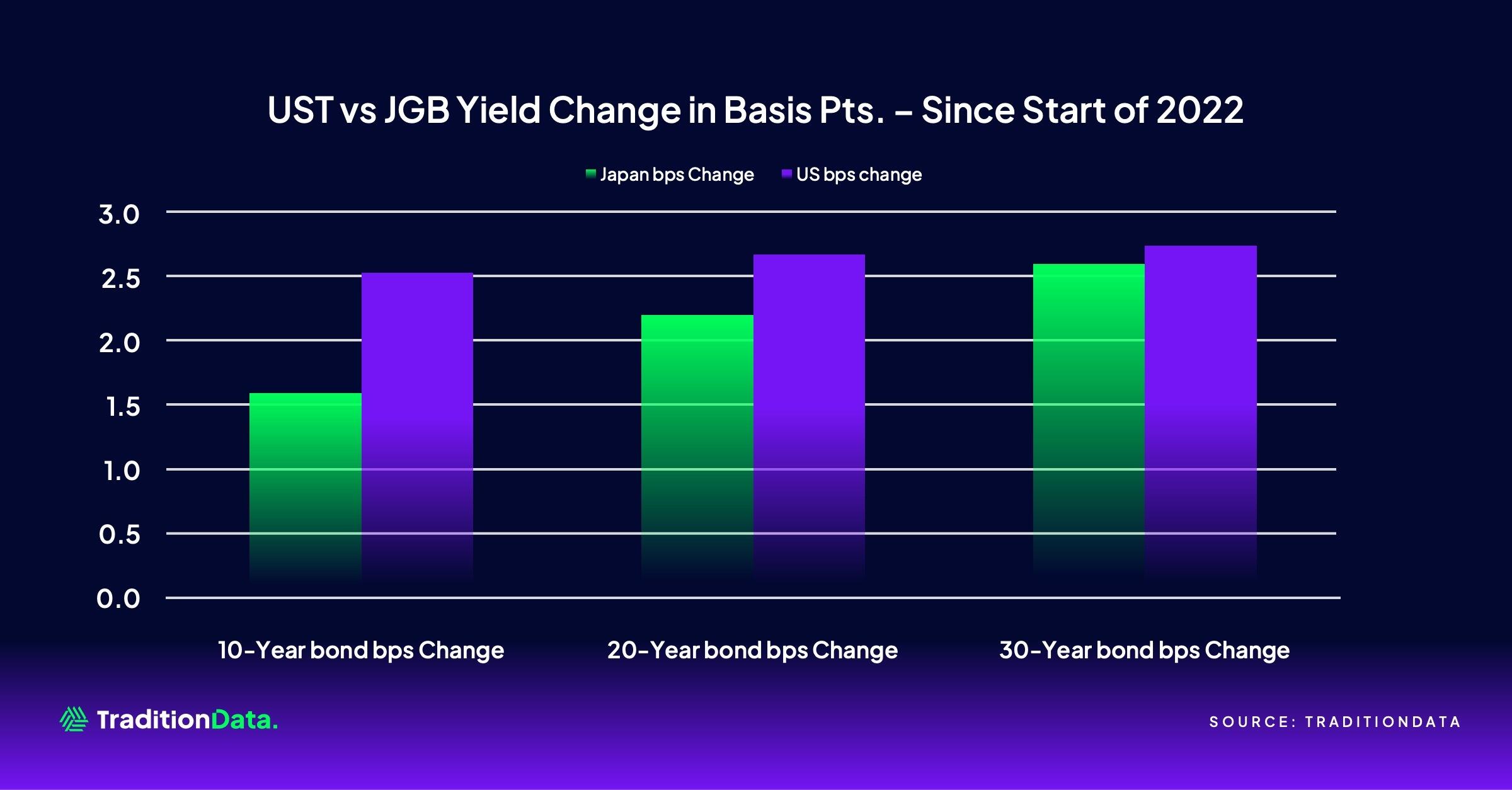
Since the Bank of Japan (BoJ) began loosening yield controls in 2022, US Treasuries have become increasingly sensitive to JGB movements. As the BoJ normalizes monetary policy and Japanese yields rise, the premium on US Treasuries has narrowed. This encourages capital to return to Japan, reducing demand for US bonds and putting upward pressure on American yields.
Meanwhile, rising US debt and persistent inflation are testing the Treasury market’s reputation as a safe-haven asset.
The long-standing trading convention of shorting JGBs is shifting, and investors are watching closely to see when Japan’s bond sell-off will stabilise and how that will shape global capital flows. The relationship between JGBs and Treasuries is no longer one-directional. A more active JGB market is beginning to influence US yields, rather than simply react to them.
Author

Akshay Gupta
TraditionData
With 12 years of experience in product and data management, Akshay brings a wealth of experience in capital markets, having previously served as a pricing and fund holdings analyst.