The reignition trade: The S&P’s melt-up and the new season of belief
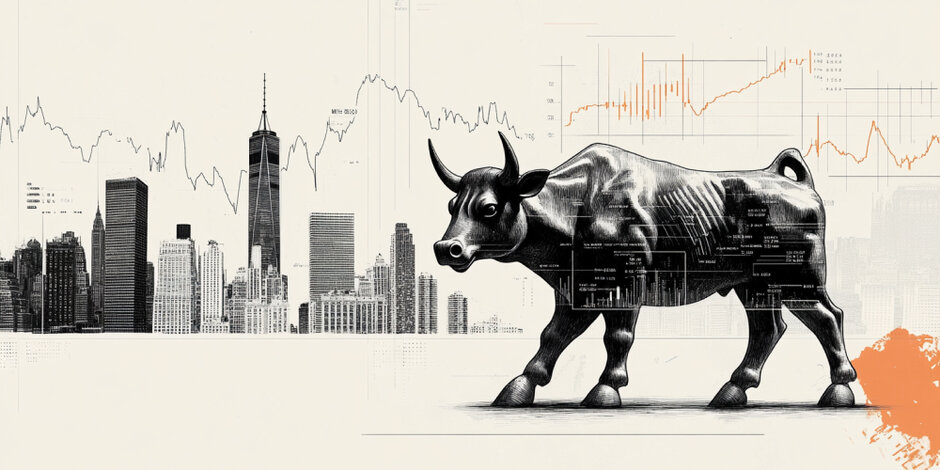

There’s a moment in every bull run when skepticism quietly hands over the keys to momentum — not with a bang, but a shrug. That moment arrived this week as the S&P 500 finally vaulted above 6,800, torching through resistance with the heat of renewed conviction. What began as another APEC headline about a “framework” for a U.S.–China trade truce has now morphed into something far more potent — a narrative that markets have decided to believe in again.
The tape feels different. The scent of détente has mingled with the heady aroma of Fed cuts, corporate buybacks, and a $7 trillion money-market powder keg waiting for a spark. Traders, long crouched under hedges of caution, are now stepping into the open field. The result: a broad, if uneven, melt-up that’s lifted megacaps, crypto, and the risk complex at large, while gold slips back below $4,000 and the dollar loses a bit of its imperial swagger. But this isn’t blind euphoria — it’s structured hope. Beneath the surface, the market is repricing resilience.
The heart of this rally beats in Silicon Valley’s server rooms. The Magnificent Seven — that unholy alliance of code, cloud, and capital — are again dictating the rhythm. Their collective capex tab has swelled to $360 billion this year, most of it aimed squarely at the AI buildout. Next year, it’s expected to surge toward $420 billion. It’s less a tech cycle than an arms race — data as ammunition, chips as artillery. The irony, of course, is that the more investors question the sustainability of AI profitability, the more they buy the companies building its scaffolding.
Microsoft, Alphabet, Meta, Amazon, and Apple — collectively a quarter of the index — are set to report this week, with traders treating their earnings like oracles. The consensus view: expectations are too low, capex deceleration too shallow, and the bar too easy to clear. In a market starved for validation, any sign of continued AI spend will feed the narrative that this is a secular boom, not a bubble.
The hedge funds seem to agree — reluctantly. Goldman’s PB desk notes that funds flipped net buyers last week, covering macro shorts and piling back into cyclicals, energy, and materials — their biggest rotation into commodity-sensitive names since early 2021. It wasn’t conviction buying, but panic buying. Short covering can masquerade as faith, but for now, it’s enough to keep the melt-up alive.
Technically, the S&P has snapped back with the power of a stretched rubber band. The 6,433 line that once marked the medium-term threshold is now a memory in the rearview. Breadth isn’t perfect — the generals still lead while the troops lag — but when liquidity returns, leadership tends to concentrate before it broadens. And right now, liquidity is the tide lifting all megacap boats.
Buybacks have re-emerged as another undertow, with nearly 40% of companies now back in the open window. Corporate desks are estimated to be putting $5 billion a day into the market — not a tsunami, but enough to counteract systematic selling. CTA positioning, too, remains neutral-to-supportive. The key thresholds held, averting the kind of supply trigger that often leads to 3–5% air pockets. That safety net, coupled with the onset of the year’s most favorable seasonal window, is a powerful cocktail.
Retail, meanwhile, refuses to be sidelined. At one point last week, retail traders made up over 16% of total S&P volume — a five-year high. Meme tickers like BYND traded over a billion shares across three sessions, a reminder that the small speculators, dismissed for dead after 2021, are still very much alive and nibbling at the edges of the machine. Sentiment is frothy in spots — AI trades are a 9/10 on length — but still far from the manic extremes that usually mark tops. Light positioning and cautious optimism remain the real drivers, not greed.
The macro backdrop is quietly constructive. Inflation has softened, the Fed is back in rate-cut mode, and fiscal policy remains loose enough to lubricate growth. Trump’s trade diplomacy — performative as it may be — is adding an extra sheen of “peace premium” to global risk assets. Even if the upcoming deal with China sidesteps the thorniest structural issues (like tech transfer and security), the optics alone matter. Traders trade the path of least resistance, and right now, that path runs higher.
Technicals melding with fundamentals fit this tape perfectly. Momentum and macro have synchronized — seasonality, liquidity, and earnings all moving in the same direction. Hedge fund exposure is climbing but not overextended; systematic flows are neutral; long-onlys are cautiously re-risking; and cash remains a massive latent bid. In market terms, that’s a powder keg beneath a candle flame.
So where does it go from here? Into 2026, many desks are modeling a rolling recovery — a broadening of the earnings base beyond tech into cyclicals, driven by easing financial conditions and a pickup in capex across industries. The current AI cycle may prove to be the spine of that expansion, pulling demand for chips, data infrastructure, and even commodities along with it. Think less dot-com bubble, more early electrification phase — wildly expensive at the frontier, but ultimately foundational.
The consensus S&P target of 7,300 by mid-2026 might sound audacious, but in the context of dovish policy, resilient margins, and a $7.4 trillion mountain of idle cash waiting for yield, it’s not implausible. If the Mag7 earnings clear the bar this week, expect a fresh wave of “what do I chase?” flows into year-end — the same FOMO that once drove parabolic rallies in 2017 and 2021, but this time fueled by institutional money and systematic strategies, not Reddit boards.
The trend, as the old adage goes, remains our friend — but this one hums with a distinctly modern rhythm. It’s not the dot-com bubble’s manic drumbeat nor the QE era’s low-vol lullaby. It’s something in between — a synchronized hum of optimism, liquidity, and technological obsession. The fire is hot, but the flow is still controlled. And for now, at least, the market’s melody plays on.
Author
Stephen Innes
SPI Asset Management
With more than 25 years of experience, Stephen has a deep-seated knowledge of G10 and Asian currency markets as well as precious metal and oil markets.