The rearmament of Europe in the aftermath of the Ukraine war
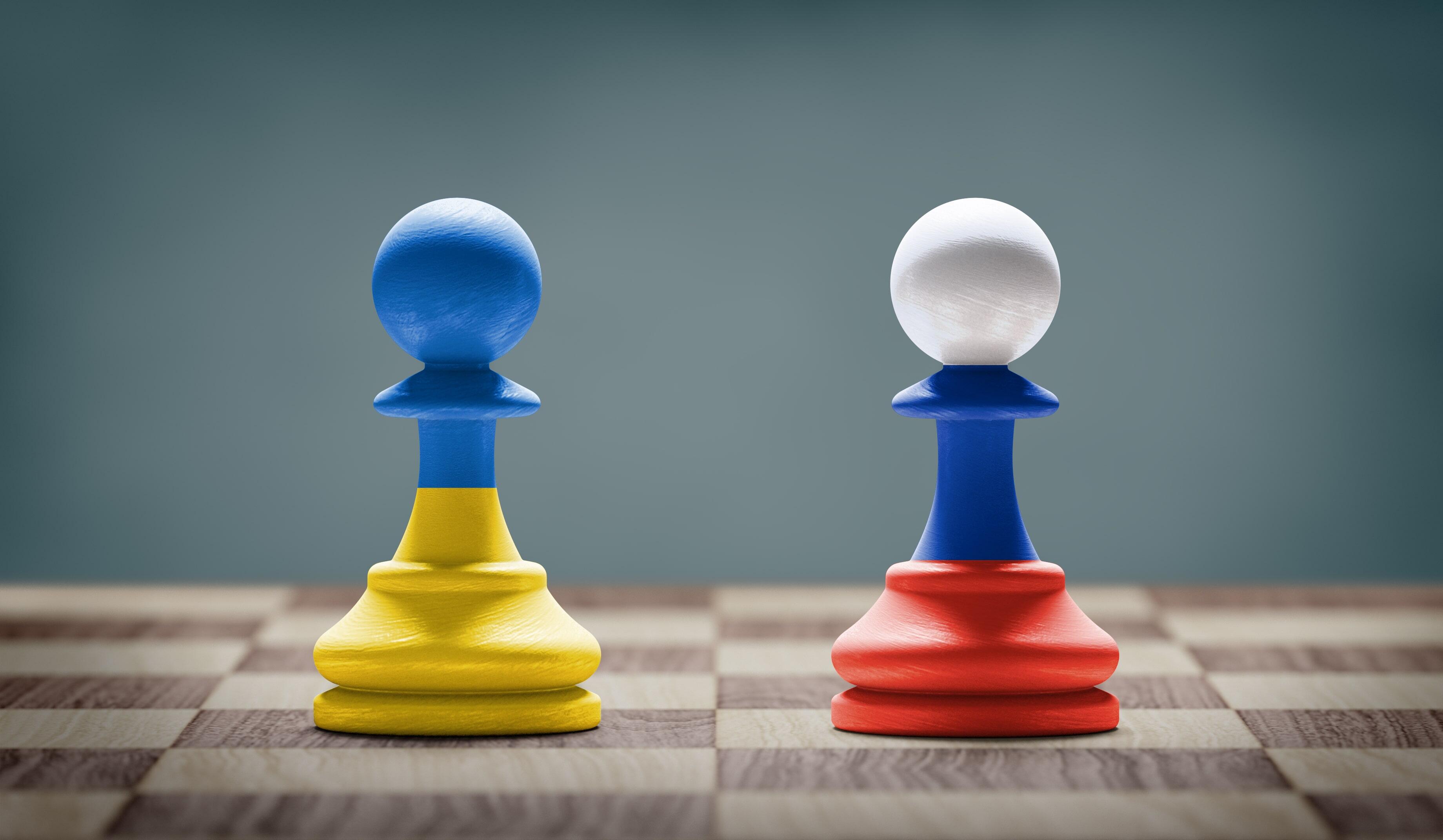
There have been much speculations on the aftermath of the Ukraine crisis, and the extent of its impacts. Many only vaguely understand them to be "no less serious than those of September 11 attacks".
Much of the consequences of Putin's war in Ukraine will, of course, not manifest immediately but rather gradually. However, at least one major change is becoming apparent and noticeable, and this is re-emergence of Germany in global geopolitics. Looking back at the past, Germany has always been a lion of Europe, indeed a powerful and formidable force, even one that is regarded to be able to contend with the ambitious Russia. To be sure, this country famed for its refined industries has been, historically speaking, the only continental power feared by Russia. Compared with Germany, other European countries are more akin to jesters before the Goliath that is Russia.
Now, Putin has awakened the giant force known as Germany. Before that, this force had been in dormant for decades after the end of the Cold War.
In Germany now, tens of thousands of people gathered in front of Berlin's Brandenburg Gate, some holding placards that read "Russia Hands Off Ukraine", "Putin! You Need Therapy!" and the like. Such zealous spirit of the Germans has never been higher. Europe shares the same sentiment against Russia and this can be seen in major cities in Europe, from Rome to Prague, from Istanbul to Madrid, or from Paris to London. The solidarity born out of loathing against Putin's Russia is unprecedented in the history of modern Europe.
Noteworthily, just a few weeks ago, the Germans' attitude towards the influence of Russia on Europe was more or less restrained, hence such change within a short time is something worth pondering.
During the Merkelian era, Germany and Russia had the largest, most enduring, and closest energy relationship in Europe. German politicians chose Russia, whose energy exports to Germany, mainly natural gas, oil and coal, have become the mainstay of the German economy. In 2021, Germany's natural gas use reached 100 billion cubic meters, and Russia provided half of the supply. In January-October 2021, 34% of Germany's crude oil came from Russia, and 53% of the hard coal received by German power plants and steelmakers also came from there. German politicians have long tied the country's world status to Russia, and this has led to dangerous dependence.
Yet even in the West, no one denies the existence of such "dangerous dependence", the question is how should it be dealt with. Angela Merkel's governing forces had long adopted a compromising approach that mixes factors such as geopolitical skills, personal friendships, Putin's European preferences and the European Dream. This was done so with the hope that disaster would not happen, or could be delayed. For the same reason, the new German government, which inherited Merkel's legacy, was reluctant to take actions that might offend Russia after the crisis in Ukraine erupted. When other European countries were sending anti-tank missiles and other armaments to support Ukraine, Germany merely sent 5,000 helmets. When countries around the world agreed to cut off Russia's SWIFT system, the only country in Europe that opposed such move was Germany. On the top of that, there were other issues that have not been resolved in the German-American diplomacy long before the war. Germany's attitude remained the same, as if the collective mind of the nation is solidified. It appeared that such development of Germany was what Russia wanted it to be.
Then, Putin just helped solving the issues that politicians in the West could not handle for so long.
Putin's irrational assault of Ukraine sparked outrage in the world and changed the how the Germans think, who finally realized and acknowledged Ukraine's relationship with Europe. They now know that Germany cannot always keep Ukraine as the gatekeeper of Europe, without paying the cost. This is especially true after seeing the war in Ukraine, the scenarios of a future Europe with burning villages and towns, where rockets and missiles soaring through its skylines and where battle tanks roaming about through its streets become real and possible. The proud Europe has now realized the daunting challenge that it has to face now. This is the time that regardless how big the economic cost is, it will have to be the secondary consideration. The Germans are finally waking up.
The German government immediately reversed its prior decisions and agreed to cut off Russia's SWIFT system, even if it could lead to inflation and energy price problems. Germany also immediately took risky arms transfers, sending the largest batch of high-grade military equipment in Europe to Ukraine. The information I saw was that there were 1,000 anti-tank missiles and 500 anti-aircraft missiles, and these are unprecedented numbers. Theoretically, the number of these anti-aircraft missiles is enough to knock down Russia's air force on the Ukrainian front twice.
This is certainly a welcoming shift in Germany for the West, but bigger changes are yet to come. Far-reaching and historic geopolitical transformation are taking place in the country, so to speak. Germany announced on February 27 that it would strengthen its military, committing an armed forces fund of USD 113 billion, and keep its defense spending above 2% of GDP from now on. For military spending to exceed 2% of GDP is a long-standing requirement of the U.S. government, as it has been done in at least two U.S. administrations. Yet, Germany had always been reluctant to do the same. They had since enjoyed a long quiet time in the comfort zone after the end of the Cold War, developing the economy and promoting the arts. Now that it is all over, the Germans have risen from their slumber.
The German army not only has a long history, but historically it was also the one with the largest scale. During the Cold War, the German army was the second largest in NATO. At that time, the military strength of West Germany was three times that of East Germany. Moreover, the German army has never lacked technology. Even today, even the U.S. military has to import German arms from tanks to missiles, from guns and ammunition. The re-emergence of German army will be a terrible force of the world's mainland island in the future.
What happens in Germany could very well happen in the rest of Europe, even in the ever-moderate Sweden and Finland. They may rearm themselves, with NATO, to bring about a wave of post-Cold War rearmament in Europe, thereby completely changing the geopolitical pattern of the world. All these could be what the result of the war in Ukraine.
Putin has aroused a force, one that was a ruling power on the mainland island of the world, and one that had captured 5.75 million Soviet troops during World War II. It is this force that the Russian President has caused to break from its past to face its present. Therefore, even if Putin takes the whole Ukraine, he will lose Europe.
Author

Chan Kung
ANBOUND Research Center Sdn Bhd
Founder of Anbound Think Tank in 1993, Chan Kung is now ANBOUND Chief Researcher. Chan Kung is one of China’s renowned experts in information analysis.