The front month in the Gold futures contract

REVIEW
Retail gasoline prices surged 25 cents in the week ending Sept. 5, the biggest gain since 2005's Hurricane Katrina. – Jeff Cox, www.cnbc.com, September 8, 2017
At least 32 people were killed after a massive 8.1 magnitude earthquake late Thursday. The quake, one of the biggest recorded in Mexico, struck off the country's southern coast. Mexico's President Enrique Pena Nieto said in a press conference that the quake was the biggest to strike the country in a hundred years. –Reuters News Service, September 8, 2017.
It was a week of more natural disasters, following the disaster of Hurricane Harvey through Texas the previous week. In the field of Mundane Astrology, hurricanes (and earthquakes, tornadoes, high winds) fall under the domain of hard aspects involving Uranus. Floods are governed by Neptune. In 1993, when the 171-year cycle of Uranus and Neptune began with their conjunction in Capricorn, heavy rains caused massive floods on the Mississippi River, resulting in sharply higher grain prices. St. Louis went under water and shipments of grains were disrupted for weeks. Now we see a similar phenomenon with gasoline distribution, as refineries shut down due to the damage caused by Hurricane Harvey. The specter looms of more havoc with gasoline delivery routes being disrupted in the coming days - and even weeks - as Florida, following Texas, goes under water with the onslaught anticipated from Hurricane Irma this weekend.
As one might expect, Uranus and Neptune are again in a hard aspect. In fact, they are now in the first 1/8 phase of their cycle, where they form a waxing semi-square (45°) aspect five times between August 11, 2017 through May 1, 2019. This is just the beginning of a 21-month period where heavy rains, floods, and hurricanes, as well earthquakes occur, probably more frequent than usual. The result can cause a spike in the price of basic commodity goods. I am aware that many will claim this is proof of the devastating effect of global warming. I am not disputing that global warming is real (or a hoax). But I am pointing out that the natural disasters we are witnessing today have a correlation to the principles of a long-term geocosmic cycle. This will have a direct effect on financial and commodity market prices, of which I will claim to have a little bit of experience and knowledge. I am on more secure ground there than I am with the science of climate changes. Somewhere in my travels, however, I remember hearing a lecture that all the planets in our solar system are warming up, and not just the Earth. It is a function of solar activity. However, not having visited any other planet recently, I cannot personally verify the validity of that statement.
There is another part of the Uranus/Neptune aspect that merits discussion. This is the willingness of people to reach out and help one another in a time of serious crisis. Uranus is known as both the rebel and the humanitarian. It also pertains to the masses – large groups of people. Neptune is known for compassion and sacrifice. When they come together in an aspect with one another, it can correlate with a crisis that is followed by great acts of sacrifice and compassion, and the willingness to help those who have suffered as a result of the crisis. This immense outpouring of care has truly been phenomenal to witness in America during the past two weeks, and I suspect it will continue throughout the Uranus/Neptune semi-square. As far as geocosmic principles are concerned, we also note that the recent solar eclipse of two weeks ago that cut its path right through the USA. The countries of the Earth that are blacked out by the path of such a potent eclipse are considered vulnerable to natural (and other types of) disasters during the 12-18 months that follow. It seems to be happening in this case as well.
But back to the markets, which is what I study all day, every day, and still don’t know as much as there is to know. Yet, I am a Capricorn with benefic planets in Scorpio (Venus and Jupiter, 2nd house), so I will never give up trying to know everything. I am relentless in my search.
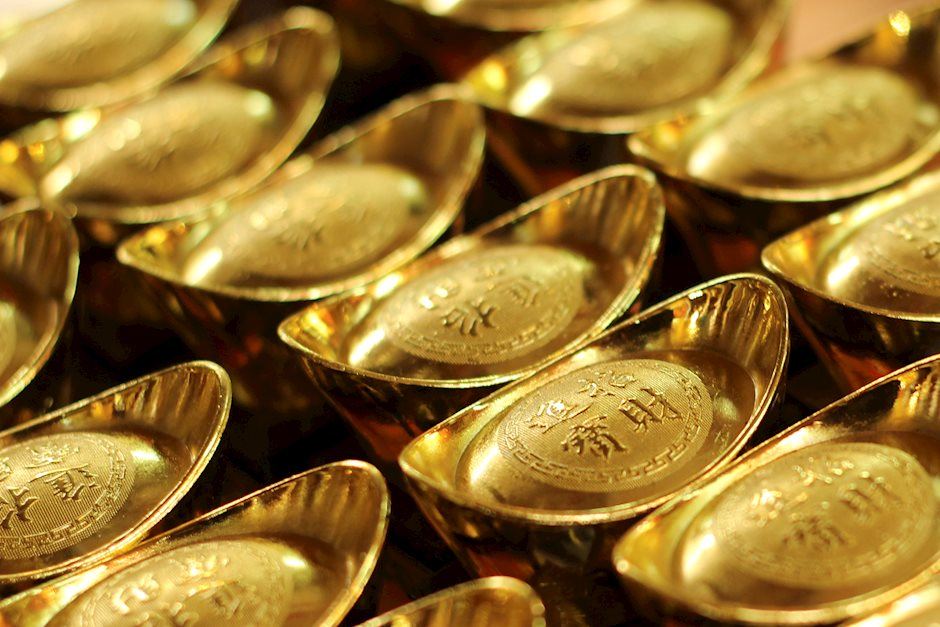
In equity markets, the prior week’s bullish performance was unable to be sustained in many world indices, such as in the USA and Japan, which were mostly down last week. Europe, China, and South America, on the other hand, were up. The big winners, however, were in treasuries, precious metals, and currencies (vis-à-vis the US Dollar, which was hammered to its lowest level in nearly three years, as outlined in the Forecast 2017 Book). The front month in the Gold futures contract, for example, closed above $1350 for the first time since July 2016, which is right in line with our Mid-Year MMA Webinar outlook. Silver closed above $18/00. Both are on target for the price objectives given in that webinar (the recording is still available and of value, and we will give a free MP4 recording to anyone who pre-orders the Forecast 2018 Book this week only, if requested).
SHORT-TERM GEOCOSMICS AND LONGER-TERM THOUGHTS
Now that Mercury has completed its retrograde cycle on September 5, we can focus upon a slew of new geocosmic signatures unfolding in the next three weeks that have historical correlations to reversals in financial markets. First, we note that Venus will be making a grand trine with Saturn and Uranus in fire signs, September 12-17. This is therefore a “translation” by Venus to the longterm 45-year Saturn/Uranus waning trine cycle that in the past has coincided with all-time highs in the U.S. stock market, followed by a significant decline. The Saturn/Uranus trine that correlates with this high takes place three times between December 2016 and November 2017, and when a faster moving planet is also involved, it can time important reversals in equity prices. Perhaps – just maybe - with Venus applying to the grand trine, Hurricane Irma will not be as devastating as newscasters and weather people are forecasting. Another important geocosmic signature we will be watching closely is the third passage of the Jupiter/Uranus opposition on September 27. The first two passages (December 26 and March 2) coincided with a half-primary and full primary cycle crest respectively in the DJIA, followed by a multi-week decline. In fact, after the high of March 1, the DJIA commenced its longest decline of this year, so far. Given a two-week orb, this aspect has the highest correlation of all geocosmic signatures to the completion of primary cycles in U.S. stocks, according to the studies presented in The Ultimate Book on Stock Market Timing Volume 3; Geocosmic Correlations to Trading Cycles. Thus, I anticipate the next three weeks will be noteworthy for financial markets.
I still keep in mind the great bull market that ended with the stock market high of September 3, 1929, followed by the Great Depression. As discussed before in this column, that was only 9 months into the term of Herbert Hoover, and the last time the country had a Republicancontrolled White House, Senate, and House of Representatives. Furthermore, Hoover – like Donald Trump – was not a politician, but rather a successful businessman. He was also not very well-liked within his own party, like President Donald Trump today. The similarities between then and now may be building. Although the current all-time high in the DJIA was one month ago, on August 8, 2017, there was re-test (secondary high) to that high on the September 1, the last trading day preceding September 3. In fact, on September 1, the NASDAQ futures did make a new all-time high, and the very next week (last week), Donald Trump - the master deal-maker - angered many of his fellow Republicans by compromising with the Democrats in order to get aid to the victims of Hurricane Harvey and the debt ceiling increased – for three months (what a deal!). In spite of that bipartisan agreement (the Republicans did not want aid for Hurricane Harvey to be attached to the debt ceiling increase), the DJIA was down nearly 200 points last week. It is not enough to declare the bull market is over, but this is a situation that bears watching. After all, sometimes history does repeat itself in the strangest ways.
Author
Raymond Merriman, CTA
The Merriman Market Analyst
Raymond A. Merriman is the President of the Merriman Market Analyst, Inc and founder of the Merriman Market Timing Academy.