|

The Euro’s soft underbelly

The Euro has churned out its worst monthly performance in September since March against a backdrop of higher Euro yields and a tepid European Central Bank response during their last meeting. Now, with the French seemingly unable to produce a budget in anytime soon and only being given an even 50% chance of passing a budget before years end on Polymarket, the Euro’s woes seem far from over.

In fact, the problem seems likely to be exacerbated by the recent round of protests and the Governments compromise to improve school conditions within the country, a compromise that the largest teaching union within France estimated would cost crica. €10bln. The French fiscal deficit of over 5% and stubborn, having been over the EU limit a max 3% budget deficit per annum for 6 years now.

For comparison, the UK budget deficit is at 4.2% and the German at 3%, even Italy rests at 3% and falling. Yet the French seemingly care little for this comparison, even as yields on French debt rise above that of domestic corporate debt. When investors feel more comfortable lending to Luis Vuitton than the Government, it’s not a great sign.
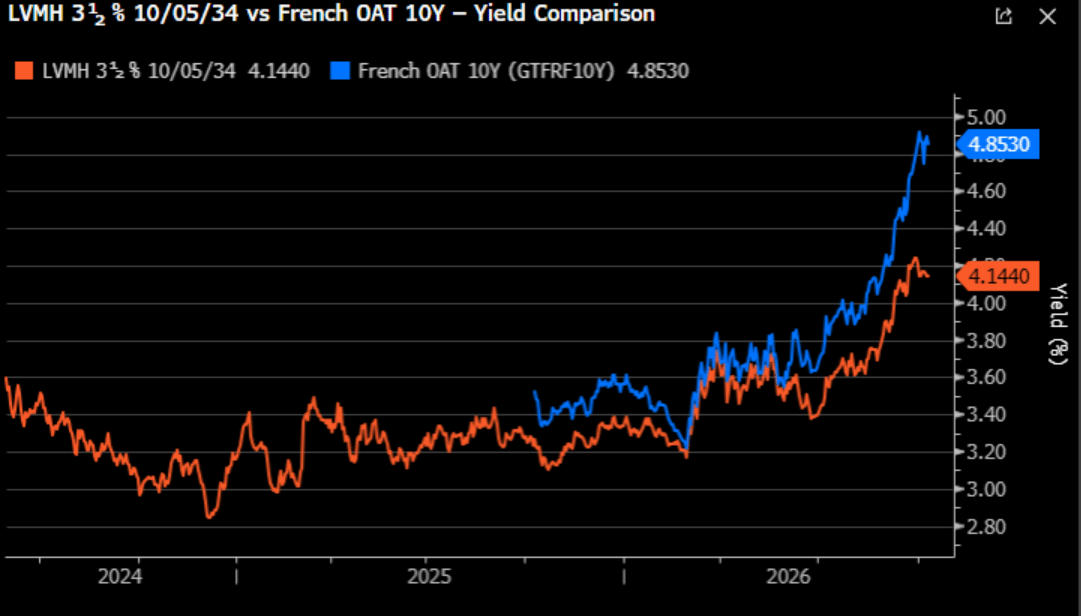
Chart

On Tuesday, Marie Le Penn, number 2 of the party started by her father, Rassemblement National, appealed to the ECB for help with taming French yields. The ECB, hammered by its own issues regarding the threat of energy inflation and the need to raise the Zone’s interest rate, seems likely to sit on its hands for now.

Even the IMF have warned France to “get their house in order” before the situation deteriorates further. But for now, there seems very little motivation by French policy makers to alter course and it may take much more external pressure to convince them to see their error than is presently being exerted.

I am reminded of the ominous words uttered by then French PM Barnier during his doomed attempt to lower the deficit “we must resolve this issue ourselves, before someone else does it for us”.

Author

David Stritch

Working as an FX Analyst at London-based payments provider Caxton since 2022, David has deftly guided clients through the immediate post-Liz Truss volatility, the 2020 and 2024 US elections and innumerable other crises and events.


More from David Stritch
Share:

Editor's Picks

AUD/USD bulls regain control above 0.6950 amid USD retreat

AUD/USD regains traction and extends the previous day's bounce from the weekly low, aiming for 0.7000 in Asia on Friday. The overnight pullback in US bond yields keeps the US Dollar below an 18-month high, which in turn offers some support to the pair. Meanwhile, hawkish RBA expectations also keep the major underpinned.

USD/JPY holds gains near 158.00 after Japan's weak Household Spending data

USD/JPY clings to gains around 158.00 after data showed on Friday that Japan's Household Spending fell for the ninth straight month, undermining the Japanese Yen. Meanwhile, the US Dollar remains depressed as the overnight fall in US bond yields counters a hawkish Fed and geopolitical uncertainties, could cap any downside in the pair.

Gold trims gains; back below $4,200

Gold now gives away part of its initial bullish attempt to weekly highs, returning to the area below the $4,200 mark per troy ounce on Friday. The current pick-up in the US Dollar’s upside momentum in combination with rising US Treasury yields across the curve seem to keep extra gains in the yellow metal under scrutiny.

Ethereum activates Glamsterdam on Sepolia testnet: Why the price is falling anyway
Ethereum (ETH) has reached a key milestone in its next major network upgrade. The planned changes aim to improve Ethereum’s Layer 1 capacity and efficiency as network activity grows. The development comes as ETH retreats toward $2,500, highlighting the contrast between the network’s long-term technical progress and its short-term market weakness.
UoM Consumer Sentiment Index expected to decline in October amid high Oil prices

The Preliminary Michigan Consumer Sentiment Index is forecast to decline for a third consecutive month in October. The US Dollar Index maintains upward pressure near its 2026 peak in the 102.50 region ahead of the release.

The UK 30-year gilt just hit a 1998 high. Is that good or bad for the British Pound?
The yield on the UK's 30-year government bond, or gilt, went through 6% on October 1 for the first time since early 1998, and on Monday the Pound was at its strongest against the Euro since June 2025. The gilt market's 28-year high is mostly someone else's. Since early May, the 30-year gilt yield has risen about 0.15 of a percentage point and the US 30-year about 0.7.